Trzciano Nowe
Borough of Szudziałowo, Sokólski District, Podlaskie VoivodshipType of place
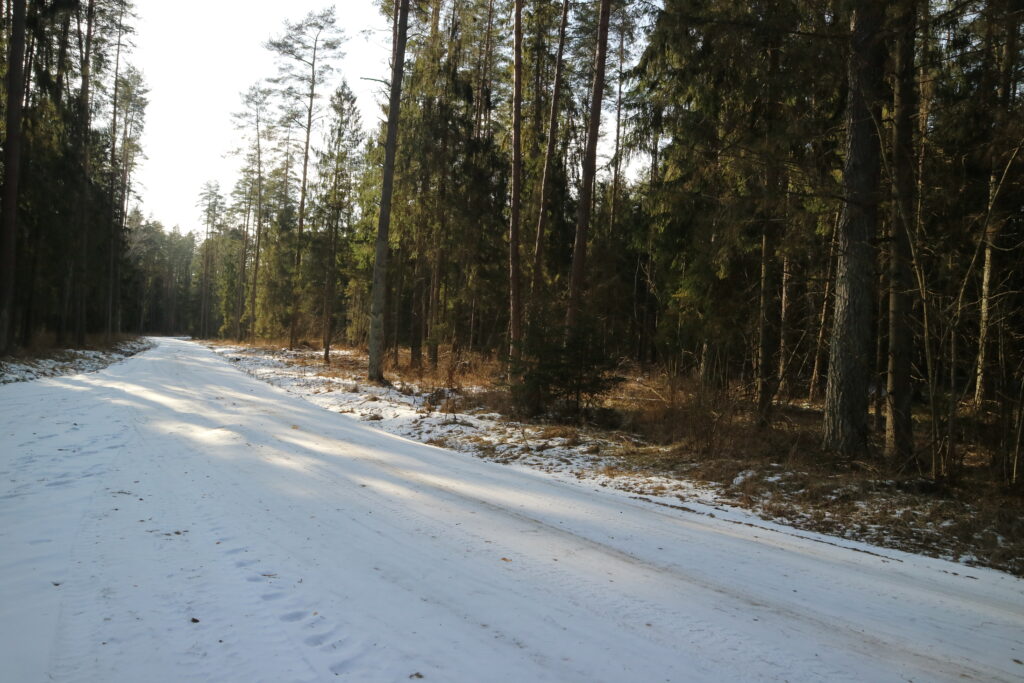
The so-called Padirka forest in the Puszcza KryszyńskaInformation about the crime
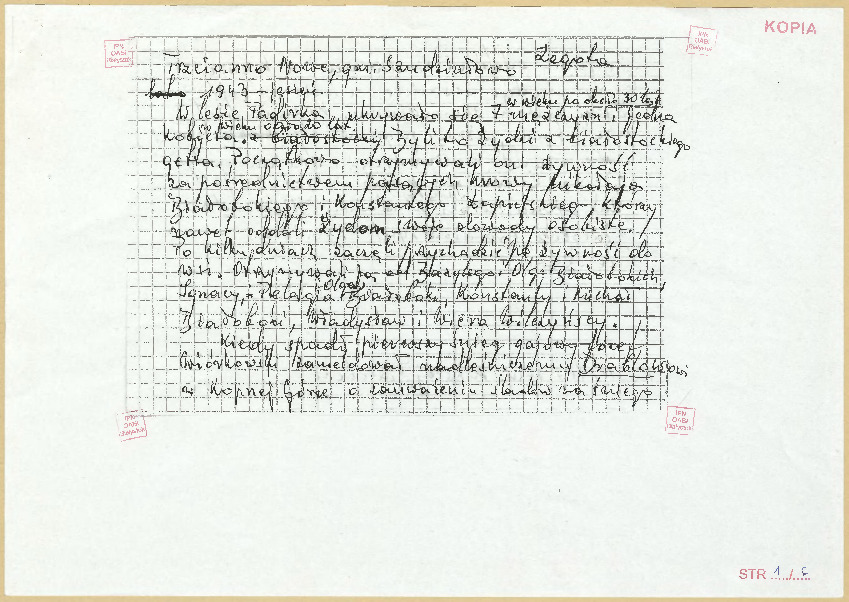
In the forest between the villages of Trzciano Nowe and Lipowy Most a group of refugees from the Białystok ghetto was hiding – seven men aged about 30 and a woman around 20. They were hiding there from Summer to late Autumn. During this time, the local people provided them with food. When the first snow fell, the gamekeeper informed the forester about suspicious tracks on the snow. „In Autumn 1943 r., a special unit of a military police from Konopna Góra had set an ambush in the forest and all the Jews were murdered. They were ordered to take off the clothes, lie face down in a row along the road and were shot in the back of the head” (pages of the file of the former Regional Commission for the Examination of German Crimes in Białystok). The bodies were buried at the place of execution, where they remain to this day.
In the winter of 2018, we conducted a site inspection of the gravesite, during which one of the residents told the story of the murdered group:
“They were escapees from the Białystok ghetto. Six men and one woman, but there were seven men in total. And K. helped them in the village of Łaźnie. But when they pacified the village in August or October, they murdered K.’s family as well [on October 11, 1943, the Nazis pacified the village, killing 55 people]. And they [the Jews] were already wandering around the surrounding villages, and the people were helping them, from Nowy Trzciane it was: G., S., W., Ł. And they [Jews] went to Lipowy Most, also looking for work. Naer Lipowy Most, on the side of Kopna Góra, there was a forester’s lodge. And the village headman… Can I say his name?
Zapomniane: Of course, I won’t use that name.
– And the village headman in Lipowy Most was […] When the Jews came looking for work, he went to the forester, who went to Kopna Góra, to the forest district office, where Germans and Ukrainians head a headquarter, about 80 people in total, not many Germans, mostly Ukrainians. And then the inhabitants of Trzciane Nowe saw Germans coming from the road. And then they heard shooting in the forest. And those Germans were returning this way through Trzciano Nowe. They went to the village headman and told him to appoint people to bury the murdered Jews near Lipowy Most. So he appointed some men who came here. The Jews were stripped naked, I think they [Germans] were looking for some valuables. And among those men there was a girl, lying on the ground, very pretty one. He […] couldn’t bear to look at it, so he took her and wrapped her in some clothes. They buried them on the fire escape that runs along the road. Later, a boy came to the village, he was with those Jews, he was the only survivor because he was trailing behind that group. When he heard the German cars were coming, he jumped into the bushes somewhere and stayed there. And that boy survived the German occupation. He joined a partisan unit that had dugouts on the other side of the Słojka River, by the Skrabacinka stream.” (February 28, 2018)
Commemoration
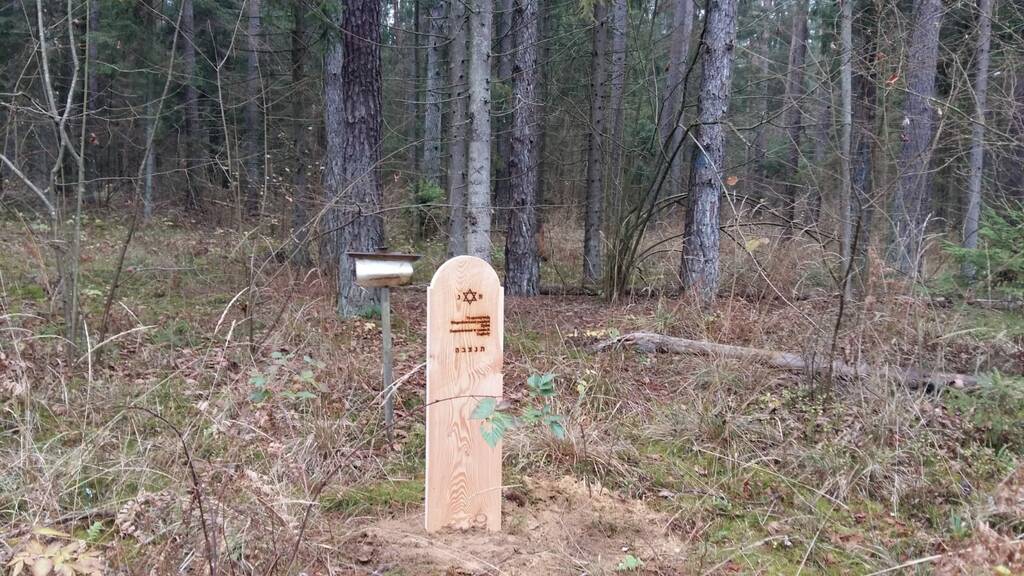
The tombstone in Nowe Trzciano, for the sake of nature protection, was located 300 meters from the burial place of the victims. The burial place is marked with a wooden matzeva and stone pillars indicating the range of the grave.
Project implemented thanks to the support of:
U.S. Commission for the Preservation of America’s Heritage Abroad, Szudzialowo Commune, Supraśl Forest District, Formy Wspólne.
Commemoration was carried out as part of the project “NeDiPa: Negotiating Difficult Pasts”, co-funded by the European Union under the Citizens, Equality, Rights and Values (CERV) programme.
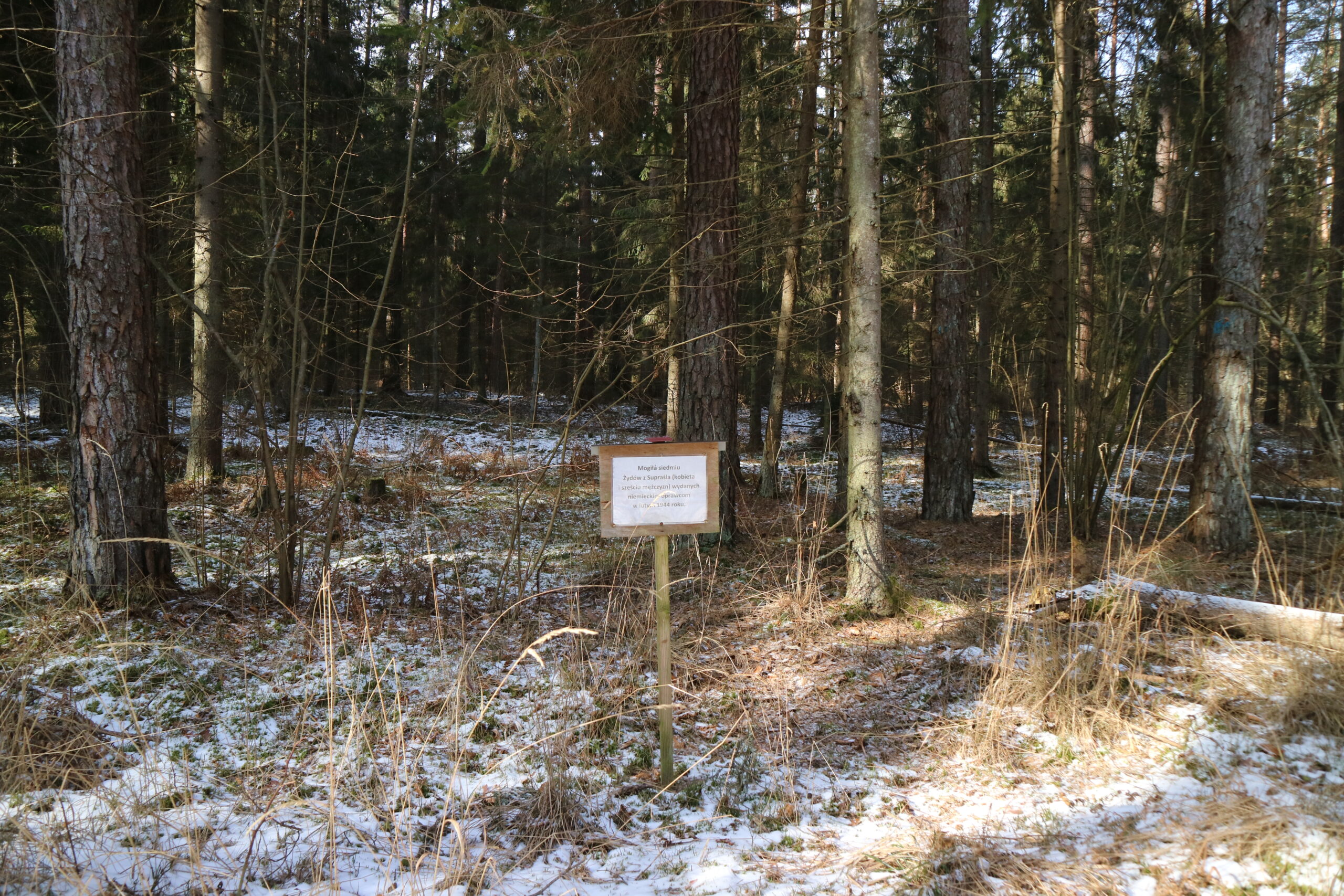
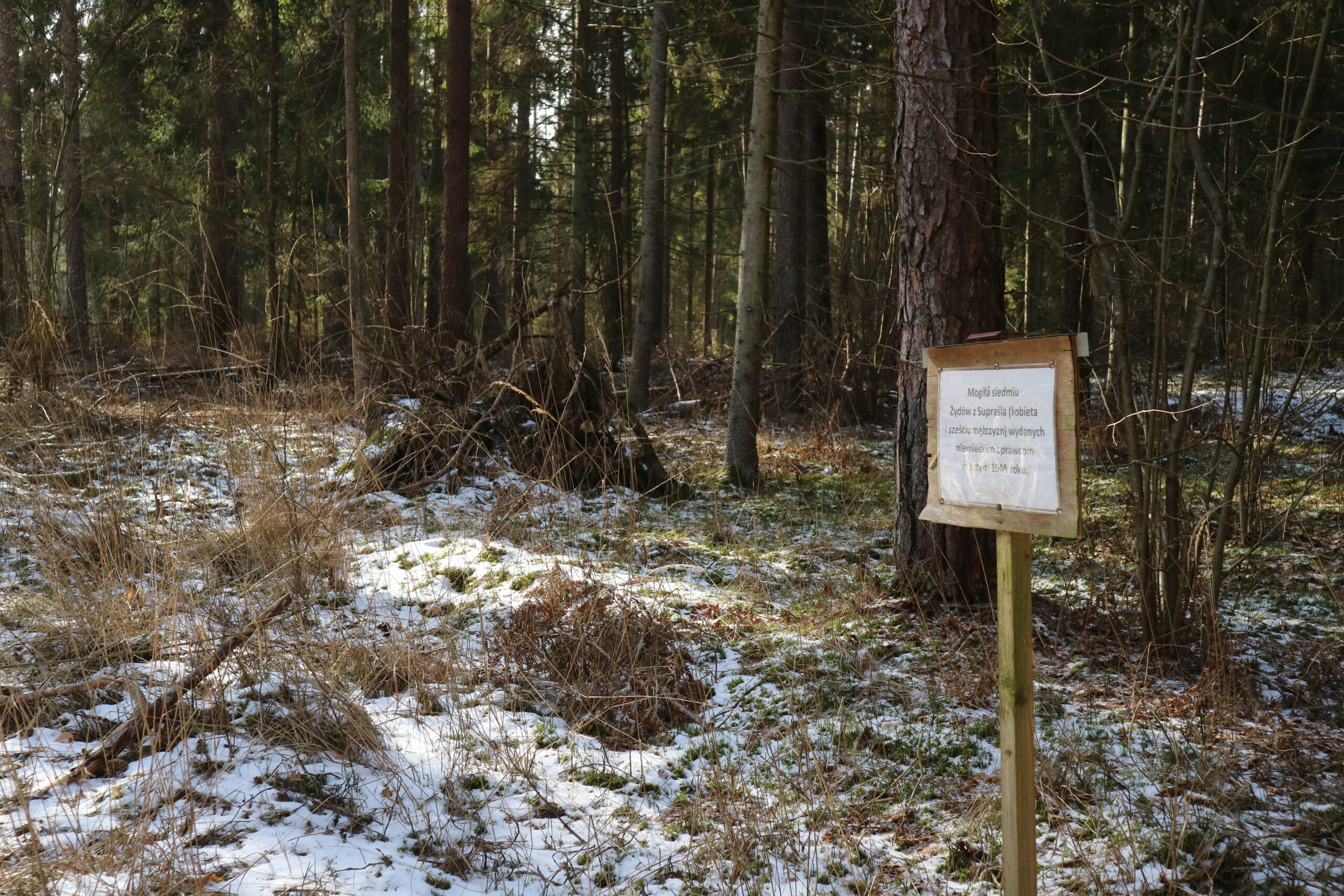
The place is marked by the local people with a plaque describing the number of victims, their place of origin and the month and the year of execution.
The place of the grave was marked with a wooden matzevah in 2020 as part of the project “Reference points – marking 24 Jewish war graves with wooden matzevot ” . The project is an attempt to find a way to mark these places before they can be commemorated. The action was aimed as an intervention in the landscape of these places, which would remind about what remains invisible, even if present in the memory of local communities.Being only a temporary commemoration, wooden matzevot invite local communities to discuss and take action, to discover the places, and perhaps to start their own memory practice related to them or to permanently commemorate them.
You can read more about the project here (English below):
https://zapomniane.org/wp-content/uploads/2018/10/MACEWY_punkty-odniesienia_folder.pdf
The project was implemented thanks to funding from the Stowarzyszenie Żydowski Instytut Historyczny and The Matzevah Foundation.


IDENTIFICATION OF THE GRAVE BASED ON NON INVASIVE RESEARCH
On February 20, 2018 the site inspection was carried out in the presence of a witness, in order to locate the mass grave of seven victims who according to the witness were murdered and buried in February 1944. The witness precisely indicated the place of burial (GPS: N53°13.631′ E023°32.182′), which was marked by the local people with a plaque describing the number of victims, their place of origin and the month and the year of execution.
The size of the topographical relief confirms numerous disturbances in the area indicated by the witness, which makes it difficult to precisely determine the disturbance related to the grave.
The aerial photography query for this area was not ordered.
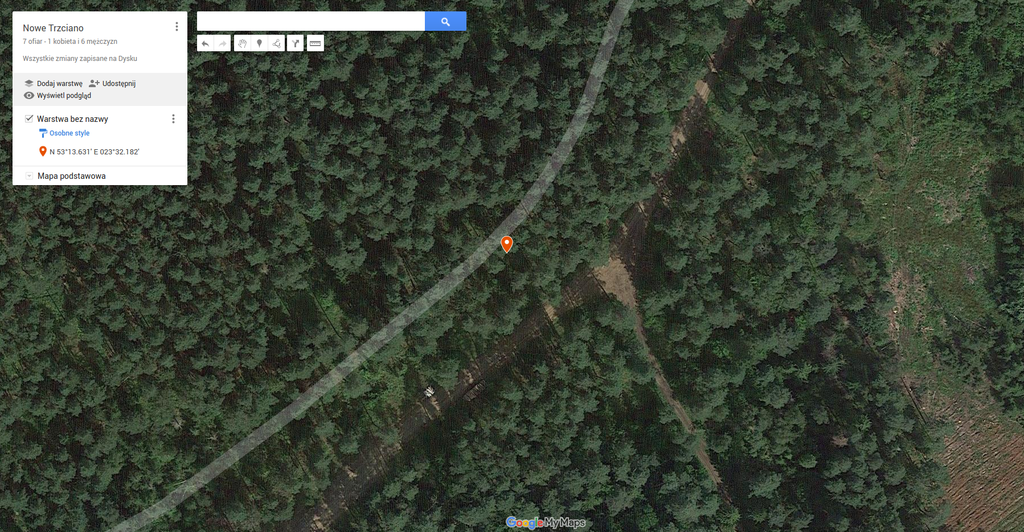 fotografia satelitarna 1e Trzciano Nowe
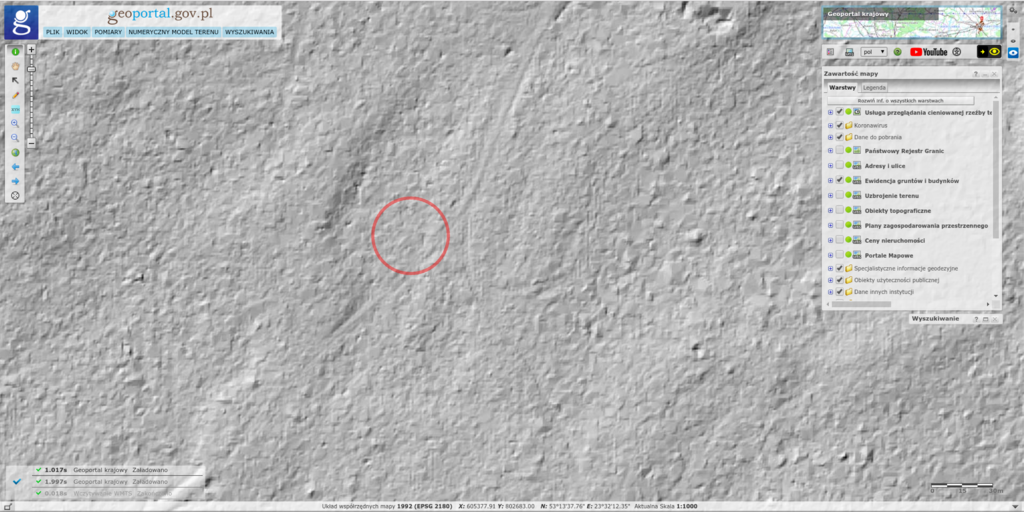 LiDAR Trzciano Nowe
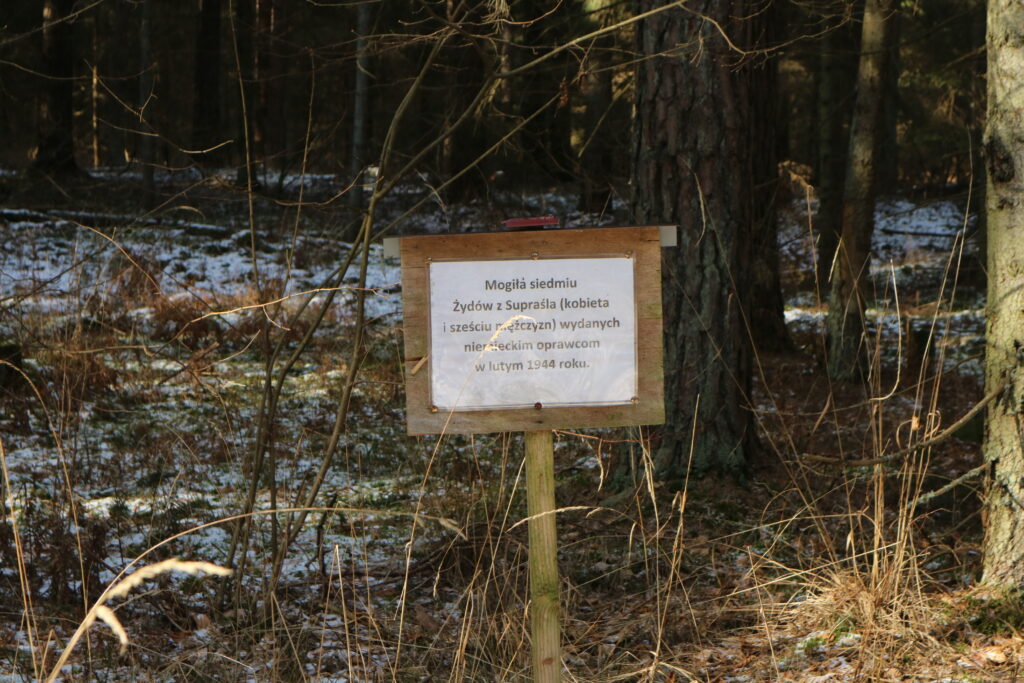 fotografia 1 lokalizacji Trzciano Nowe
Sources
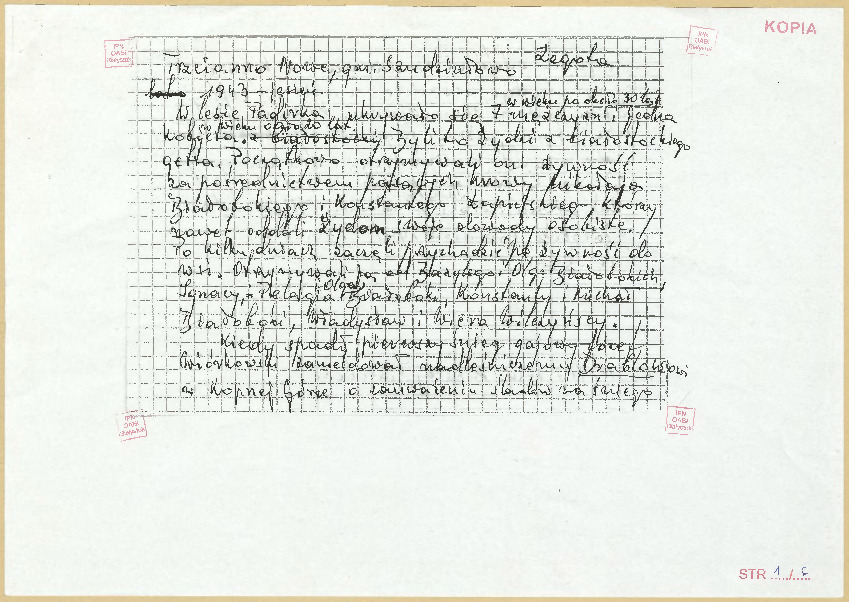 Kartoteka b. OKBZHpNP Trzciano Nowe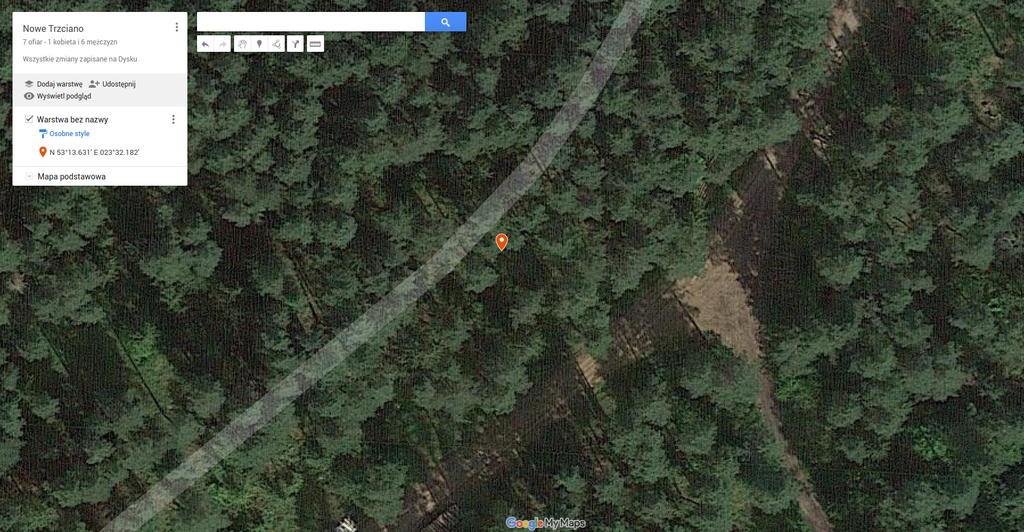
Contact and cooperation
We are still looking for information on the identity of the victims and the location of Jewish graves in Trzciano Nowe. If you know something more, write to us at the following address: fundacjazapomniane@gmail.com.
Bibliography
File of the former Regional Commission for the Examination of German Crimes in Białystok
Recording of the Zapomniane Foundation, Mikołaj W., interview conducted by Aleksander Schwarz, Trzciano Nowe, February 28, 2018.