Zabitek
Borough: Siedliszcze, District: chełmski, Voivodeship: lubelskieType of place
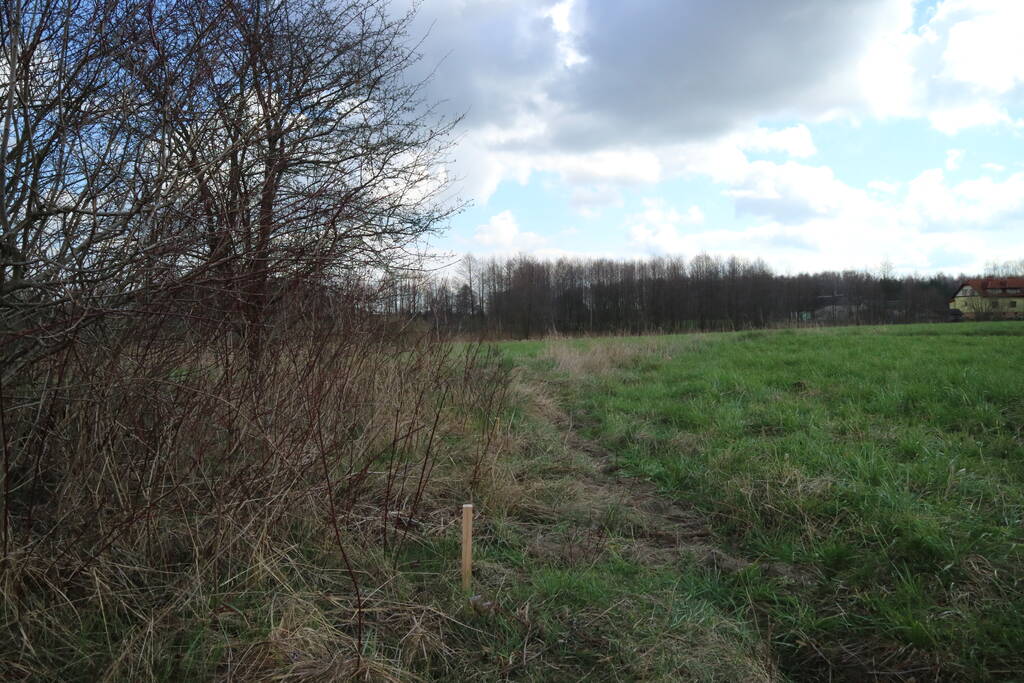
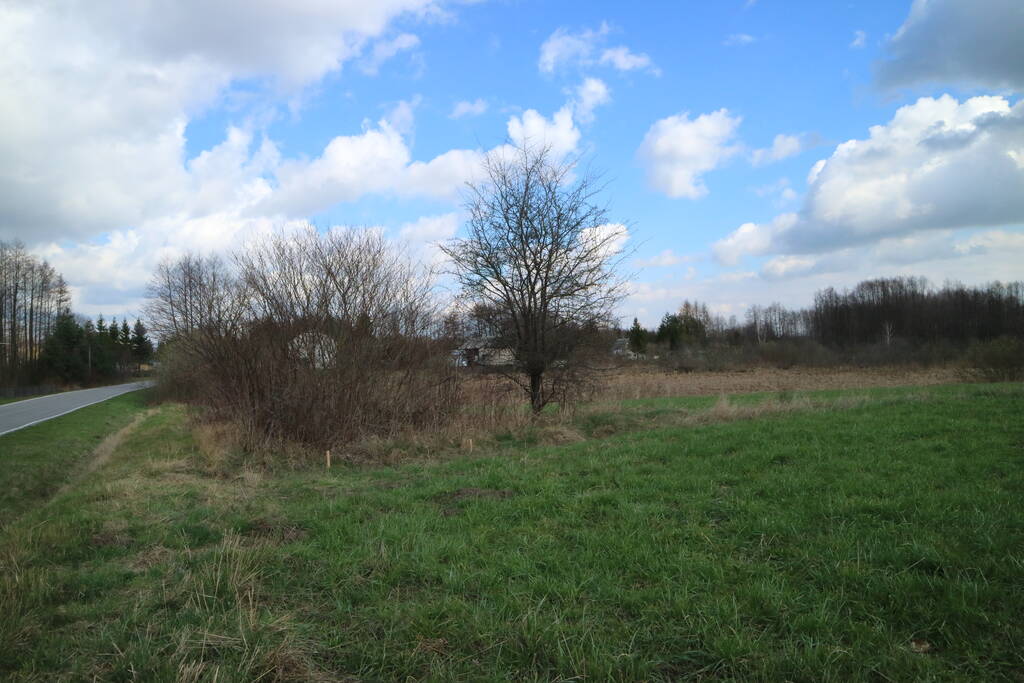
Boundary of a private plot (wasteland) by the road.Information about the crime
In 2021, Holocaust survivor Jack Kuper contacted the Foundation regarding the unmarked grave of his grandfather, who was murdered in the borough of Siedliszcze in 1942. He described the wartime fate of his relatives as follows:
“Although we came from Puławy, in 1941, my mother, my four-year-old brother, and I, aged nine, were relocated to Siedliszcze under the so-called “voluntary” deportation. Later, after escaping from the Warsaw ghetto, my maternal grandfather, Shija [a diminutive of Jehoshua] Chuen, and his two young sons joined us. My grandfather was a shoemaker, so to help provide for us, he traveled daily to nearby villages in search of shoes that needed repairing. We waited impatiently for his return in the late afternoon, eating the bread, potatoes, eggs, and vegetables that spilled out of his jute bag. Until the day he did not return home. On the outskirts of the town, in the village of Dobromyśl, three Germans on horseback came across a Jew carrying a jute sack on his shoulder, and perhaps out of boredom, decided entertain themselves by killing him.” (October 20, 2021)
In a letter addressed to the village head of Dobromyśl in October 2022, Jack Kuper wrote:
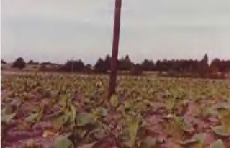
“Fortunately, when I visited the Pejzak family in Kulik in 1985, for whom I had looked after cows as a ten-year-old, the late Mrs Helena Pejzak, who claimed to have witnessed the murder of my grandfather, pointed out the grave to the left of the road as we went past Dobromyśl, on the road from Kulik to Siedliszcze. I posed for a photo (attached) to mark the exact location.”
In the 1980s, an article by Andrzej Wawryniuk, titled ‘Kubuś, co krówki gnał’ (‘Kubuś, who herded the cows’), appeared in the local press. The author quotes the account of Eugenia Pejzak-Gogułka, who, together with her mother Helena, helped a Jewish boy during the war. In the photo, we can see Jack Kuper with Helena and Eugenia. It was taken in 1985 during Jack’s visit to Poland. At his request, Helena Pejzak and Eugenia Pejzak-Gogułka were honored with the Medal of the Righteous Among the Nations in 1998.
We visited the borough of Siedliszcze twice, and thanks to the help of the village head, we were able to reach the site where the body of the murdered shoemaker was buried in Zabitek. The grave is located in a meadow right by the road from Siedliszcze to Kulik. The village head shared with us his knowledge about the circumstances of the Jewish shoemaker’s death:
Zapomniane: Jack Kuper’s grandfather was hiding somewhere here in the village, wasn’t he?
Wiesław P.: No, no. There was a ghetto in Siedliszcze. And it wasn’t very well guarded. They walked around the villages; he was a shoemaker and repaired shoes in exchange for bread.
Zapomniane: So he just left the ghetto and wandered around here looking for work?
Wiesław P.: He walked around the village and came back from Kulik. And somewhere in Kulik, the Germans caught him.
Zapomniane: Did they stumble upon him?
Wiesław P.: Yes. And they shot him.
Zapomniane: What did Jack Kuper say about his mother? That she was here with him, too?
Wiesław P.: In the ghetto.
Zapomniane: In the ghetto in Siedliszcze?
Wiesław P.: She was there with her sister.
Zapomniane: And he was with them too as a kid?
Wiesław P.: She sent him to Kulik because he had Aryan features.
Zapomniane: I see.
Wiesław P.: And he was hiding in Kulik.
Zapomniane: And she was killed?
Wiesław P.: And she… Well, she definitely… Because here in Siedliszcze, they didn’t murder too many people. They were taken to… somewhere near Stołpie. Damn, what was it called… Staw. Near Staw. There was a larger ghetto there.
Zapomniane: Yes. A labour camp, even.
Wiesław P.: Yes, yes. And then they were transported to Sobibór.
Zapomniane: I see. So she was sent to a labour camp.
Wiesław P.: Yes, yes, yes. You know, that creek that you passed, that bridge – it was dug by the Jews.
Zapomniane: Land improvement of some sort?
Wiesław P.: Yes, the Jews from Siedliszcze. And then, when they finished here, they were taken away.
Zapomniane: And that boy [Jack Kuper], did he manage to survive the whole war?
Wiesław P.: Yes, yes. He stayed with Gogułka. [Eugenia Pejzak-Gogułka, Righteous Among the Nations]
Zapomniane: Jack said that his family, his grandfather, the one buried here, didn’t come from here?
Wiesław P.: No, no. They were from… Puławy, Dęblin. Somewhere around there.
(Zabitek, December 8, 2022)
IDENTIFICATION OF THE GRAVE BASED ON NON INVASIVE RESEARCH
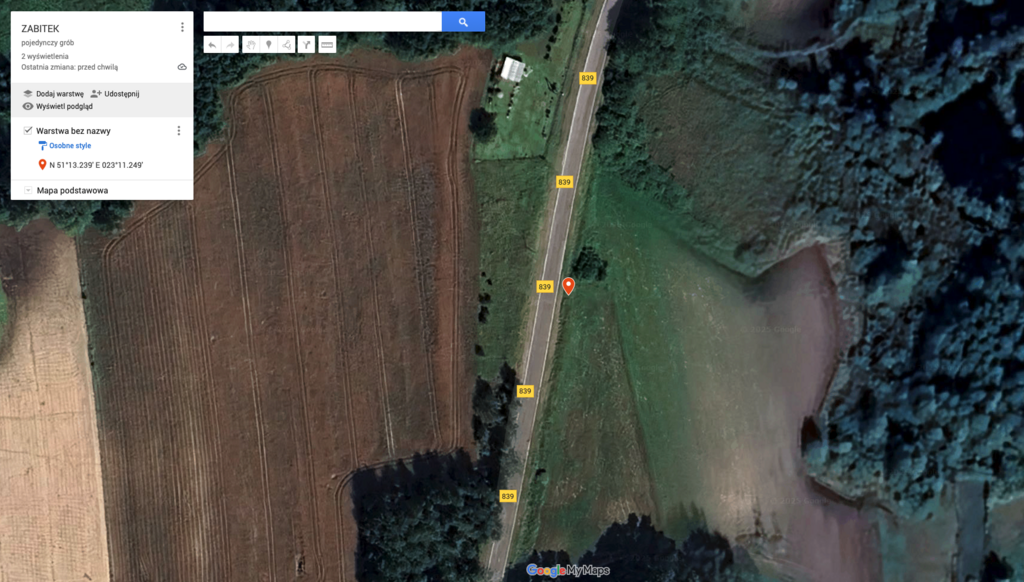
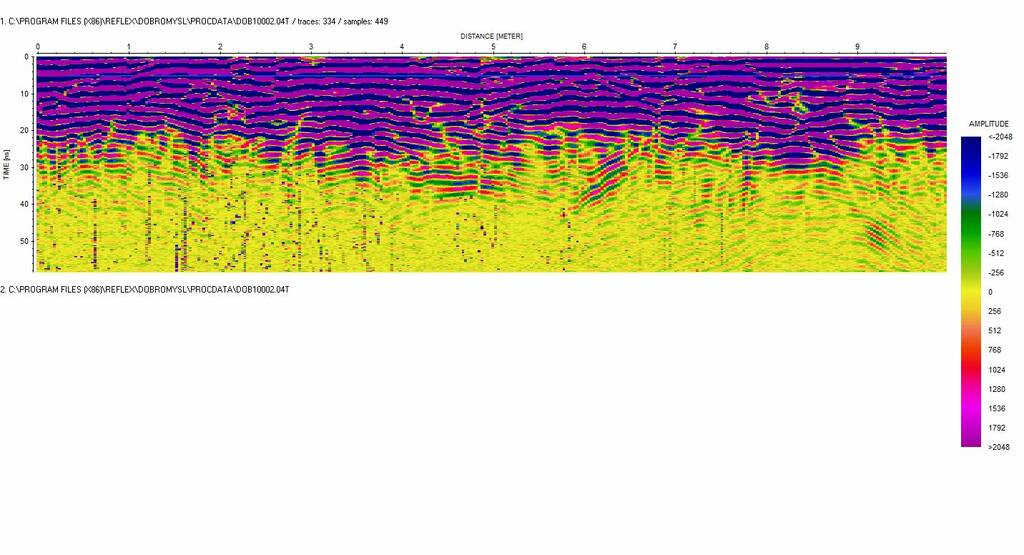
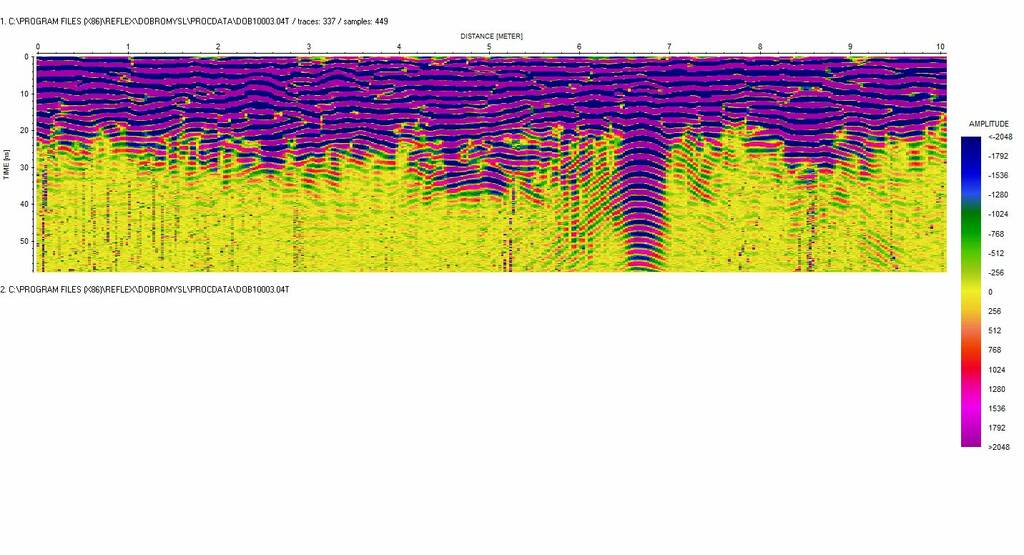
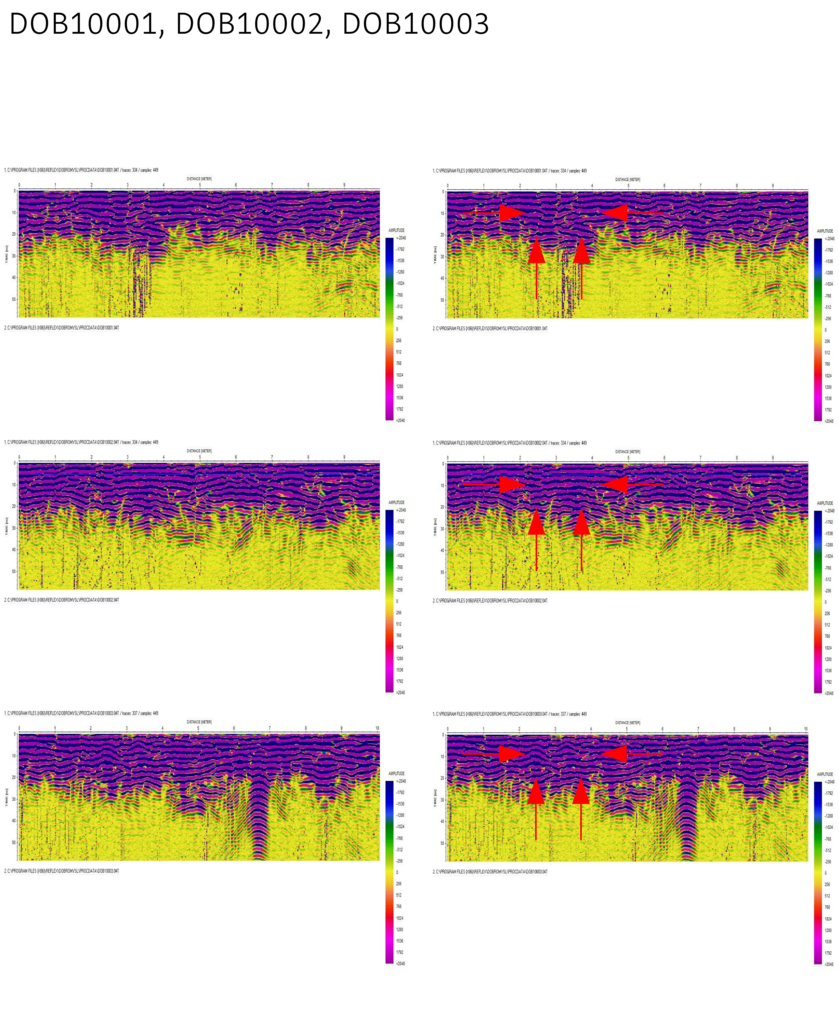
On 25 March 2024, a site inspection was carried out in the presence of a witness who precisely indicated the location of a single grave (GPS: N 51°13.239′ E 023°11.249′). The indicated location was examined using ground-penetrating radar (Mala X3M/Ramac 500 Mhz). Three georadar profiles were collected, named: DOB10001, DOB10002, DOB10003. The echograms show soil layer disturbances between roughly 2.0 m and 4.1 m, with a depth of approximately 0.70 m – 1.0 m below ground level (see Attachment: Zabitek, echogram set DOB10001–DOB10003, red arrows), which is probably a remnant of a grave pit.
The aerial photography query for this area wasn’t ordered.
The research conducted in 2024 was financed by the European Union NextGenerationEU.

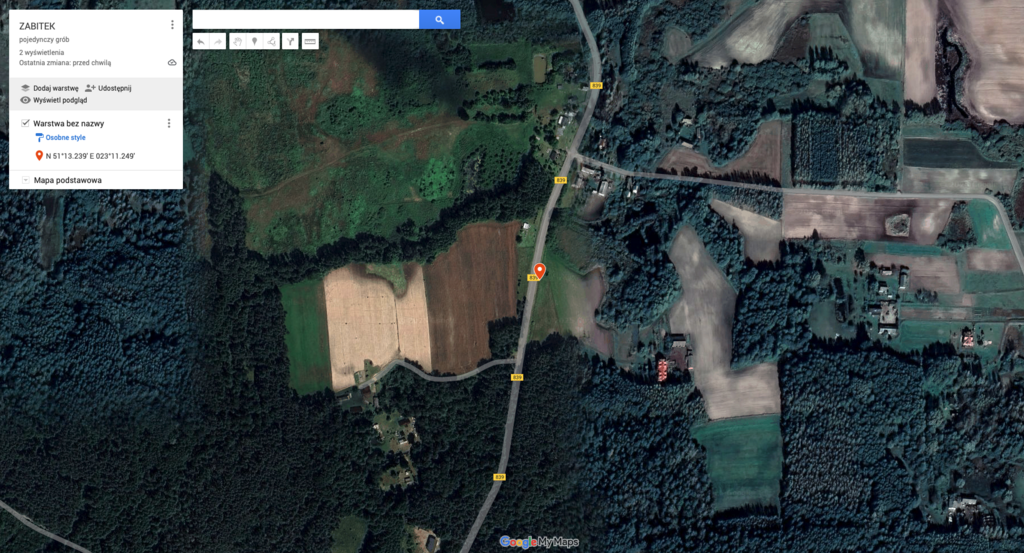 Zabitek fotografia satelitarna 1a
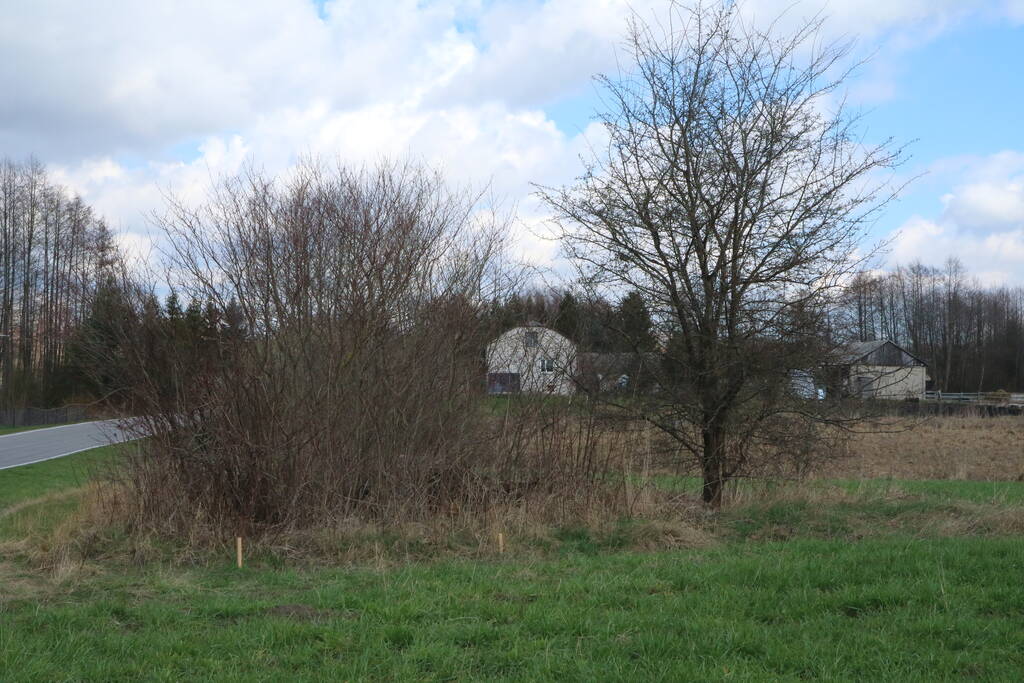 Zabitek fotografia 1 lokalizacji
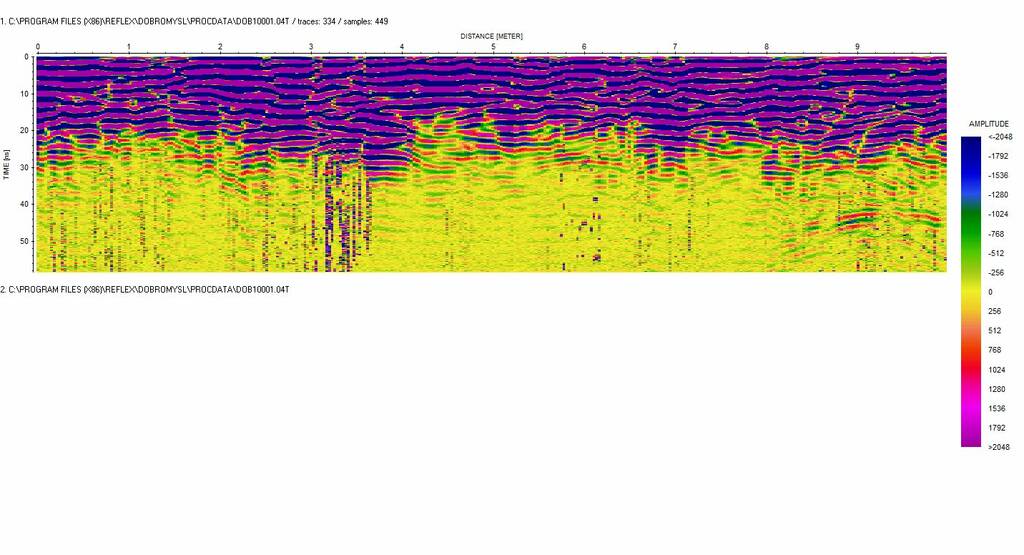 Zabitek DOB10001
Sources
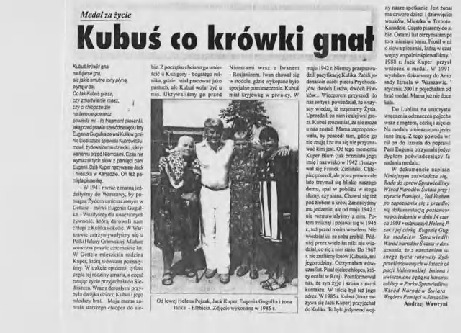 Zabitek Andrzej Wawryniuk pt.”Kubuś, co krówki gnał”
Transkrypcje
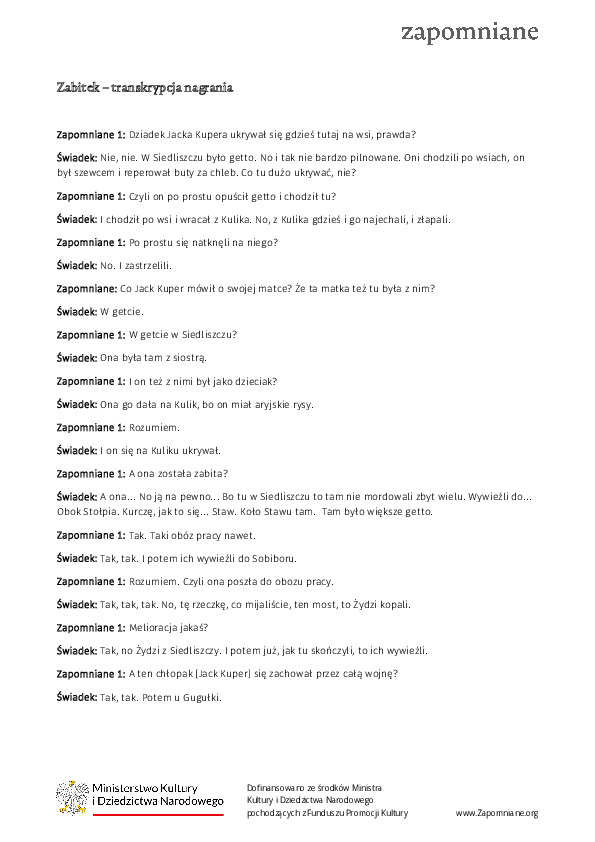 Zabitek transkrypcja nagrania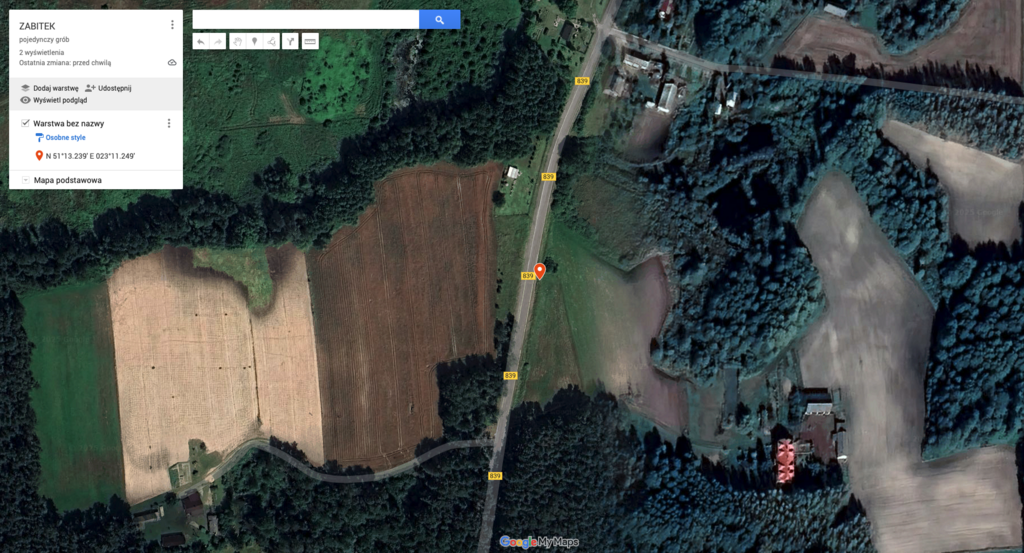
Contact and cooperation
We are still looking for information on the identity of the victims and the location of Jewish graves in Zabitek. If you know something more, write to us at the following address: kontakt@zapomniane.org.
Bibliography
Recording of the Zapomniane Foundation (audio file), Wiesław P., interviewed by Agnieszka Nieradko and Aleksander Schwarz, Zabitek, December 8, 2022.
Recording of the Zapomniane Foundation (audio file), Wiesław P., interviewed by Agnieszka Nieradko and Aleksander Schwarz, Zabitek, March 25, 2024.
Photographs of Jacek Kuper (Zapomniane Foundation Archive)
Andrzej Wawryniuk, Kubuś, co krówki gnał (Kubuś, who herded the cows), no date (Zapomniane Foundation Archive)
The materials published on this website were developed, digitized, and made available thanks to funding from the Minister of Culture and National Heritage through the Culture Promotion Fund, as well as support from the Embassy of the Federal Republic of Germany in Warsaw, which also enabled the creation of the English-language version of the website.