Szczebrzeszyn
Borough: Szczebrzeszyn, District: zamojski, Voivodeship: lubelskieType of place
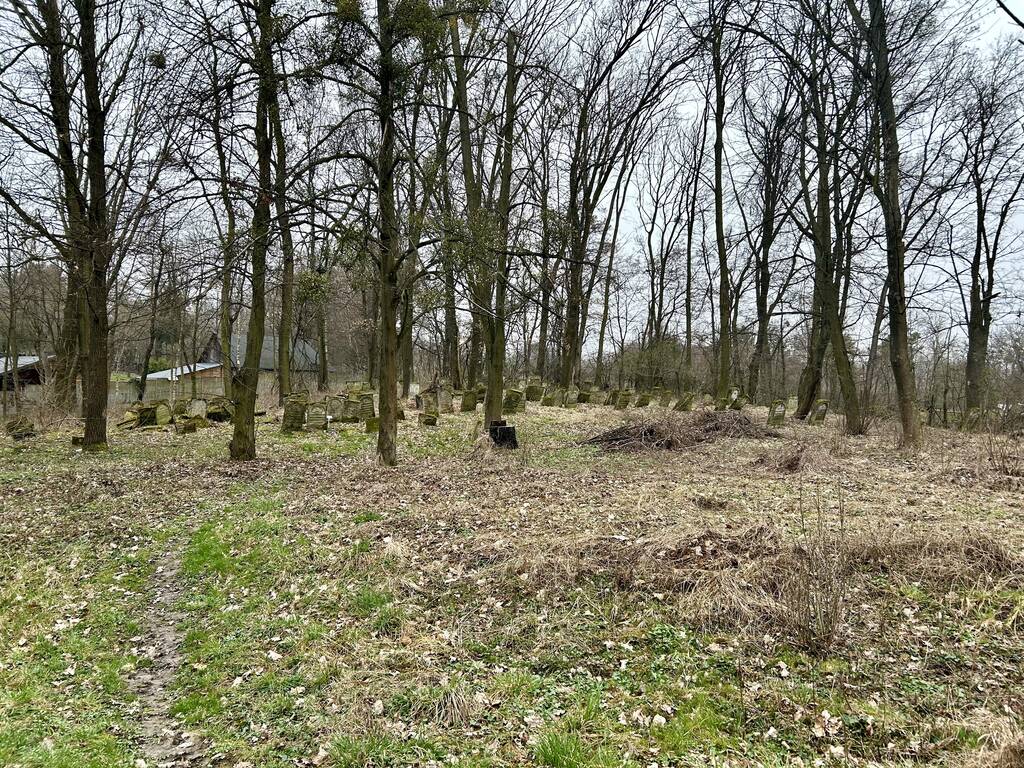
Jewish cemetery in Szczebrzeszyn.Information about the crime
The Chief Commission for the Examination of German Crimes in Poland records the following murders of Jews that took place in Szczebrzeszyn:
- On the evening of 7 July 1941, a German shot a young Jewish woman aged 22.
- A few days before 18 February 1942, near Szczebrzeszyn, on the road toward Zwierzyniec, the Gestapo shot a 20-year-old Jewish woman. The Germans did not notice the mandatory armband.
- On 11 May 1942, before eight o’clock in the morning, the Germans shot the Jewish printer Kligier in front of the municipal office in Szczebrzeszyn. (IPN Bu 2448/608, pp. 172, 175, 179)
The name Kligier appears on the list of Szczebrzeszyn residents who received matza and financial support from the Joint in May 1940. One of them was Mosze Kligier (AŻIH).
- On 17 June 1942, a Jew named Gelernter was shot in the municipal office courtyard. (IPN Bu 2448/608, p. 195)
The Yad Vashem Holocaust Victims’ Names Database contains information about four men with this surname who died in Szczebrzeszyn in 1942: Aron, Mojżesz, Mordechaj and Zew.
- On the night of 18 July 1942, six Jewish men were shot.
- On 27 July 1942, seven people were shot in retaliation for the murder of a German informant; one of the victims was Jewish.
- On 8 August 1942, during the day, 13 people were murdered during a deportation.
- In September 1942, 20 people were murdered on Frampolska Street in Szczebrzeszyn.
- In September 1942, during the operation to exterminate the Jewish population, 4,000 people were murdered. Their bodies were buried in mass graves in the Jewish cemetery.
- On 15 October 1942, in the forest called ‘Remiza,’ a military policeman murdered two men: Lejzor Zero, a butcher residing in Szczebrzeszyn, and Tuchsznajder, a hairdresser residing in Szczebrzeszyn. (IPN Bu 2448/608, pp. 199, 200, 205, 206, 210, 211, 223, 225, 227)
The name Lejzor Zhiro appears in the Book of Remembrance of the Jews of Szczebrzeszyn among the Holocaust victims. Hairdresser Jozef Tuchsznajder is listed among Jewish craftsmen from the Biłgoraj district dated 15 February 1942.
- On 26 October 1942, at around 6 p.m., five Jewish women were murdered.
- On 16 November 1942, a military policeman murdered a Jewish woman from Goraj named Oberweis. She was about 30 years old and had converted to Catholicism. Around 1940, she took a job at the military police station in Szczebrzeszyn. She was sent to the town on an errand, and a military policeman followed her and shot her in the back of the head. (IPN Bu 2448/ 608, pp. 237, 238, 241, and 242)
- A few days before 28 July 1943, a young Jewish woman and her seven-year-old child were murdered. The child was taken by workers from ‘Aksa’ and shot by military policemen. (IPN Bu 2448/608, pp. 254–255)”
Commemoration
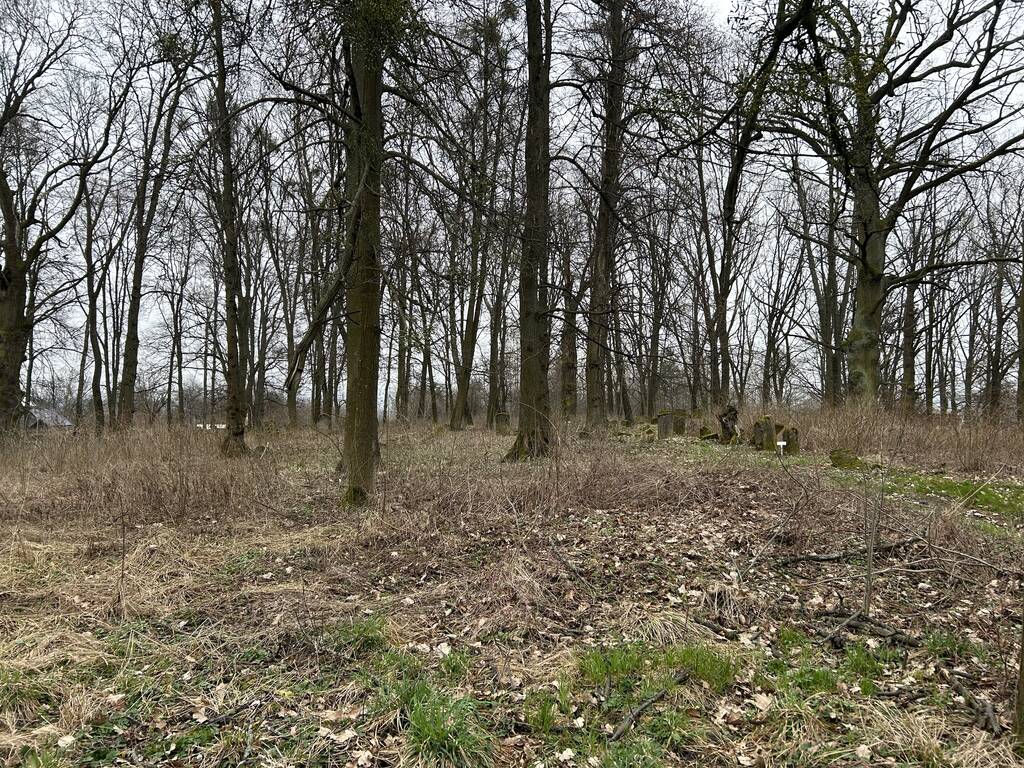
The place of the grave was marked with a wooden matzevah on 20 March 2024 as part of the project “Reference points”.
The site was marked thanks to the initiative of the Miejsce Uwagi Foundation, in collaboration with local memory activists and representatives of the local authorities. A symbolic wooden matzevah was placed at the site in a joint effort, initiating a process aimed at the permanent commemoration of the burials located here. Before this, the site remained unmarked in the landscape.
“Reference points” is an attempt to find a way of marking these places before they can be commemorated. Marking forgotten Jewish war graves with wooden matzevot is a subtle intervention in the landscape reminding about what remains invisible, yet present in the memory of local communities. Being only a temporary commemoration, wooden matzevot invite local communities to discuss and take action, to discover the places, and perhaps to start their own memory practice related to them or to initiate a permanent commemoration. The initiative was part of the international project ‘MultiMemo. Multidirectional Memory: Remembering for Social Justice’, funded by the European Union under the CERV programme.
You can read more about the project here: link

IDENTIFICATION OF THE GRAVE BASED ON NON INVASIVE RESEARCH
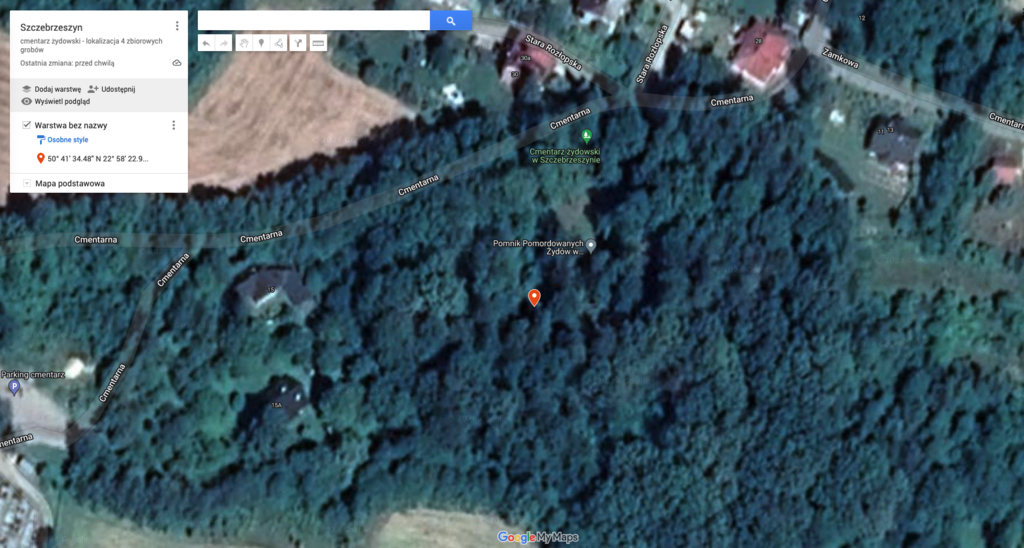
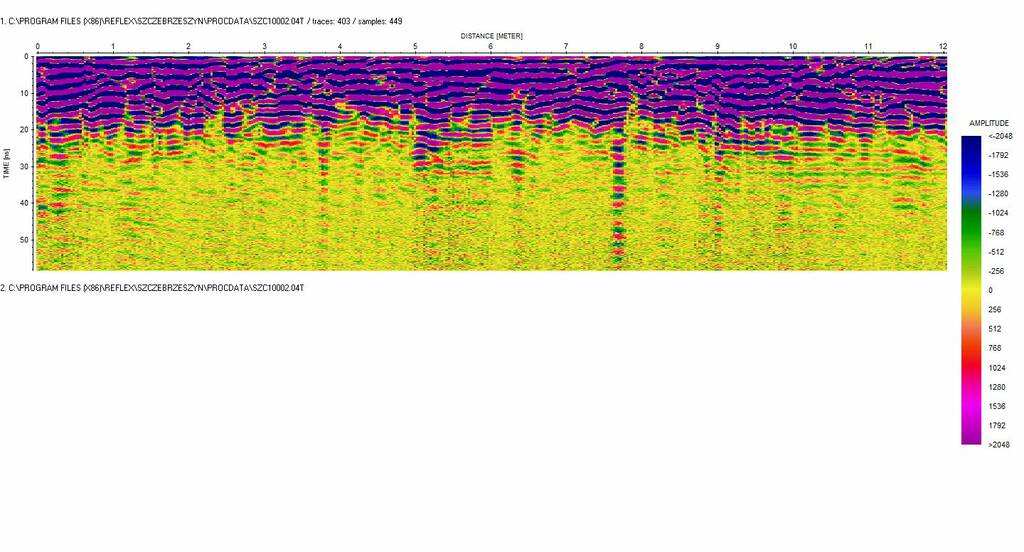
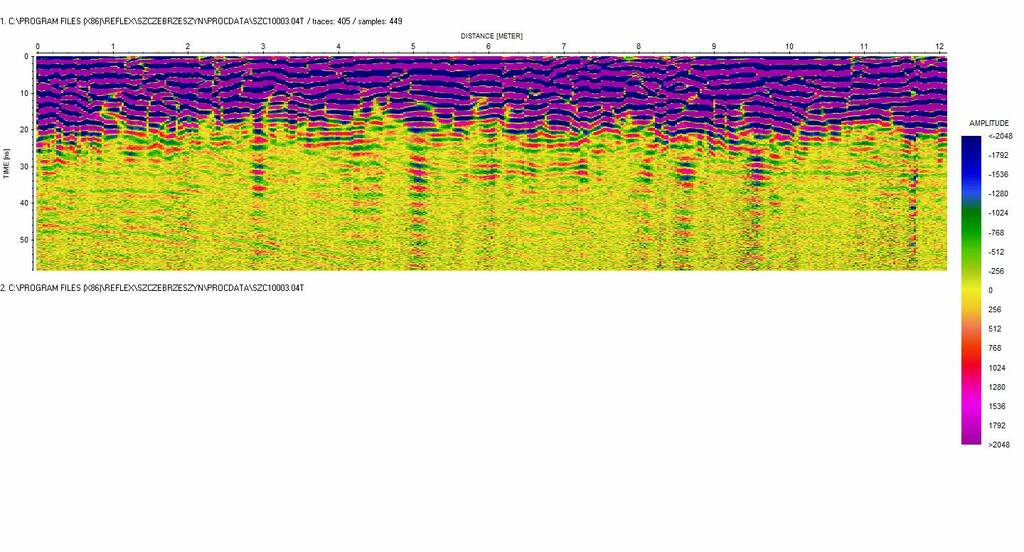
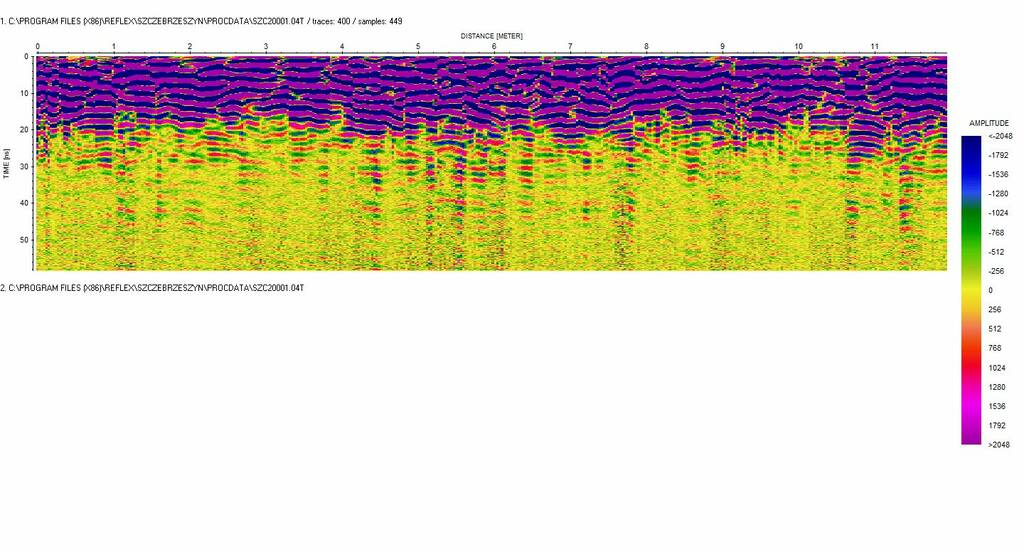
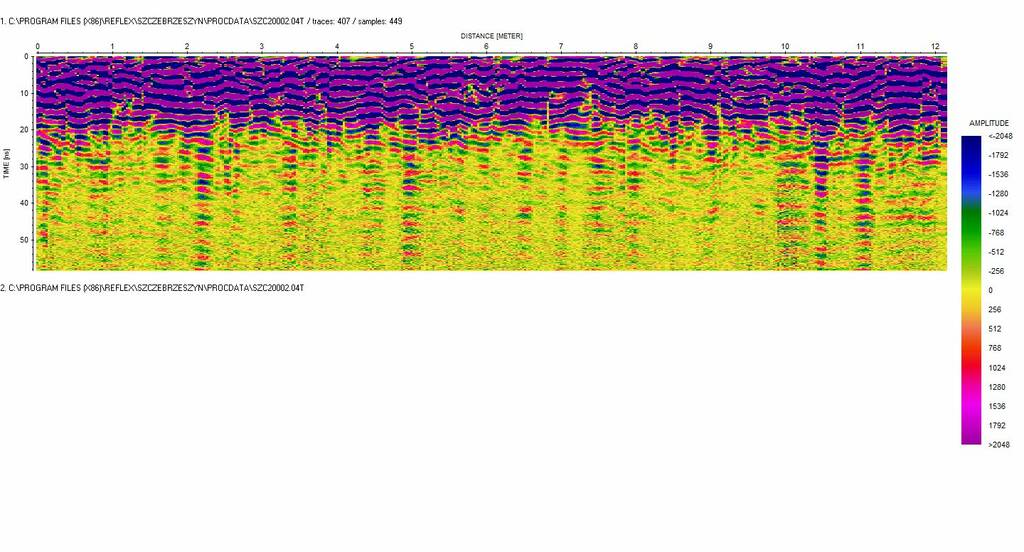
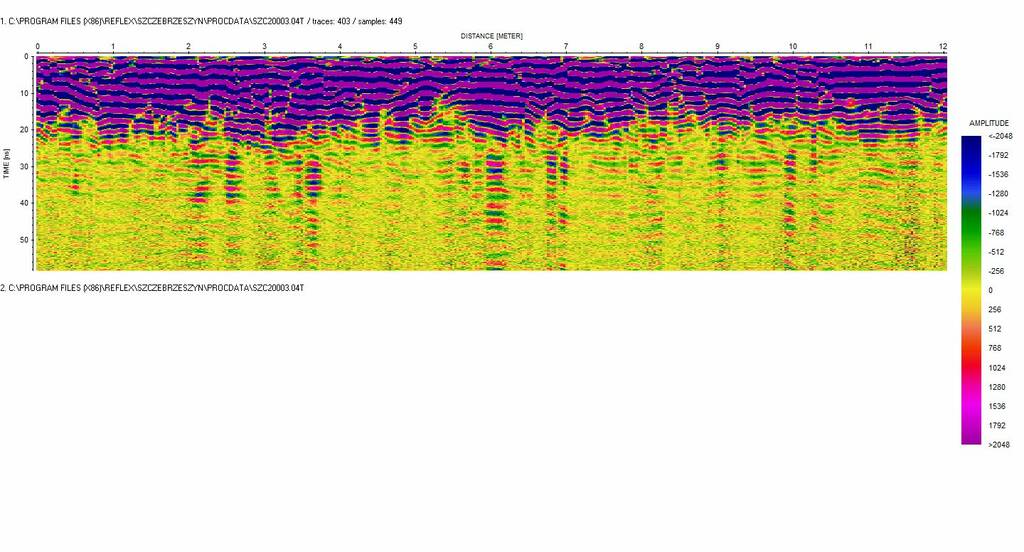
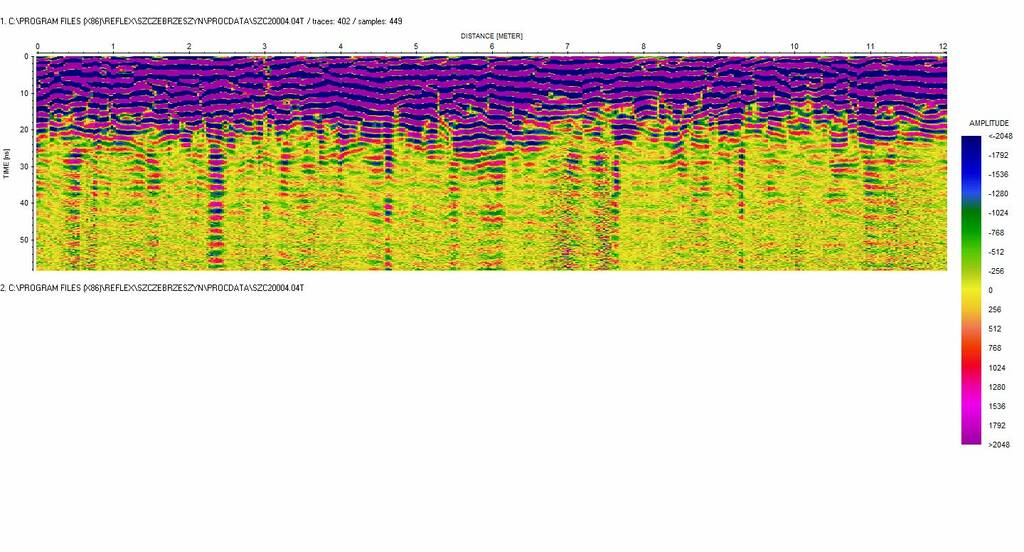
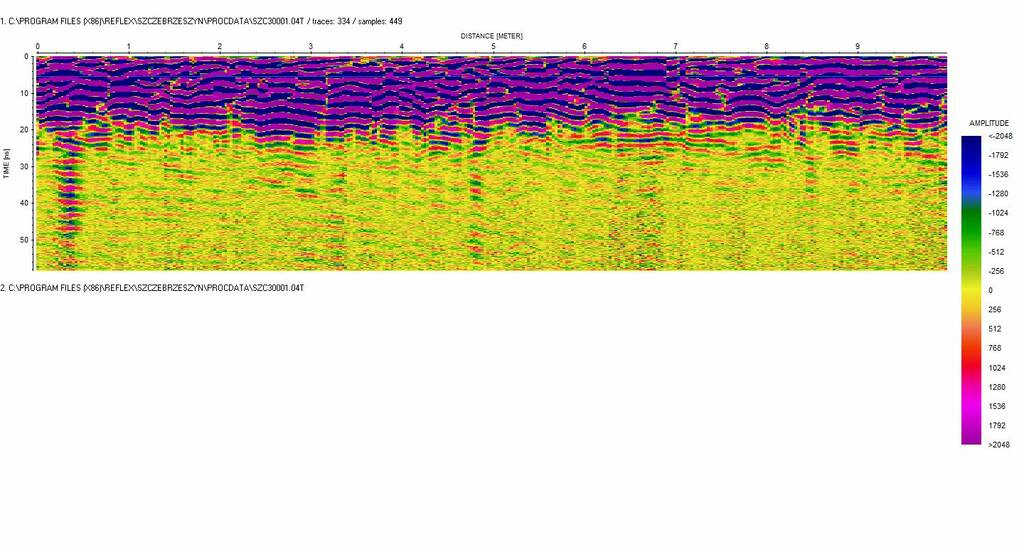
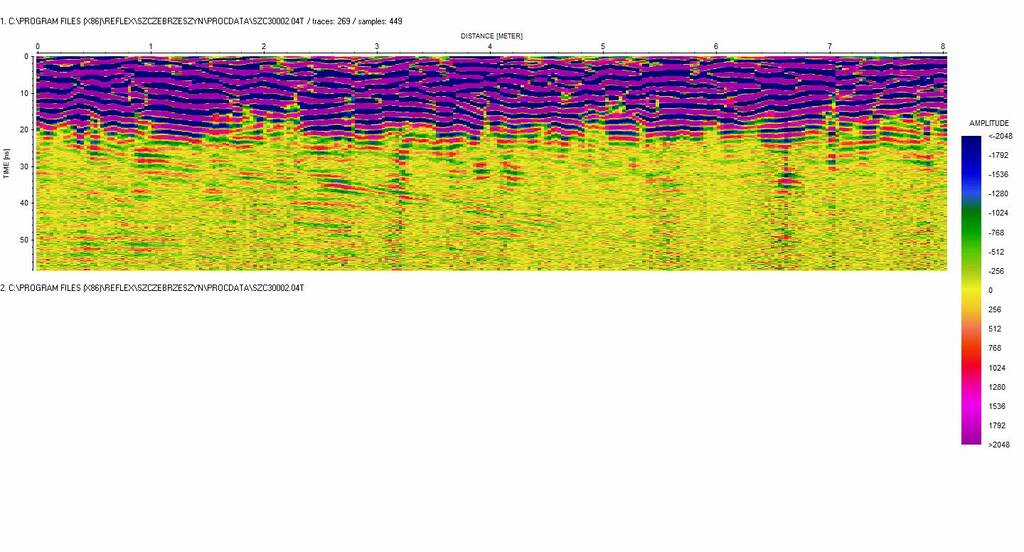
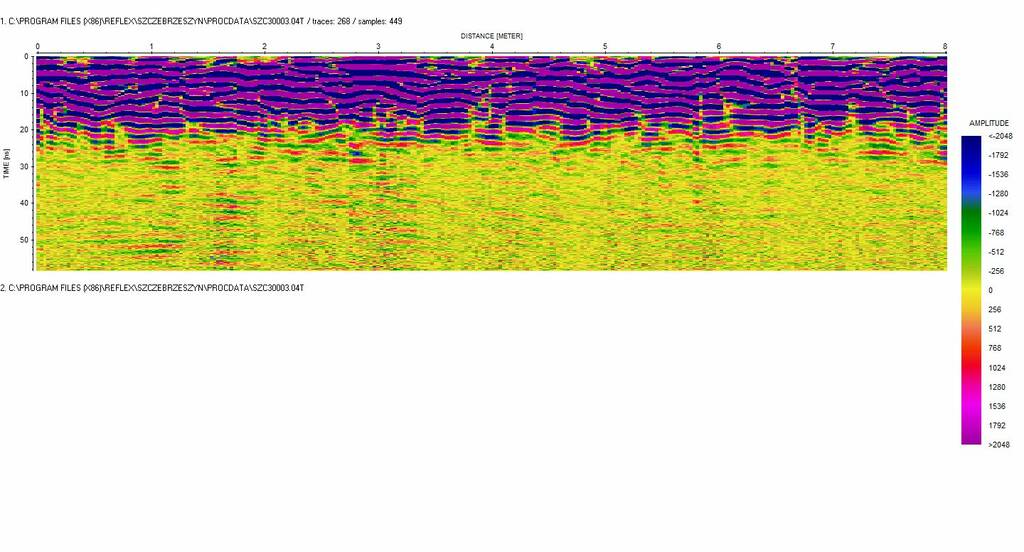
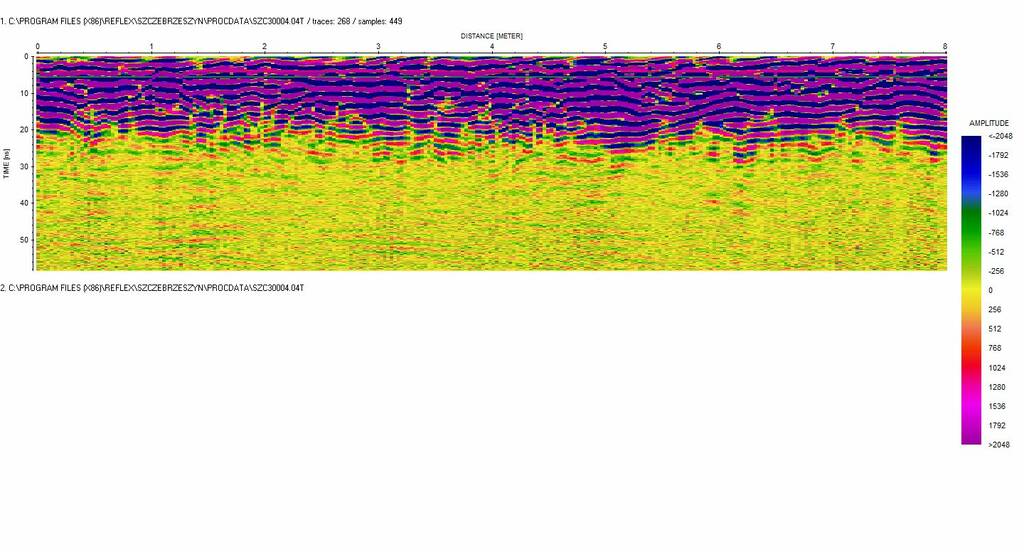
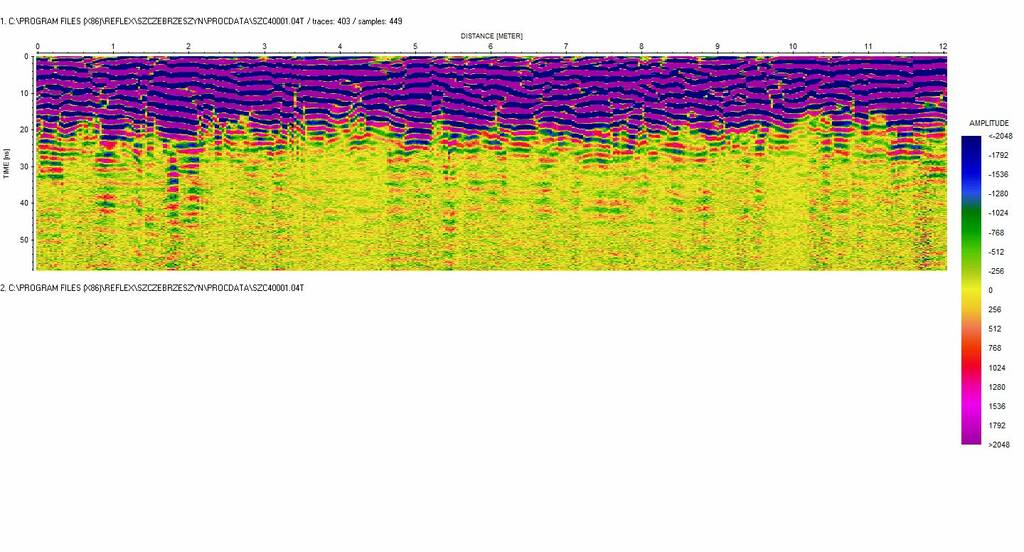
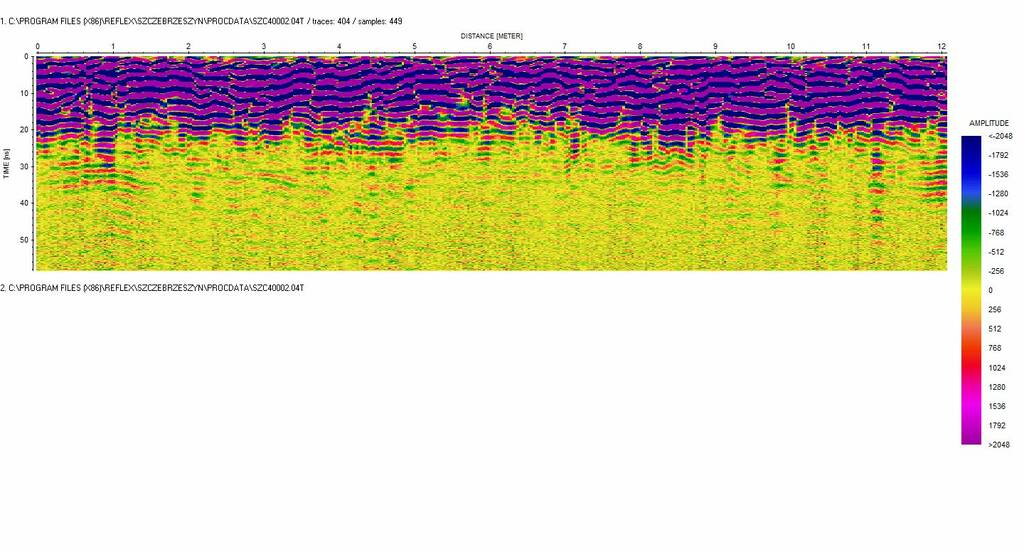
On 20 March 2024, a site inspection was carried out at the Jewish cemetery in Sczebrzeszyn (lubelskie voivodeship) at 30 Cmentarna Street in order to locate the mass graves of Holocaust victims. The area of the mass graves has been partially marked, enabling precise localization of the burial sites (GPS: 50°41’34.48″ N, 22°58’22.901″ E).
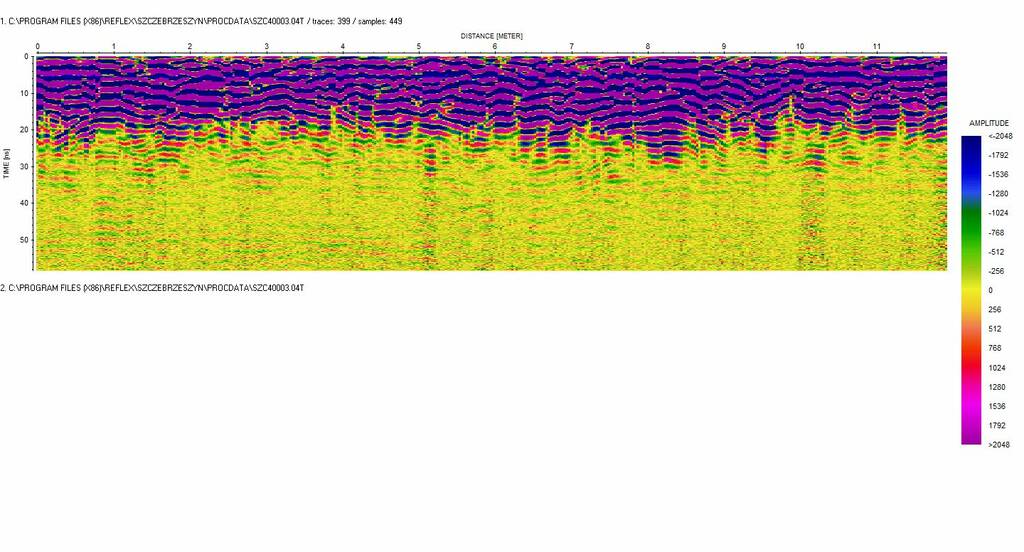
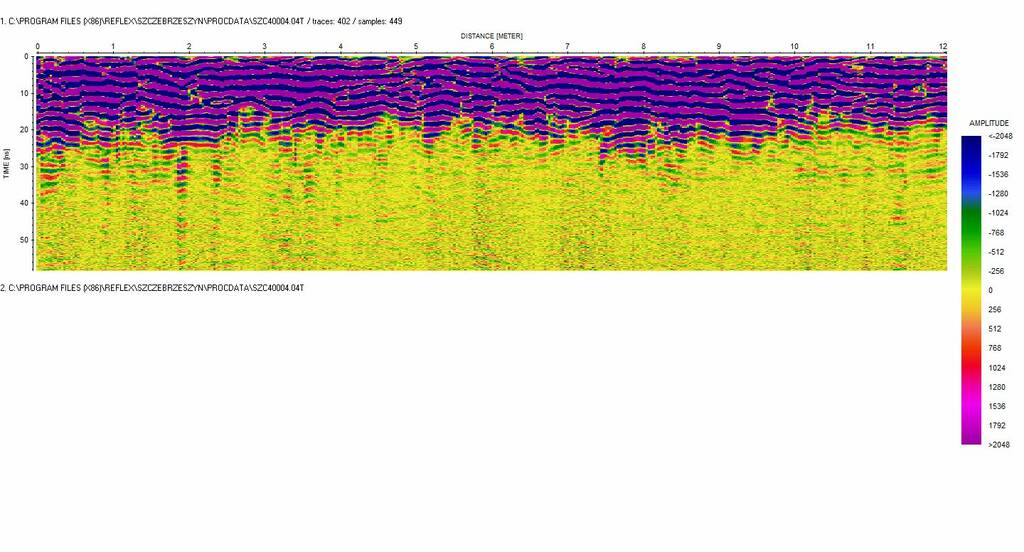
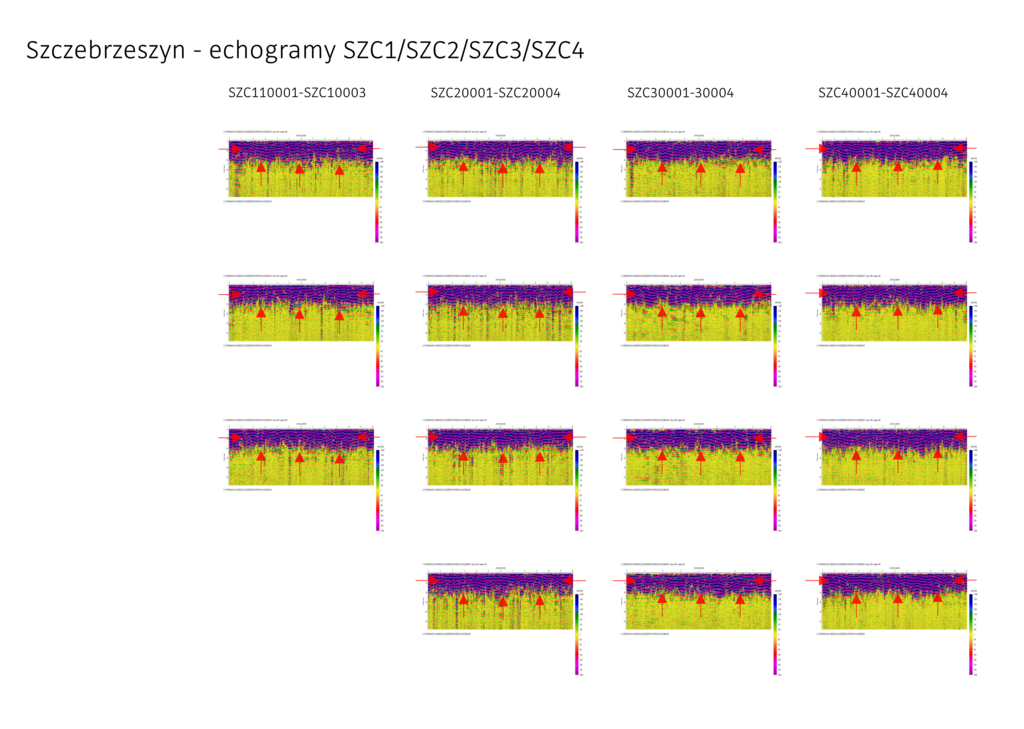
The research was carried out using MALA X3M/RAMA /500 MHZ ground-penetrating radar. Fifteen echograms were obtained: SZC10001–SZC10003, SZC20001–SZC20004, SZC30001–SZC30004, and SZC40001–SZC40004. Soil layer disturbances are listed in the anomaly table. Echograms SZC1/SZC2/SZC3/SZC4 were marked with red arrows at points where anomalies occur.
Aerial photography
As a result of an aerial photography query conducted at the National Archives and Records Administration (NARA) for the Szczebrzeszyn area, lubelskie voivodeship, an archival aerial photograph with the reference number GX12372 SD frame 31 was obtained. The photograph was taken on 25 August 1944 at 11:44 a.m. The image covers the area where the mass graves of Holocaust victims were searched for, within the boundaries of the Jewish cemetery at 30 Cmentarna Street. The cemetery area is very clearly visible due to strong sunlight. The dark areas seen within the cemetery correspond to shadows cast by old trees growing on the northeastern side. Additionally, the photograph shows paths crossing the cemetery from the north, west, south and east sides. In the western part of the cemetery, approximately 50 metres from the cemetery road, clear signs of soil disturbance are visible. Extensive light grey patches are the remains of mass graves of victims. The light colour is the result of sunlight reflecting off quartz particles present in the soil. The shapes of these areas are irregular due to piles of excavated sand that were moved beyond the bounds of the burial sites themselves.
LiDAR (topographic survey)
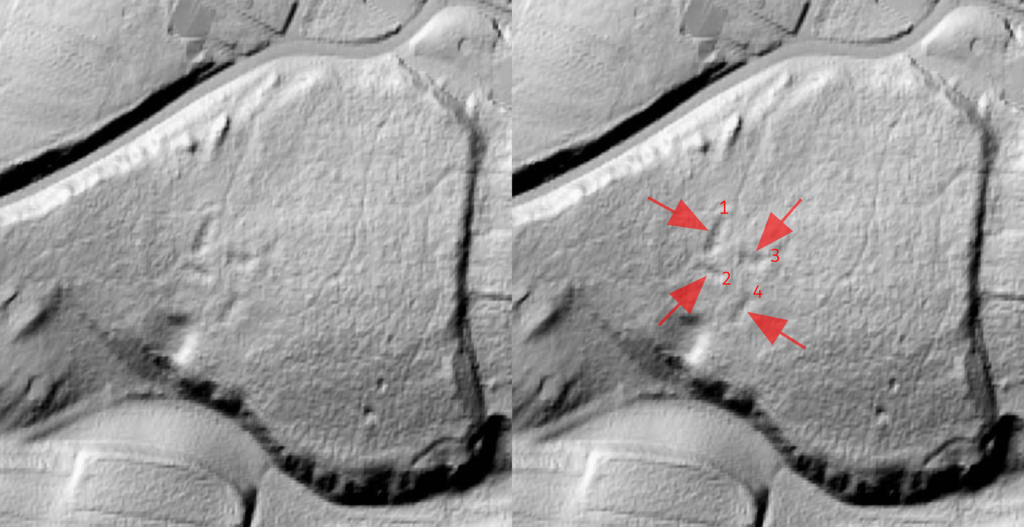
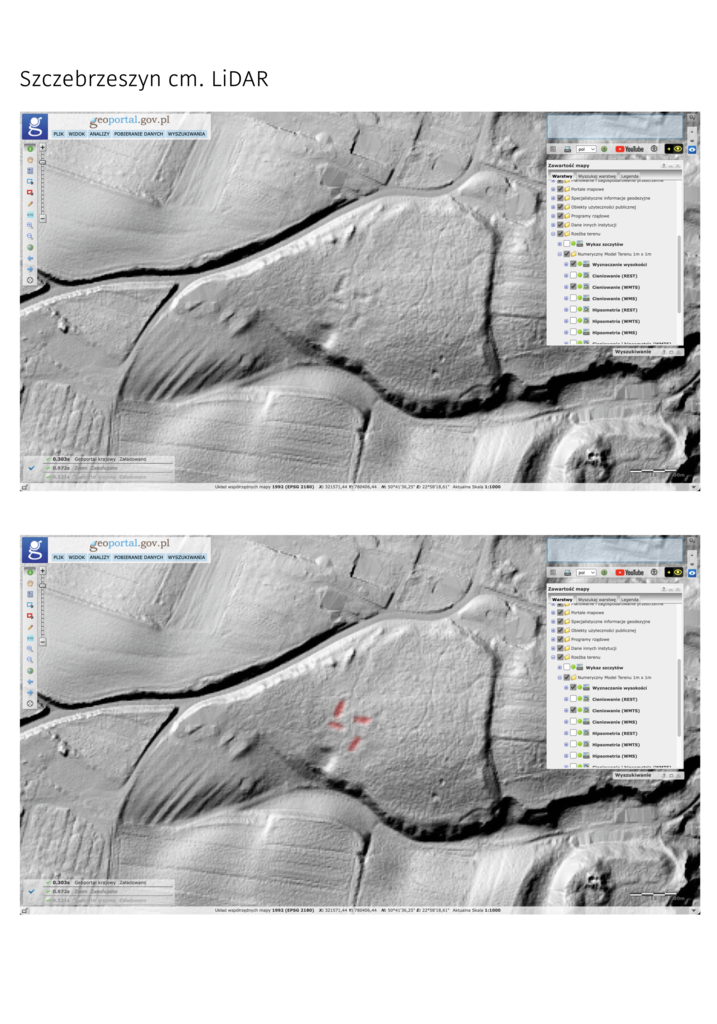
The terrain indicates four locations of mass graves in the western part of the cemetery. All four sites contain depressions measuring approximately 10.0 metres by 2.5 metres (illustration 2). The areas of soil disturbances correspond with the locations of anomalies visible on the archival aerial photograph GX12372 SD, frame 31, dated 25 August 1944 at 11:44.
Download the memo here: link to PDF file.
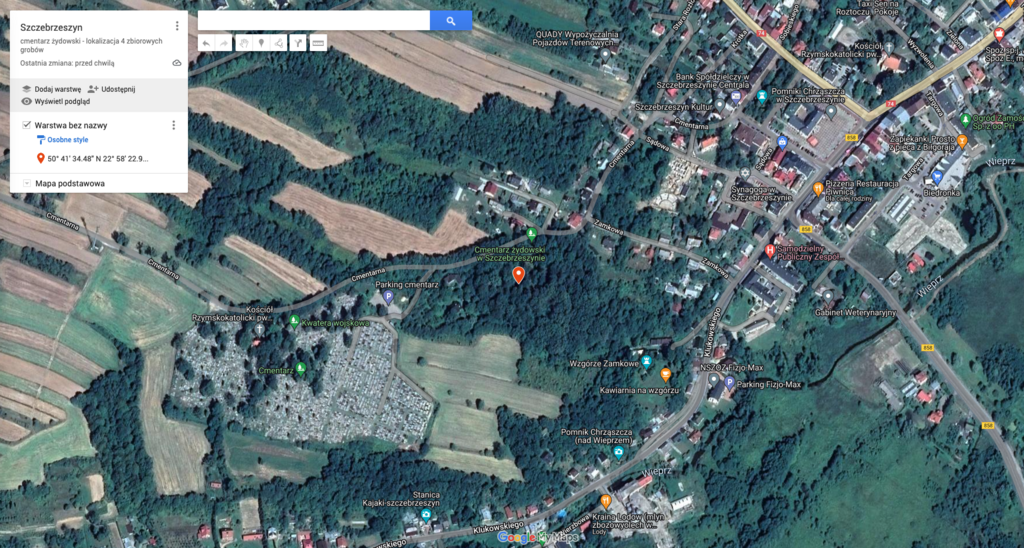 Szczebrzeszyn fotografia satelitarna 1a
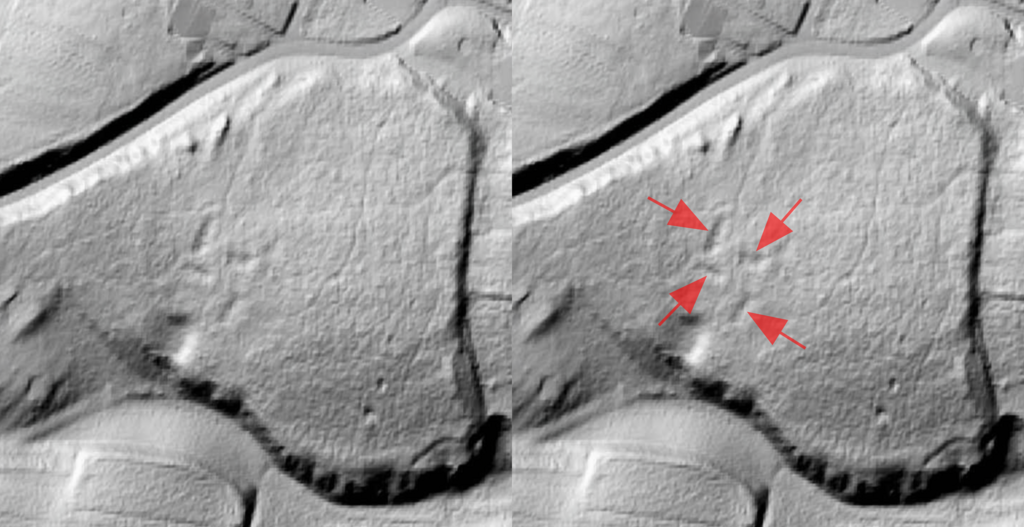 Szczebrzeszyn LiDAR kadr 1
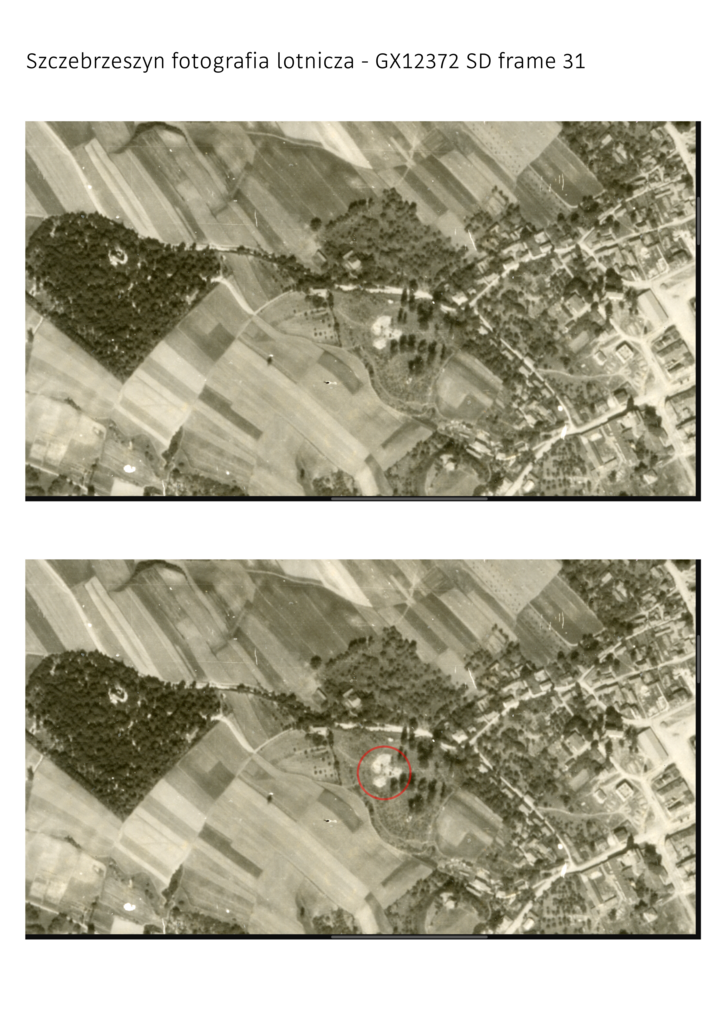 Szczebrzeszyn fotografia lotnicza 1944
 Szczebrzeszyn fotografia lokalizacji 1
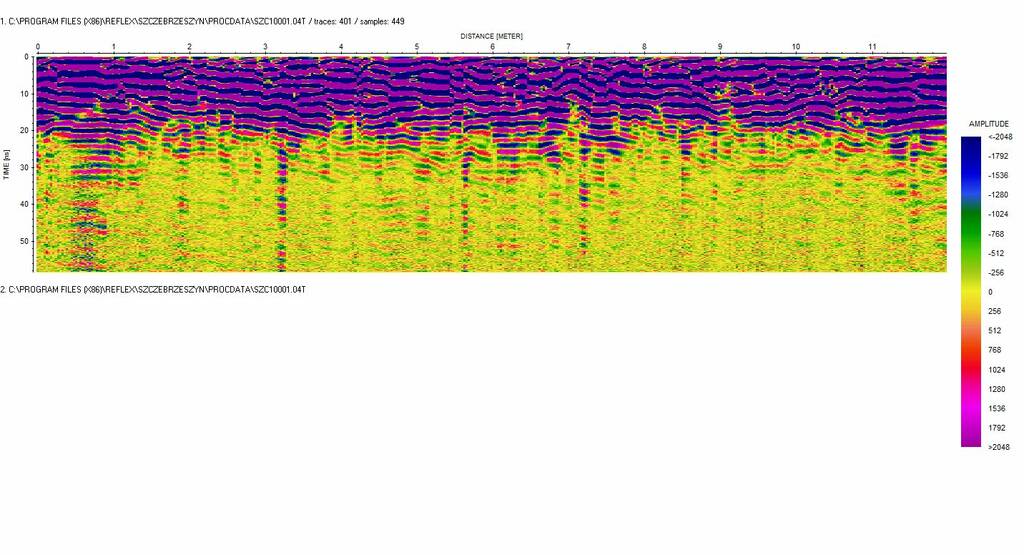 Szczebrzeszyn SZC10001
Sources
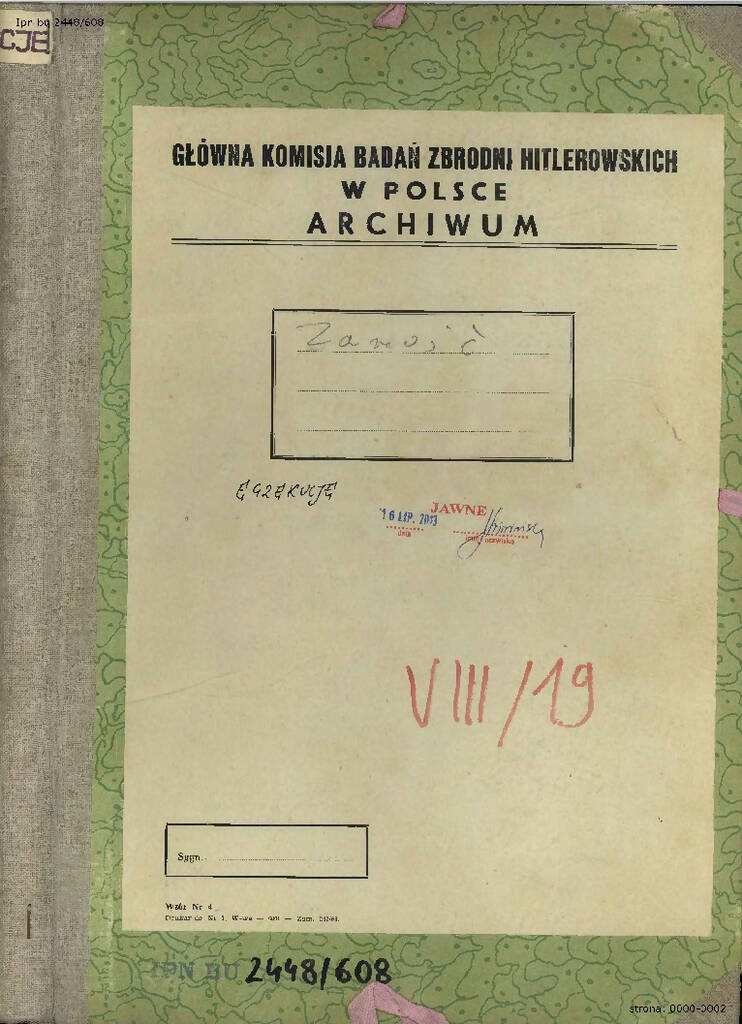 Szczebrzeszyn Ankiety GKBZH w Polsce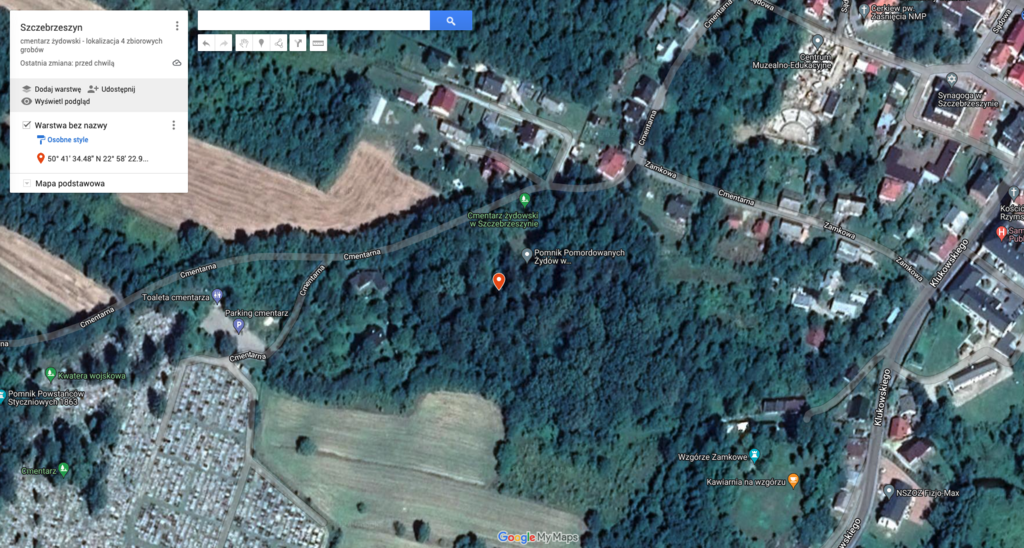
Contact and cooperation
We are still looking for information on the identity of the victims and the location of Jewish graves in Szczebrzeszyn. If you know something more, write to us at the following address: kontakt@zapomniane.org.
Bibliography
IPN Bu 2448/608 from the files of the Chief Commission for the Examination of German Crimes in Poland survey
Klukowski Z., Zamojszczyzna 1918-1943, Warsaw 2008
AŻIH 301/5503, account of Zofia Skorzek
The materials published on this website were developed, digitized, and made available thanks to funding from the Minister of Culture and National Heritage through the Culture Promotion Fund, as well as support from the Embassy of the Federal Republic of Germany in Warsaw, which also enabled the creation of the English-language version of the website.