Lasochów
Borough: Małogoszcz, District: jędrzejowski, Voivodeship: świętokrzyskieType of place
A drainage ditch on private land.Information about the crime
In the spring of 2023, we received an email informing us about an unmarked Jewish grave in Lasochów: “I have information about a crime committed during the German occupation against two young Polish men of Jewish origin.” (May 22, 2023) According to our informant, the two Jews from Węgleszyn were named Abak and were the sons of a local merchant who was well known in the area.
After analysing the testimonies from the Yad Vashem Institute database, we concluded that the two young Jews were most likely Aba Oblęgorski (born in 1922 in Jędrzejów) and Nakhum Oblęgorski (born in 1926 in Węgleszyn) from Węgleszyn. Their father, Lemel, was a merchant and died in 1943 in Skarżysko-Kamienna. Lemel’s daughter, Malka Mania Taub, gave a testimony about the murdered members of her family to Yad Vashem in 1999. Here is what she wrote about the circumstances of her brothers’ deaths:
“Aba Oblegorski, born in Jędrzejów in 1922, fled with his younger brother Nahum, went into hiding, attempted to join the partisans, and bought a weapon. He was murdered by Polish partisans who hated Jews. He died in 1944.
Nakhum Oblengorski, born in 1926 in Węgleszyn. He fled with his brother, went into hiding, joined the partisans, and purchased a weapon. He was murdered together with his brother Aba and another group of partisans by Poles. He died in 1944.”
There was at least one more brother in the family, Shmuel Arie Leib Oblęgorski. His sister wrote about his death: “He was taken to the camp in Lipnica, from where he reportedly escaped into the forests in 1943, but was caught by the Polish police and shot by them. Date unknown.” We know nothing about the fate of their mother, Johewet.
In 2024, with the help of local historians and journalists, we found articles by Eugeniusz Supernat published, among others, in Gazeta Jędrzejowska, in which he describes his Jewish neighbors he remembered. Among them, he mentions Lemel Oblęgorski, the father of the Oblęgorski brothers. “Lemek Oblęgorski also lived in Zakarczmie, but on the eastern side. His daughter Salcia left for the Soviet Union in the spring of 1939 and later went to Palestine. […] Lemek Oblęgorski was considered a wealthy man in Węgleszyn. He had three sons: Abe, Szmul, and Nuchym, and a daughter, Salcia. Abe was killed by a German bullet in Małogoszcz. The youngest, Nuchym, was shot together with Bernard Kaiser in the labor camp in Lipnica. Lipnica. The fate of the rest of the Lemek family is unknown; it is only certain that in August 1942, they did not go to the ghetto in Jędrzejów.” (Supernat E., Żydzi w Węgleszynie i ich zajęcia, Gazeta Jędrzejowska, no date)
“In Węgleszyn, Rabbi Icyk Oblęgorski was appointed to organize a group of young Jews for the labor camp in Lipnica. The labor camp for Jews from Węgleszyn and the surrounding villages in Lipnica, Złotniki borough, was established in early spring 1940. It was located on a sandy wasteland behind a stunted forest, several dozen meters from the Węgleszyn-Mniszek road. It was a huge wooden barrack brought in as prefabricated parts and assembled on site. Bunk beds were used for sleeping, but many boys slept on the floor because there were only about fifty beds or more than a hundred people most of the time. During hot weather, it was hot and stuffy inside, while in the autumn, the wind blew through the gaps and cracks between the boards. The first inhabitants of the camp were men employed in regulating the Lipnica River and draining meadows. They worked barefoot in the water, even in November. Food was delivered to them, but they were constantly hungry. They used every opportunity to interact with Poles in order to buy something to eat.” (Supernat E. Żydzi w Węgleszynie – fala uchodźców, Gazeta Jędrzejowska, May 14, 2002)
In 2025, it turned out that the grave we had been searching for did not contain the bodies of the murdered Oblęgorski brothers. A breakthrough in the case came with access to a publication released in 500 copies in 2022 in Tarnów, edited by Anna Żalińska and Adam Żaliński, titled Ich już tu nie ma… Szkice o historii społeczności żydowskiej w Małogoszczu (They are no longer here… Sketches on the history of the Jewish community in Małogoszcz). The following mention can be found there: “A similar situation reportedly took place in June 1943 in Lasochów, where local residents captured two Jews hiding near the village and brought them to the village head, demanding that the police be called. The commander of the Blue Police station in Małogoszcz arrived at the scene with his entire team and the execution was carried out.” (p. 42)
Present at the scene was certainly Wacław Król, a Blue Police officer from Małogoszcz, who was accused under the August decree, tried, and sentenced by the Voivodeship Court in Kielce in 1953 to 15 years in prison for persecuting Polish citizens of various nationalities, including the murder of an unknown Jew from Małogoszcz in the village of Brzezinki (IPN Ki 128/51). Information about the murder in Lasochów appears in a letter written in 1957 by Król, who had already been convicted, addressed to the Council of State, in which he requested a reduction of his sentence. “I did not commit the killings described in verdict III K 5/53 dated May 16, 1953; I was only present at the scene of the crime committed by other police officers. In June 1943, the residents of the village of Lasochów, Małgoszcz borough, captured two Jews wandering near the village and demanded police intervention through the village head. By order of the station commander, under his command and with my entire staff, I arrived at the site, where a crowd of local people were holding two bloodied Jews in a circle. I was present at the execution, but I did not carry out the order to shoot the victims.” (IPN Ki 128/51) The sentence of May 16, 1953, mentioned by Król, concerns the murder in 1944 in Lasochów of Izaak and Lejba Rachman, who, like the Oblęgorski family, were from Węgleszyn. The investigation files contain testimonies from eyewitnesses to the murder. Interestingly, one of the testimonies recorded for the purposes of this investigation was that of Aber Oblęgorski (son of Icek and Łaja, née Grundman). “At the end of 1946, while I was in Węgleszyn, I met Mr. Mieczysław B., a resident of Gawrony near Węgleszyn, who told me about the murder during the occupation in 1944 of the two Rachman brothers, Izaak and Lejb. I learned the details of this murder in 1950 from him, who heard the story from his brother Stefan B., a resident of the village of Wiśnicz in the borough of Małogoszcz. In 1942, two brothers, Rochman Izak and Lejb, escaped from the Jewish camp in Skarżysko-Kamienna. Until then, they had been living in Węgleszyn. From 1942 to 1944, they hid in the forests and fields in the area of Węgleszyn and Lasochów, Małogoszcz borough. In 1944, I cannot specify the exact date, they were murdered by Władysław B., nicknamed “Leciński,” a well-known bandit and thief from before 1939, currently residing in Lasochów, Małogoszcz borough, who, having encountered them in the Smołasz forest near Lasochów, killed them with a knife and barbarically abused their corpses. B. boasted to Stefan B. that he had killed the last Jews in hiding. It should be noted that the Rochman brothers visited Stefan B. before their murder and asked him for bread. I did not find out where they were buried. The story of this murder should be known to Stanisław B., residing in one of the poor houses in Lasochów. He was a neighbor of K., with whom the Rochman brothers often had to stay.” (October 12, 1951, IPN Ki 128/52)
Stanisław B.: “I knew Rachman Izak and Lejb since before the war, i.e., 1939. I grew up with them and lived, like them, in Lasochów, Małogoszcz borough, Jędrzejów district. […] On a Sunday evening around 4:00 p.m. in June, I can’t remember the year, but it was during the German occupation, I left the church in Kozłów and was walking home to my village. When I arrived in my village, I noticed a large group of people standing near the house of Wincenty K. and Wiktoria L. […] I asked Józef Z. and Windenty D., who told me that the Blue Police officers from Oksa were chasing the Jews Rachman Izak and Lejb, and that they were to be pursued from Lasochów by the peasants Władysław B. and P., who at that time was a gamekeeper in Lasochów. […] The police officers and the peasants chased them from Węgleszyn to Lasochów and then through Lasochów, and it was in Lasochów that they were killed by the Blue Police officers, though I do not know their names. The murdered brothers, Izak and Lejb Rochman, were killed in the meadow of Wiktoria L. There were many people at the scene. I went there too; among those I knew were Wincenty B., Józef Z., Stanisław N., Helena B., Zofia B., and Piotr K. Upon arriving where the bodies lay, I saw two men whom I recognized as Rachman Izaak and Lejb. The police were no longer there, only local residents, including Władysław B., who was holding the clothes of the murdered Jews, which he then took to his home. […] The murdered Rochman brothers, Izak and Lejb, lay face down; they had bullet holes in their backs, and one had a cut above the eye, but I couldn’t tell which one it was, Izaak or Lejb. They were stripped down to their underwear by Władysław B. […] The bodies of the murdered lie next to the place where they were killed in the common pastures; I can point out the exact location. […] Władysław B. and P., as I heard from the above-mentioned witnesses, were said to have already been killing the Rochmans in the forest while chasing them, using blunt weapons, and B. was reportedly using a small axe to hack them.” (November 17, 1951, IPK Ki 128/52)
Ludwik K., who served as the village head of Lasochów, during the war, ordered the bodies of the Rachman brothers to be buried “in the common pasture, at the place where they were killed”. (October 3, 1951, IPN Ki 128/52)
According to Stefan L., “It was the next day; the Jews were buried in their shirts and long underwear. The policeman gave their clothes to Władysław B., which I saw scattered around B.’s yard for a long time.” (10 October 1951, IPN Ki 128/52)
In his testimony, Wincenty B. provides several details about the murdered brothers: “I knew Rachman Izaak and Lejba since childhood, since before the war. I grew up with them; they were my neighbors, and they were known to the whole community because they were engaged in trading pens and other small items. They lived in Lasochów, Małogoszcz borough, until the occupation, that is until the Germans invaded poland [original spelling], and then they moved to Węgleszyn. […] After a while, I saw a large group of people coming out of the forest in the direction where the aforementioned individuals had fled, and at that moment, children came running and began shouting: They are leading Izaak and Lejb! I immediately understood that it was Rachmans. […] They were badly beaten, as I could see blood on their heads, and they were extremely exhausted. I couldn’t and still can’t look at a person who is bleeding, so I went home and looked through the window. Władysław B. and his son, together with P., led the Rochmans up to my house […] Izak and Lejb sat down on a fallen tree beside my house and sat there, hunched over. […] When the police arrived, they took the Jews away and led them to the communal pasture behind the rye field, and after a few minutes, two shots were heard.” (November 18, 1951, IPN Ki 128/52)
Shocking testimonies were given by two witnesses, Felicja B. and Zofia B.
Zofia B.: “[…] When I arrived, I saw two Jews sitting with their backs to the village. They were crying heavily and were badly beaten; there was a lot of blood on their faces, and I recognized that they were Izak and Lejba Rochman.” (18 November 1951, IPN Ki 128/52)
Felicja B. “[…] When I approached the group of those people, among them I saw two Jews sitting on a tree next to the house of Wincenty K. I didn’t know the Jews personally, but according to what people said, they were Jews from Węgleszyn who were sitting on that tree with their backs to the village. One of them begged the people to let them go, but no one spoke up out of fear. Later, both asked for water, which I gave them. Immediately after the captives drank the water, the policemen arrived.” (18 November 1951, IPN Ki 128/52)
A report by the Voivodeship Headquarters of the Citizens’ Militia in Kielce from 1952 states that Jews captured by the local population of Lasochów, the Rachman brothers, i.e. Izaak and Lejba, were shot behind a rye field about 150 meters from the buildings of Leon K., a resident of Lasochów. (IPN Ki 128/52)
The indictment against Wacław Król issued by the Voivodeship Court in Kielce contains the following description of the events in Lasochów:
“On a Sunday afternoon in June 1944, within the territory of the village of Lasochów, Małogoszcz borough, Jędrzejów district, local residents captured two Jewish citizens, brothers Izak and Lejba Rochman, who had been hiding from the German authorities. Shortly after bringing the captives to the village of Lasochów, while they were sitting on tree stumps, tired and beaten, officers from the Oksa police station arrived, among them the late Józef S., Wacław K., and Józef W. On S.’s orders, the captives gave him their money, after which they were instructed to go into the field. Behind the Rachman brothers, who were walking in the direction indicated to them, holding each other’s arms, were the police officers Wacław K. and Józef W. At a signal given to them by S., W. and S., from a distance of about three steps, fired several shots from their rifles at the Rachmans from, after which the victims fell to the ground. On the orders of the police officers, the bodies of the Rachman brothers were buried next to the place where they died.”
The archives of the Zapomniane Foundation contain the following account of the murder in Lasochów, submitted by an anonymous person:
“Two residents of Lasochów contributed to the murder of two young Jewish boys who lived in Węgleszyn and were fleeing from being taken to the ghetto and passed through Lasochów. Lasochów. Two thoughtless boys, probably peers of the fleeing Jewish boys, set off in pursuit of them. They caught up with them near the peasant forests, west of Lasochów, and took them to the center of the village, beating them with whatever they could find along the way. One boy was in such a terrible condition that, according to reports, he had been beaten so severely that one eyeball was hanging on his cheek. […] They left the boys at the mercy of fate. One of the perpetrators mounted a horse and rode to Małogoszcz to notify the Blue Police station. The ride on horseback must have taken half an hour each way, and those boys were sitting there. No one even gave them water to drink. They sat on those branches. After an hour, the boy returned, reporting that they didn’t want to come from Małogoszcz, that this area belonged to Włoszczowa, so he must go to Włoszczowa. Włoszczowa is farther than Małogoszcz, so the bareback ride there took about an hour or more one way. A Blue Police officer arrived immediately after him, armed with a rifle, of course. He ordered the Jewish boys to strip down to their long johns. The two perpetrators took all of the poor boys’ clothes, dividing the spoils between themselves; they got the jackboots. Then the Blue Police officer led them to the neighboring plot of land, which was then a meadow but is now overgrown with forest. They dug a hole, and bang bang, shot the boys. They were then covered with earth.”
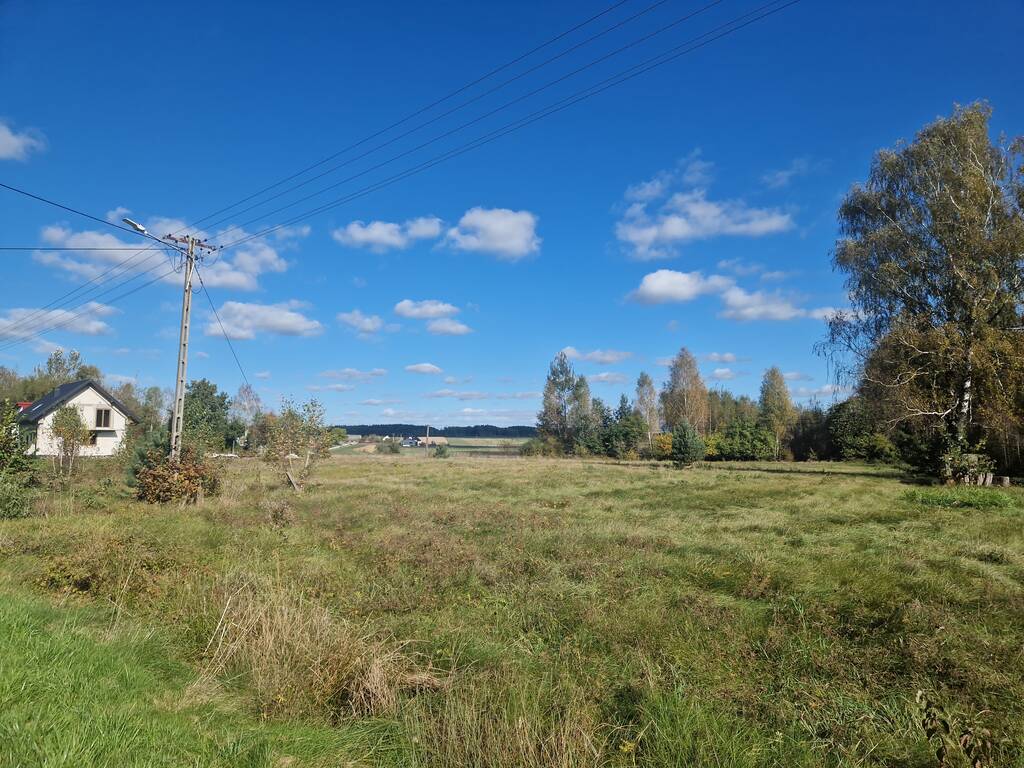 Lasochów fotografia lokalizacji
Sources
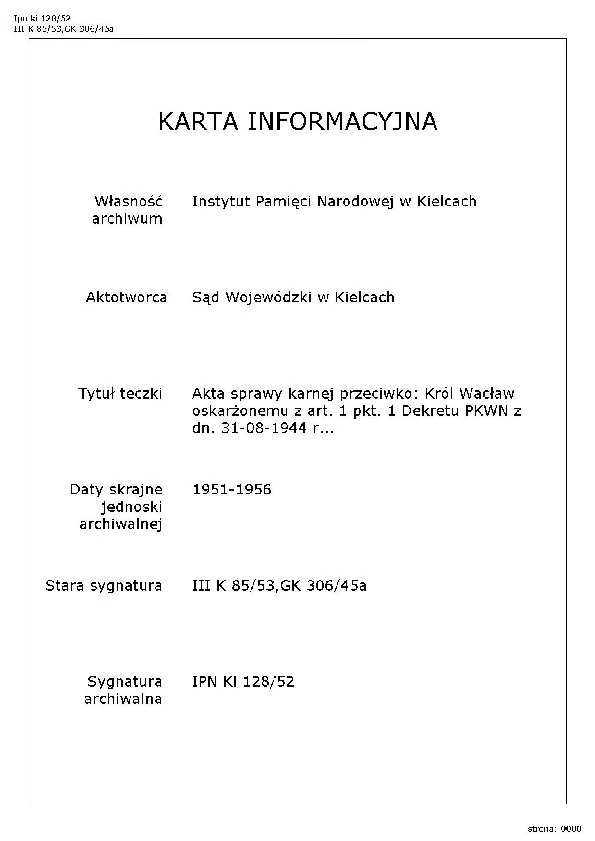 Lasochów Akta sprawy karnej przeciwko_ Wacław Król, imię ojca_ Antoni, ur. 25-09-1906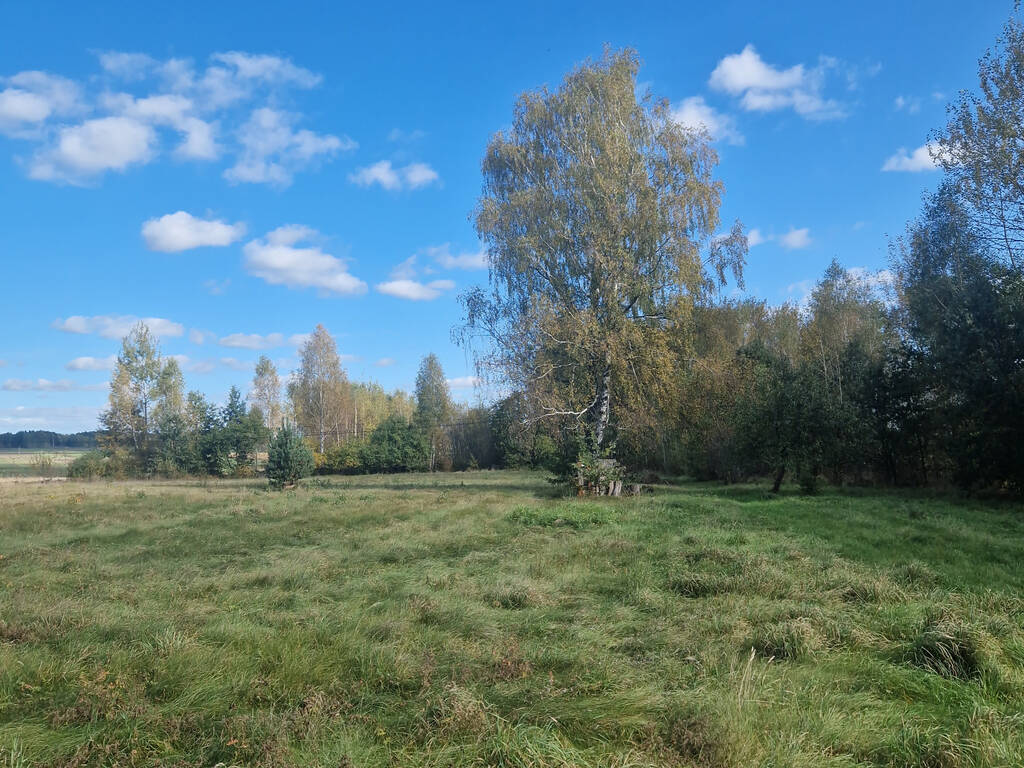
Contact and cooperation
We are still looking for information on the identity of the victims and the location of Jewish graves in Lasochów. If you know something more, write to us at the following address: kontakt@zapomniane.org.
Bibliography
IPN Ki 128/51 Criminal case files against: Wacław Król, father’s name: Antoni, born on September 25, 1906, charged under Article 1(1), Articles 2 and 3 of the PKWN Decree of August 31, 1944 on the punishment of fascist and Nazi criminals guilty of murder and abuse of civilians and prisoners of war, and of traitors to the Polish nation, i.e. that in 1942 in Brzezinki, as a member of the Blue Police, he shot a Polish citizen of Jewish nationality; […]
IPN Ki 128/51 Criminal case files against: Wacław Król, father’s name: Antoni, born on September 25, 1906, charged under Article 1(1), Articles 2 and 3 of the PKWN Decree of August 31, 1944 on the punishment of fascist and Nazi criminals guilty of murder and abuse of civilians and prisoners of war, and of traitors to the Polish nation, i.e. that in that in June 1944 in Lasochów, Małogoszcz borough, as an officer of the Blue Police, he took part in the murder of Polish citizens of Jewish nationality, Izaak and Lejba Rachman.
Ich już tu nie ma… Szkice o historii społeczności żydowskiej w Małogoszczu, edited by Żalińska A. and Żaliński A. Tarnów 2022.
Supernat E., Żydzi w Węgleszynie – fala uchodźców, Gazeta Jędrzejowska, May 14, 2022
Supernat E., Żydzi w Węgleszynie – fala uchodźców, Gazeta Jędrzejowska, no date
Duda M., Z Okszą Imć Pana Mikołaja przez dzieje, part 2
The materials published on this website were developed, digitized, and made available thanks to funding from the Minister of Culture and National Heritage through the Culture Promotion Fund, as well as support from the Embassy of the Federal Republic of Germany in Warsaw, which also enabled the creation of the English-language version of the website.