Radzymin
Borough of Radzymin, Wołomin District, Mazowieckie VoivodshipType of place
The Jewish cemetery in Radzymin.Information about the crime
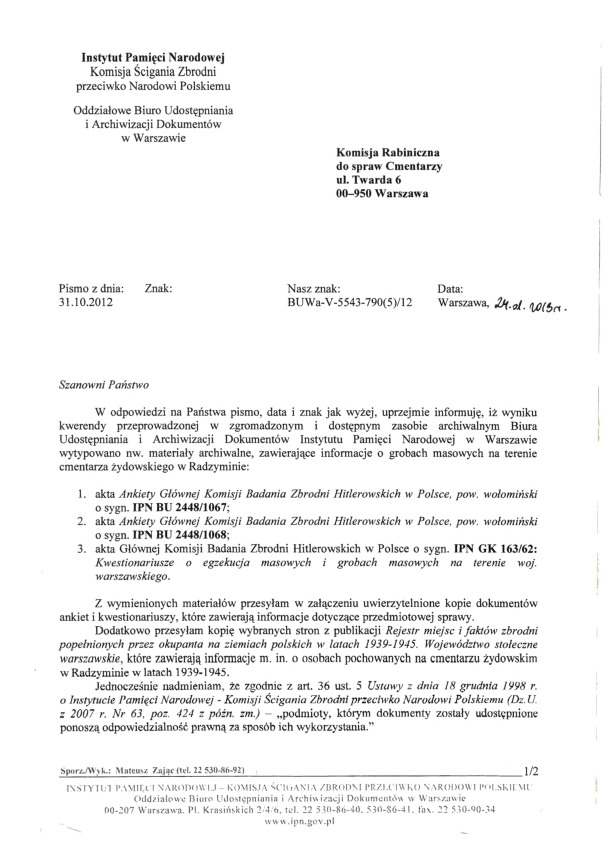
The ghetto in Radzymin operated from September 1940 till October 1942. Approx. 2500 people altogether were imprisoned there. According to the Questionnaire of the camps, approx. 700 people lost their lives during that time and their remains were buried on the Jewish cemetery in Radzymin (IPN GK 163/62). The same cemetery was the place of burial of the Holocaust victims after the liquidation of the ghetto in Radzymin and the deportation of the remaining Jews to Treblinka. According to the Register of crimes and killing sites, the Jewish cemetery in Radzymin was the location of the following events:
- In the autumn or spring of 1940 the military policemen stopped and murdered two Jewish boys. Their bodies were buried on the Jewish cemetery. An eyewitness’ account: “The older boy tried to escape but the younger one grabbed his trousers. At this point a military policeman approached, pulled away the younger boy and shot him in the head. The older one pulled out and ran to the other side of the street where the policeman’s bullet reached him.” (IPN BU 2448/1068)
- In the spring of 1942 the military policemen from the local police station shot 4 or 5 Jewish women on the Jewish cemetery. Bodies of the victims were buried at the place of execution.
- In the spring of 1942 or 1943 a military policeman shot a Jewish man called Maje on the Jewish cemetery. There is no information about the body.
- In the summer of 1942 on the Jewish cemetery military policemen from the local police station shot a Jewish family: a barrister, his wife and their 7-year-old daughter. There is no information about the place of burial.
- In the summer of 1942 military policemen shot 8 Jews on the Jewish cemetery. There is no information about the bodies.
- In June 1942 military police shot 19 Jews (10 men, 5 women and 4 children) with automatic guns on the Jewish cemetery in Radzymin. A witness testified: “In June 1942 a cart full of Jews stopped near my house. [Among the Jews] there were women and children. I watched the event hidden behind the trees in my garden which was located near the Jewish cemetery. The Jews were escorted by military policemen on horseback. I recognised Hoppe, Radke and Cymbryk. Beating them with butts of their rifles they pushed the Jews off the cart and walked them to the cemetery. I didn’t see the execution itself because I hid in my house. After a while, however, I heard automatic gunshots. After an hour I went to the cemetery. There was an old Jewish caretaker who was crying. Before leaving, Hoppe ordered him to bury the bodies before the evening – otherwise he would be shot as well.” (IPN BU 2448/1068)
- In October 1942 a military policeman from the local police station shot to death a Jew called Rybak (first name unknown) on the Jewish cemetery His body was buried at the crime scene.
- In the autumn of 1942 the military policemen shot a Jewish woman, approx. 30 years old, on the Jewish cemetery. There is no information about the place of burial.
- In the autumn of 1942 the military policemen shot approx. 20 people (including women and 4 or 5 children) on the Jewish cemetery. There is no information about the place of burial.
- In the winter of 1942 the police officers and the military policemen shot to death 4 Jews on the Jewish cemetery. There is no information about the place of burial.
- In January 1943 the military policemen shot 2 Jews who escaped from the ghetto in Warsaw. It was a father and his 7-year-old son. Their bodies were buried on the Jewish cemetery in Radzymin. A witness testified: “In January 1943 the military policemen from Radzymin, Hoppe and Radke, were walking past my house laughing loudly and joking. They were escorting a man and his 7-year-old son. Before they reached the cemetery, the boy tried to run – Hoppe shot him and a moment later he shot the father as well. I don’t know the names of the victims.” (IPN BU 2448/1068)
- In August 1943 a German soldier shot to death a Jewish child on the Jewish cemetery. An eyewitness testified: “[…] Also in the same year I saw in Radzymin a German soldier from Wehrmacht, armed with a rifle, chasing a Jewish boy. He escorted him to the Jewish cemetery where he shot him. I saw it with my own eyes because as a young girl, out of curiosity, I followed them quietly and watched. I don’t know the name of the boy or that of his killer.” (IPN BU 2448/1067)
- In the autumn of 1943 Nazis shot to death 14 Jews (men, women and children 4-5 years old.) Their bodies were buried on the Jewish cemetery.
- In the autumn of 1943 a military policeman from the local police station shot to death a 5 or 6-year-old Jewish girl. There is no information about her body.
On 19 May 2015 Leon N., a resident of Radzymin born in 1930, told us about one of the murders committed on the Jewish cemetery that he witnessed: “There were two killers [in Radzymin]: military policemen Hoppe and Radke. They had their headquarters where the gardening school is right now. They were leading a 17 or 18-year-old Jew from there. We used to ride bicycles here. I was 13 and I knew why they were escorting him because it was well known that they were persecuting Jews. I told my friend (he died by now): ‘Look, Jurek, they are probably leading him to be shot. Let’s hide. Be quiet because they will shoot us too.’ They were escorting him, he was a pretty boy. He entered [the cemetery.] The grave had already been prepared, dug by Mr Paciorek. He [the military policeman] shot him and he fell. When he fell, Mr Paciorek arrived, approached him, turned him around, took off his clothes and shoes, took a spade and buried him. Then the Germans left.” (Radzymin, 19 May 2015.)
More information can be found in the study “History of the Jewish Cemetery in Radzymin”.
IDENTIFICATION OF THE GRAVE BASED ON NON INVASIVE RESEARCH
In order to search for mass graves of Holocaust victims at the Jewish cemetery in Radzymin (GPS: N 52° 24′ 40.687” E 21° 11′ 13.865”), on Mickiewicza Street, an archival aerial photograph, reference number GX 12387, taken on September 6, 1944, was acquired. The aerial photograph covers the entire cemetery plot, indicating the historical course of the borders (yellow line). The northern border runs along the edge of Adama Mickiewicza Street, with a slight arc of the street visible on the western side, corresponding to the shape of the cemetery in this area. The eastern border runs within the fences of private properties currently located on Zielona Street (blue line). The southern border, like the eastern border, is within the boundaries of properties located on Zielona Street. The western boundary does not conflict with the private property plots, which currently have addresses assigned to Adama Mickiewicza Street. Zielona Street, serving as the access road to the private properties, is located within the original cemetery boundary.
The cemetery area contains numerous ground disturbances, characterized by a light shade of gray. The soil, containing sand (quartz), reflects sunlight, creating a contrast that allows for the identification of areas disturbed by human activity. Traffic routes are clearly visible within the cemetery. In the northwestern part, a west-east path is visible, running along the cemetery boundary. This path contains spot disturbances that may be related to the burial grounds of Holocaust victims. Another clearly visible alley is located in the southern part. This alley, like the path at the northern boundary, runs west-east and also contains ground disturbances that may be related to the location of burial grounds. This alley leads to the Ohel (tomb), the ruins of which are visible in the southwest corner of the cemetery plot. To the south of the main alley, remnants of what is likely the cemetery’s original burial infrastructure are visible. Slightly diagonal lines, forming a repeating pattern, are visible, reminiscent of the cemetery plot, complete with paths and tombstones. In the eastern part of the cemetery, an irregular path serving as a shortcut leading north. The cemetery also contains numerous ground disturbances related to tree removal. The traces of the removal of plants are characterized by a circular shape, light gray in color, with a dark gray spot in the center of the circle. Traces of tree removal are present throughout most of the cemetery, complicating the interpretation of the photographs in terms of the location of mass graves of Holocaust victims. The highest density of ground disturbances is located in the central part of the cemetery, and the eastern part of the cemetery also contains further ground disturbances that may be related to the location of mass graves. A LiDAR (Literature-Definition Arrangement) survey indicates numerous ground disturbances within the cemetery. In the western section, ruts left by cars driving through the historic cemetery grounds are visible. In the eastern section, point depressions are visible. In the southern area (near the main alley), larger depressions are visible, which may be related to the original alley’s course, but also to potential burial sites of Holocaust victims. The northern boundary of the cemetery contains point depressions and traces of an informal path running along Adama Mickiewicza Street.
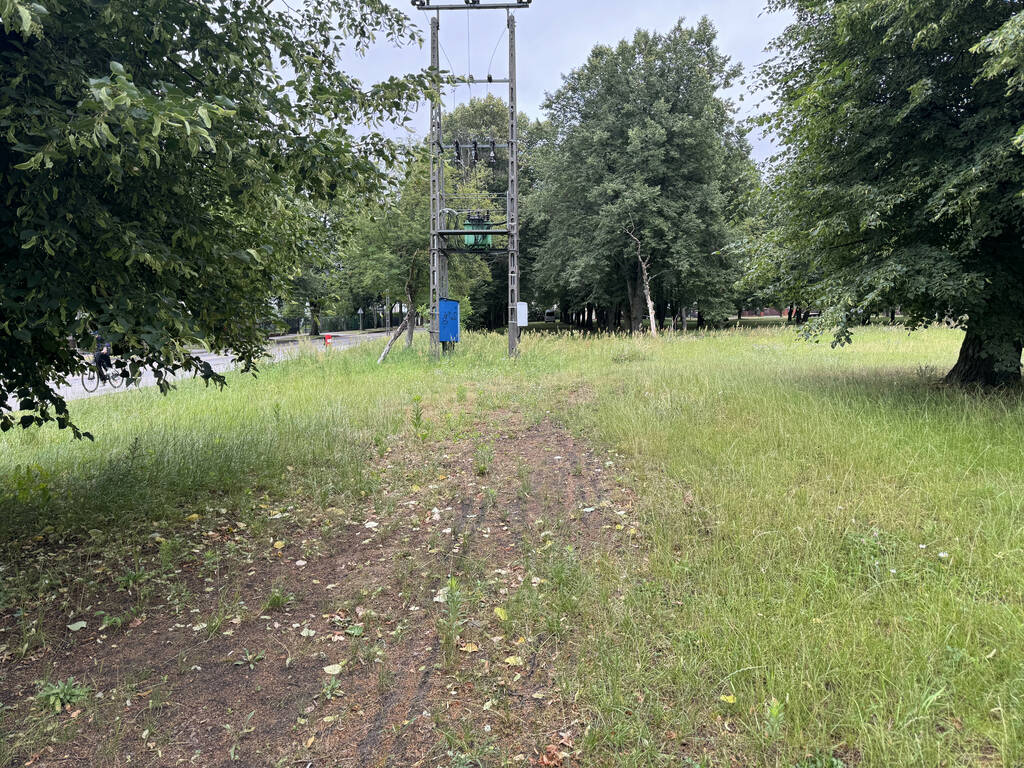
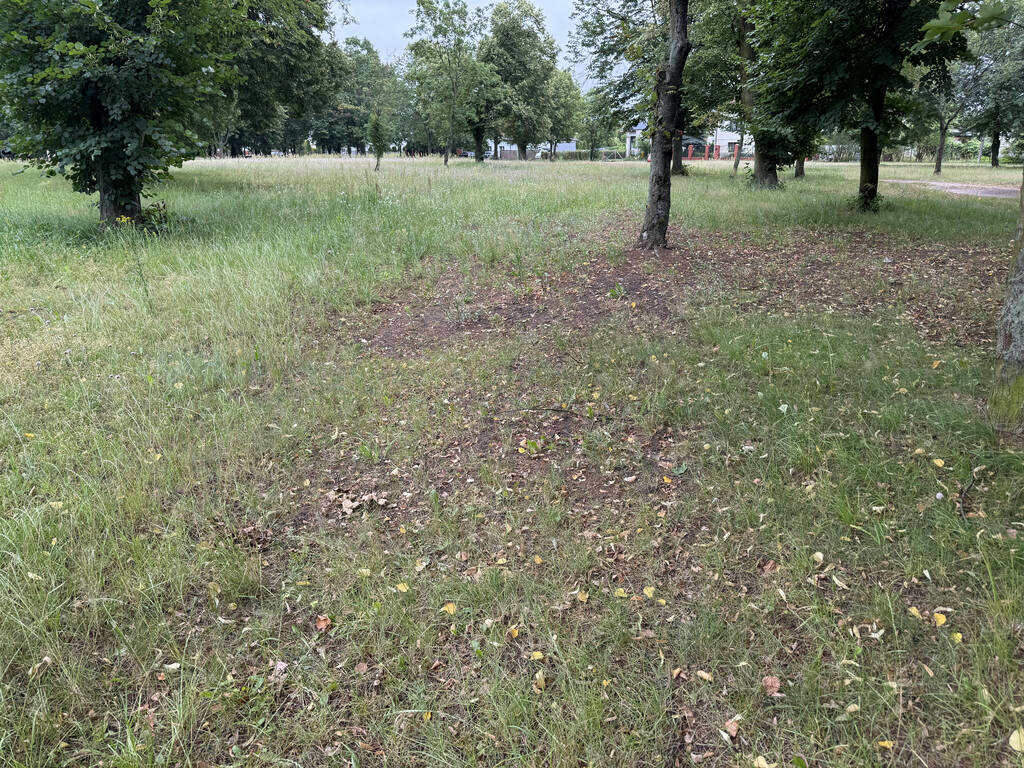
On July 11, 2025, a survey of the cemetery grounds was conducted to identify potential locations for mass graves of Holocaust victims. Currently, the cemetery is a green area with mature linden trees. The trees occupy the eastern half of the cemetery plot, a portion of the western side, and a row of trees in the northwestern section of the cemetery. The central area of the cemetery is free of older plantings, but there are younger trees planted later. The lack of older vegetation in the central part may be related to the location of mass graves. Post-war planting plans may have avoided areas that were remembered as burial grounds at the time.
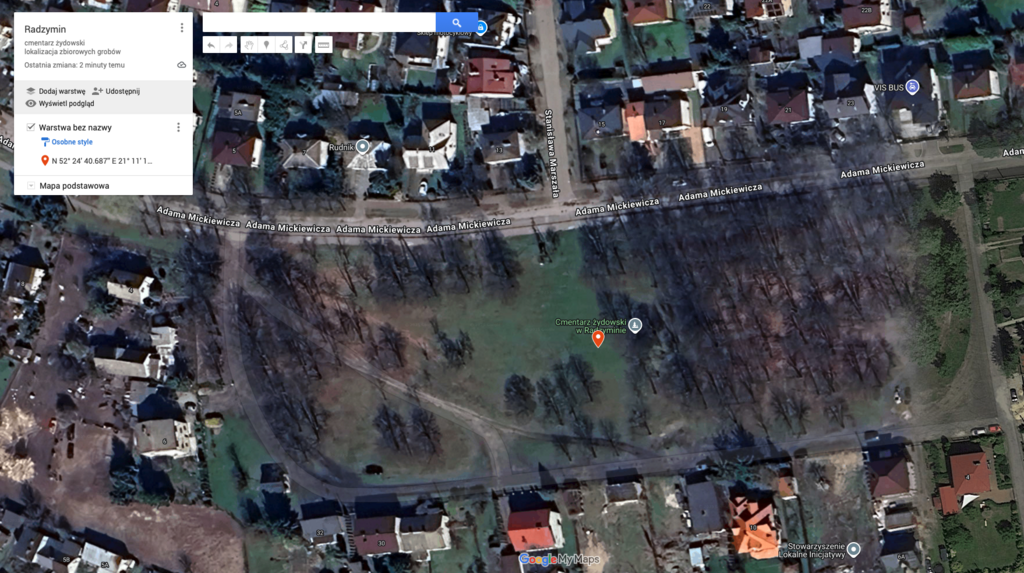 Radzymin fotografia satelitarna
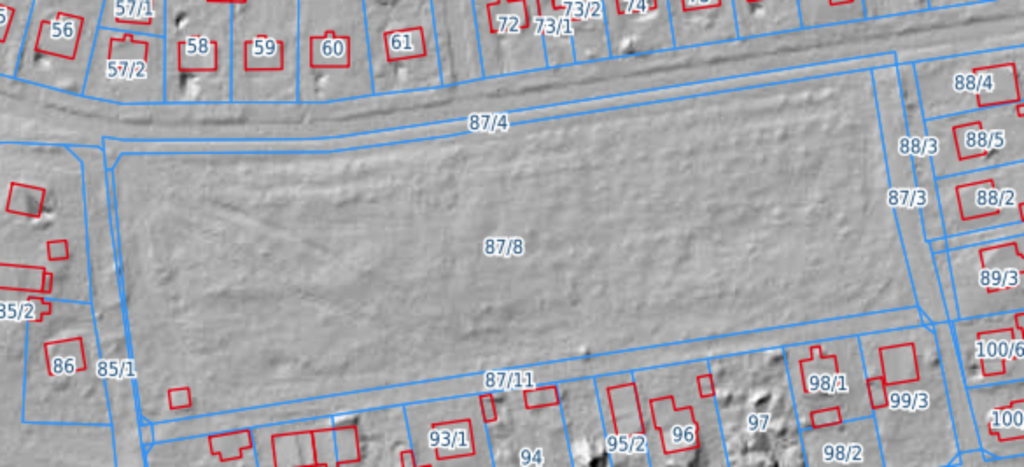 Radzymin LiDAR
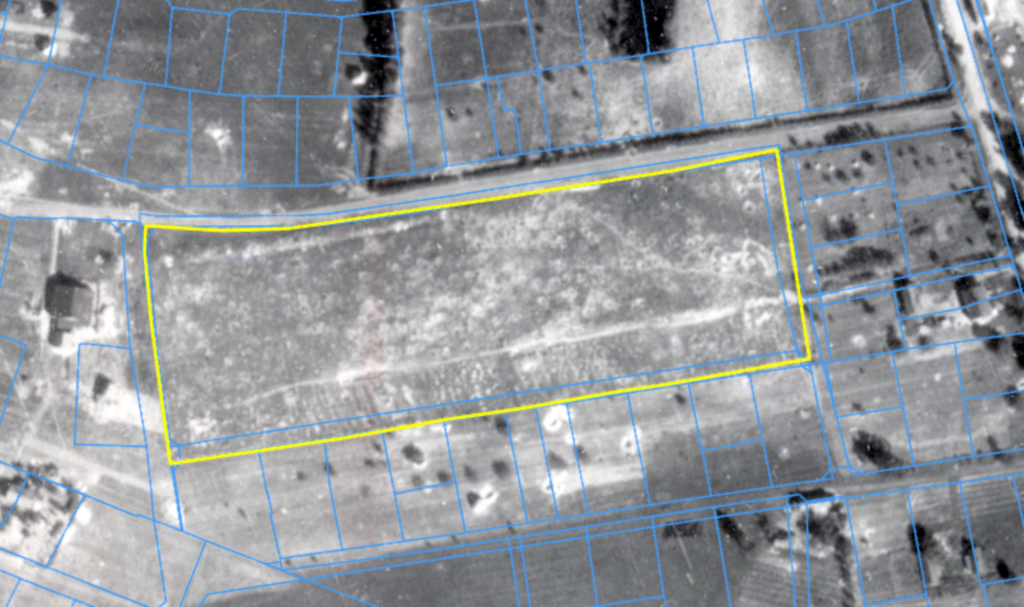 Radzymin fotografia lotnicza
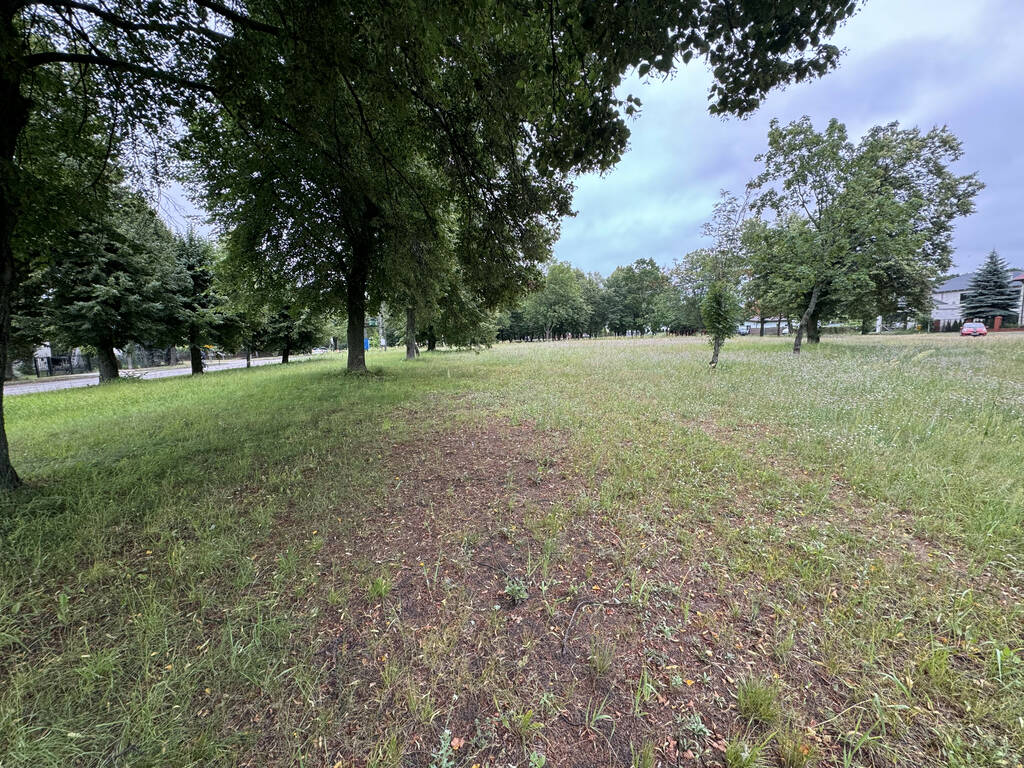 Radzymin fot 1
Sources
 Rejestr Miejsc I Faktów Zbrodni Popełnionych przez Okupanta Hitlerowskiego na Ziemiach Polskich w latach 1939-1945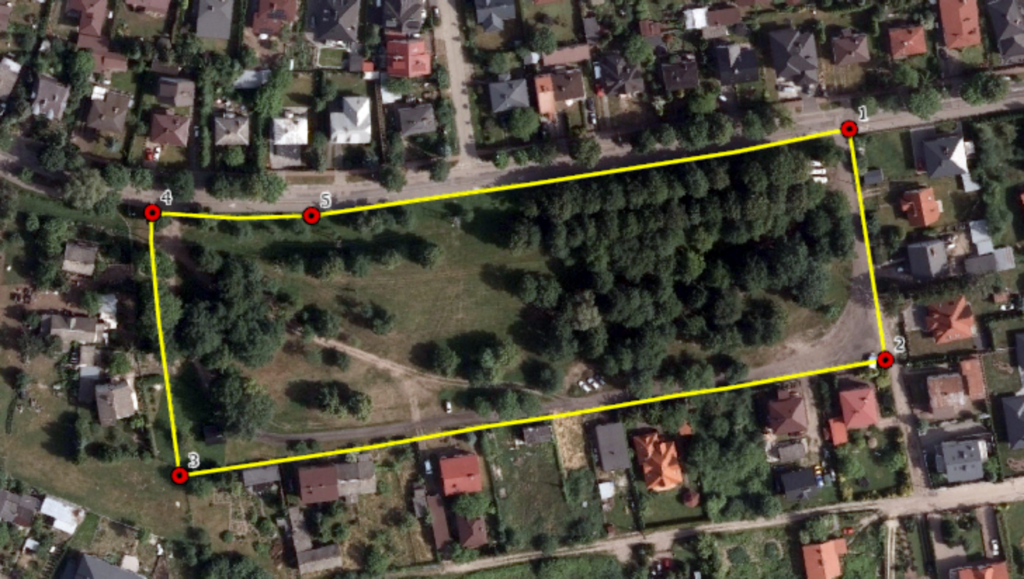
Contact and cooperation
We are still looking for information on the identity of the victims and the location of Jewish graves in Radzymin. If you know something more, write to us at the following address: fundacjazapomniane@gmail.com.
Bibliography
Recording of the Zapomniane Foundation (audio file), name: Leon [eyewitness], b. 1930, place of residence: Radzymin, subject and keywords: Jewish graves in Radzymin, interviewed by Agnieszka Nieradko, Radzymin, 19 May 2015.
IPN BU 2448/1067 from the files of the group of the Chief Commission for the Examination of German Crimes in Poland, Wołomiński district.
IPN BU 2448/1068 from the files of the group of the Chief Commission for the Examination of German Crimes in Poland Wołomiński district.
IPN GK 163/62, Questionnaire. Executions. Graves. Warszawskie province, volume III, Questionnaires about mass executions and mass graves in the warszawskie province.
The register of sites and crimes committed by the Germans in Poland between 1939 and 1945. Warszawskie capital province, Warszawa 1988, p. 250 – 252.