Zrąb
Borough: Skierbieszów, District: zamojski, Voivodeship: lubelskieType of place
The edge of the cultivated field, on the top of the ravine.Information about the crime
In the village of Zrąb, on the road from Zamość to Skierbieszów, there is a house on the left side of the road. It was built before the war by a Polish man named W. and a Jew named Mendel. The Jewish family consisted of three people: a father, mother and daughter. They were the only Jewish family in Zrąb. Probably in 1942, a German military policeman from Udrycze shot the Jewish family in their home. He ordered young W. to bury the bodies, which he did at the far end of the field, about 200 meters from the house. We managed to establish the names of the parents and daughter. They were Mendel, Tajka and Niura.
In 2022, we spoke with a former resident of Zrąb who remembered the murder of the Jewish family: “Sir, there lived a man named W., and the Jew was called Mendel. They built this house together, W. and Mendel. The Jews occupied one wing of the house and had a shop there. Before the war, there were misunderstandings and competition. So across from the Jewish shop, the Poles opened their own shop. My uncle worked there as a shop assistant for a while. It was a kind of competition. And the Jews lived there. Probably at that time, the Germans from Udrycze came. They ordered W., a single man who lived there, to bring the Jews out into the yard. He went in, but there were only Jewish women there – a mother and her two daughters. They said they would not leave that house. And if they wanted to kill them, they should come and do it. The Germans came and shot them in their beds. They ordered that young man to take those Jews away and bury them. He took them, together with the bedding, to the small woods behind the house.” (Zamość, 2022)
Commemoration

IDENTIFICATION OF THE GRAVE BASED ON NON INVASIVE RESEARCH
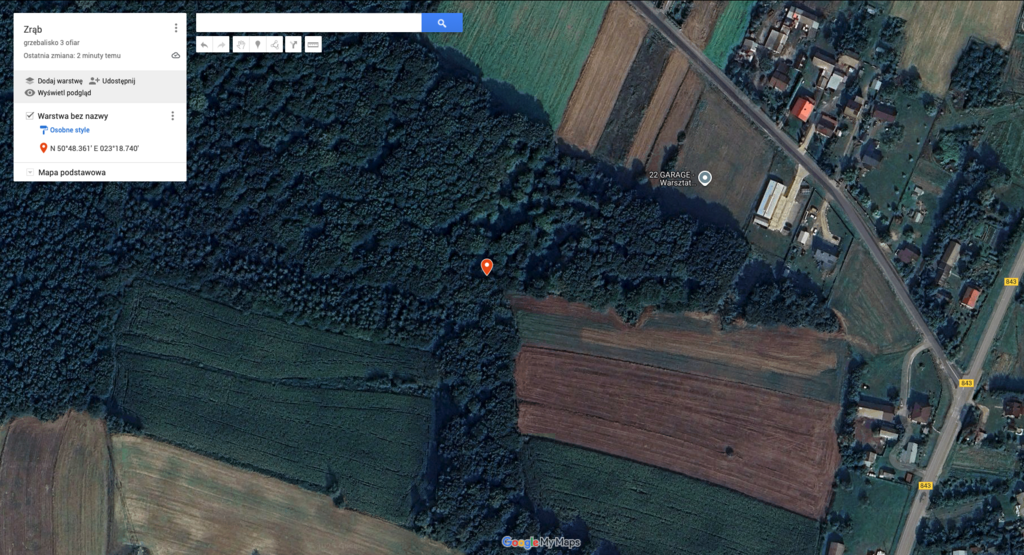
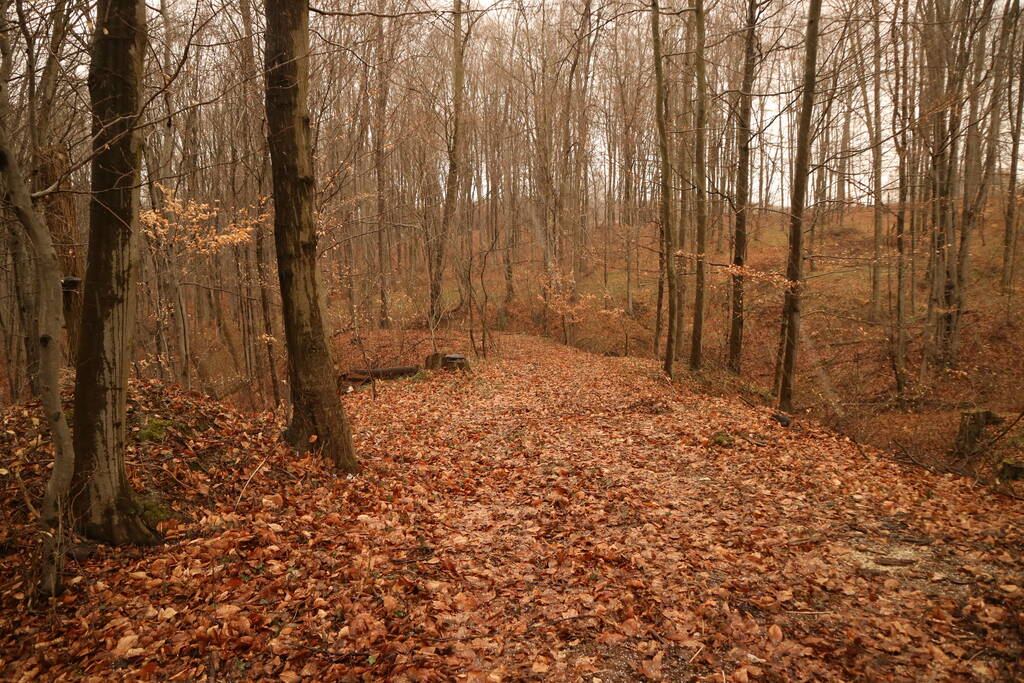
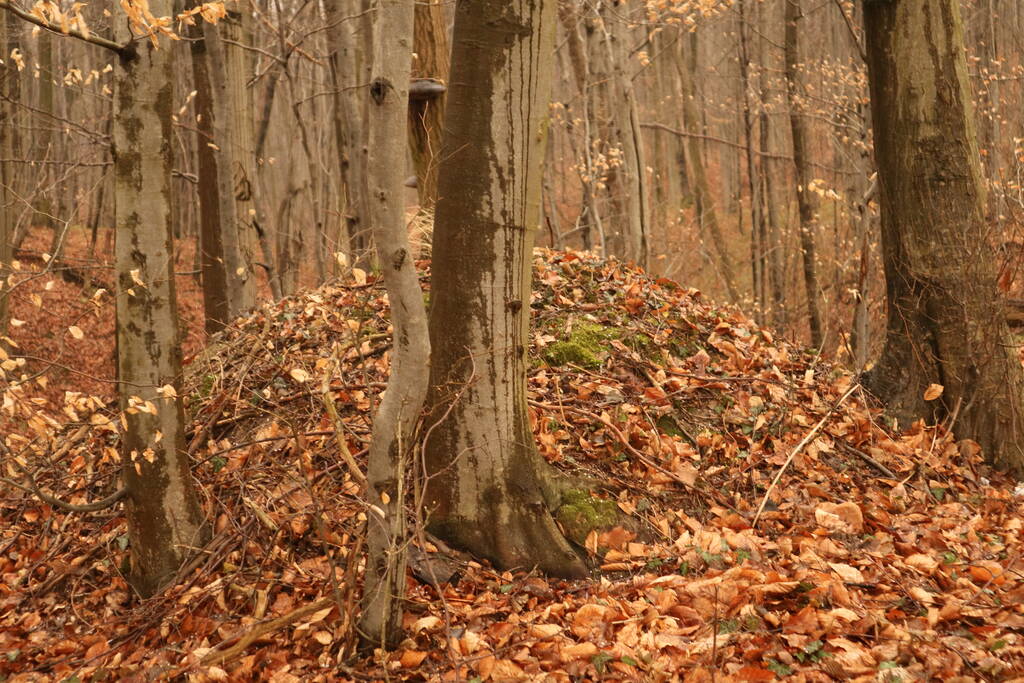
On February 23, 2022, a site inspection was carried out out in the area indicated as the burial site of three victims (GPS: N 50°48.361′ E023°18.740′). It is located on the edge of a cultivated field and a forested ravine. Due to the lack of more precise information regarding the grave’s location, it is not possible to determine its exact position (see attached location photographs 1–3).
The aerial photography query for this area wasn’t ordered.
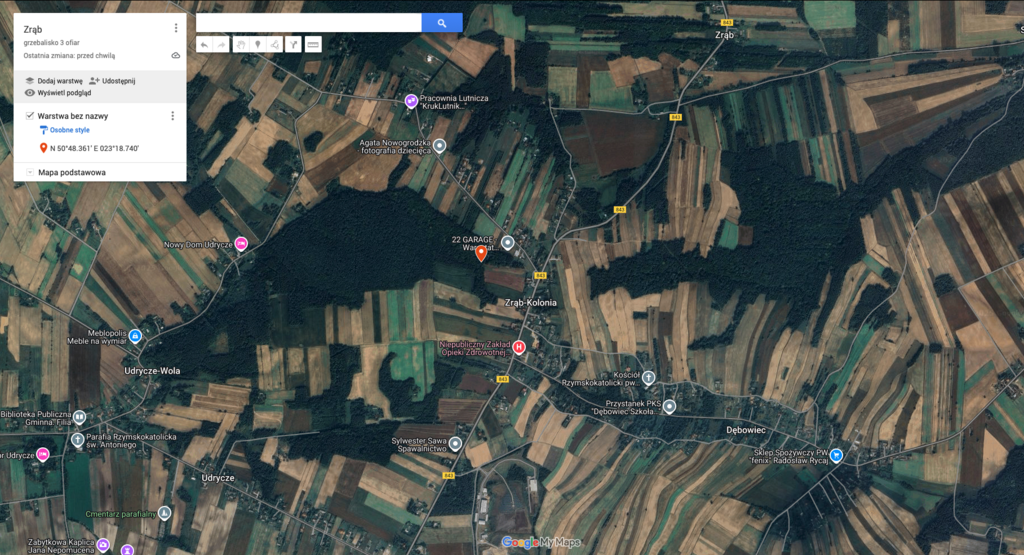 Zrąb fotografia satelitarna 1a
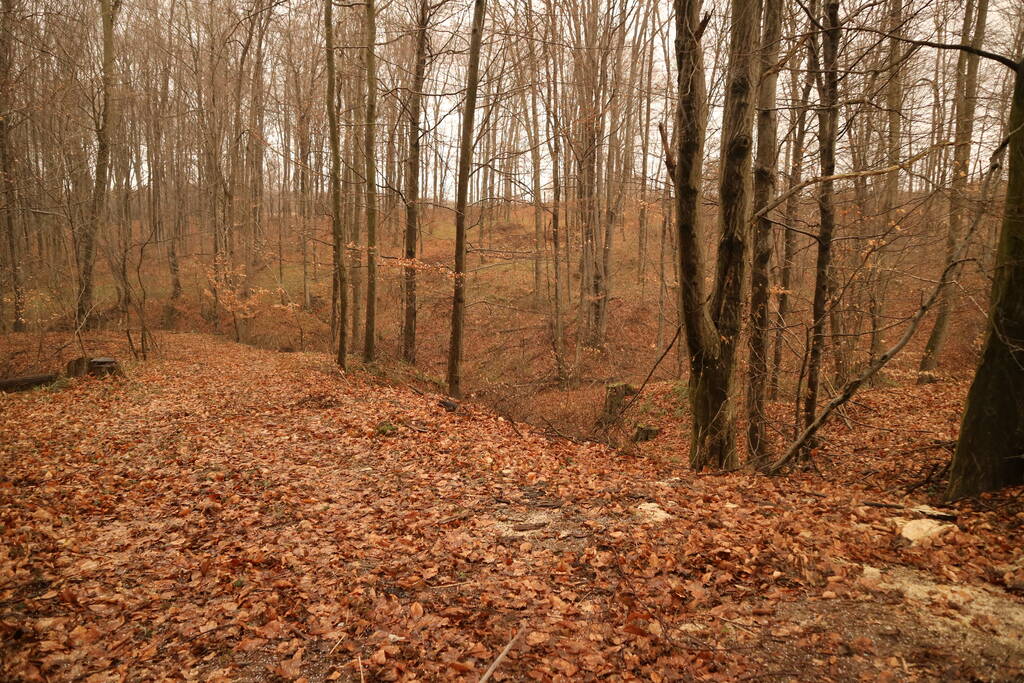 Zrąb fotografia 1 lokalizacji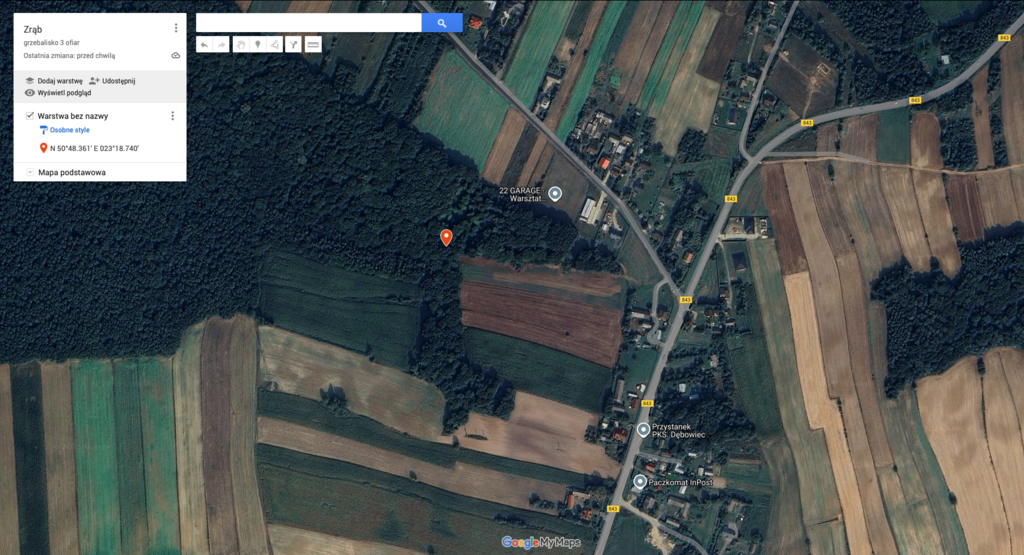
Contact and cooperation
We are still looking for information on the identity of the victims and the location of Jewish graves in Zrąb. If you know something more, write to us at the following address: kontakt@zapomniane.org.
Bibliography
Recording of the Zapomniane Foundation (audio file), Bogumił J., b. in 1936, interviewed by Marek Kołcon, July 2022.
The materials published on this website were developed, digitized, and made available thanks to funding from the Minister of Culture and National Heritage through the Culture Promotion Fund, as well as support from the Embassy of the Federal Republic of Germany in Warsaw, which also enabled the creation of the English-language version of the website.