Zarzecze
Borough: Zamość, District: zamojski, Voivodeship: lubelskieType of place
A forest.Information about the crime
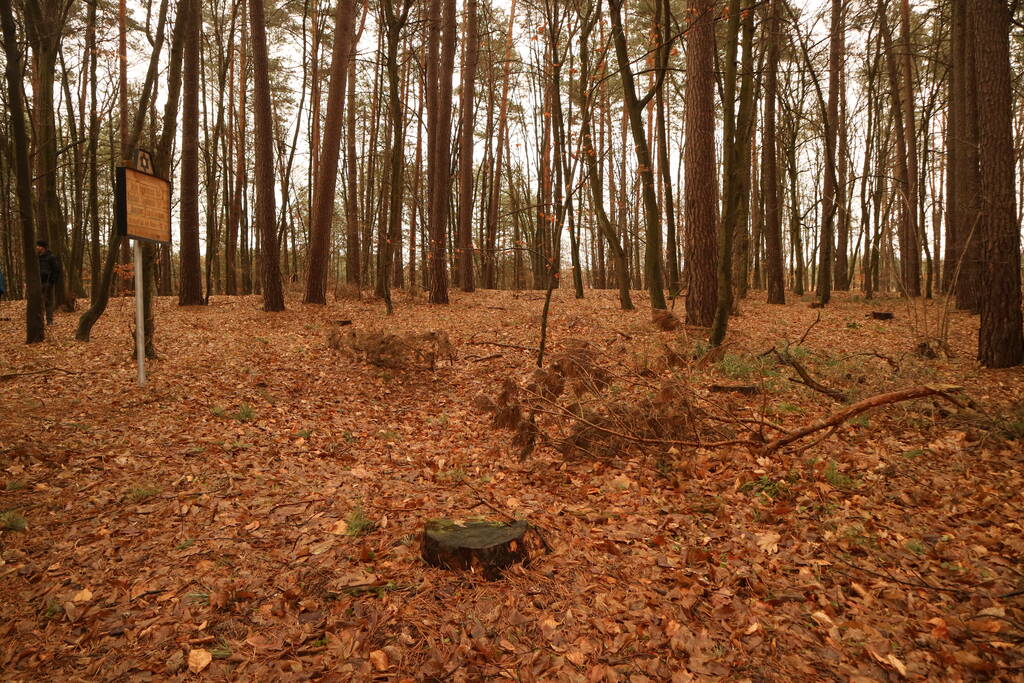
On May 10, 2021, we conducted a site inspection of the alleged grave in the forest near the village of Zarzecze, marked with a plaque reading: “Memorial site: Arie Lewinzon, aged 3, Rachel Lewinzon, aged 27, Awrum Szmuklerman, shot here by the Germans in 1942, and other members of the family.” The plaque was funded by Holocaust survivor Sabina (Sara) Fizik, née Lewinzon. Sara Lewinzon, born in 1935, was the daughter of Jona and Rachel Lewinzon, née Szmuklerman. Her closest relatives were murdered by the Germans, but Sara managed to escape. Sara’s father, Jona, who was absent that day, did not find his daughter among the bodies of the dead when he returned home. Sara wandered around the area and was found by her father and taken to an abandoned house, where Jona’s sister and the wife of a local pharmacist with her two sons were already hiding. After some time, the same story repeated: while Jona was away, the Germans murdered everyone hiding in the abandoned house. Sara hid behind a wardrobe and survived, staying in hiding with several families until she reached Marianna and Jan Gac. For safety reasons, Sara’s name was changed to Sabina. The Gacs were honored with the title Righteous Among the Nations in 2016.
After the war, Sara gave testimony at the Yad Vashem Institute about the murdered members of her family. According to her testimony, Sara’s mother, Rachela, born in 1914 in Rejowiec, was a seamstress by profession. We also learn that Sara’s brother was three years old at the time of his death and was named Lejba. It is difficult to say whether the three-year-old Aron commemorated on the plaque mentioned above is the same person. Awrum, mentioned on the plaque, could have been Sara’s grandfather, a sixty-year-old tailor from Rejowiec and Rachela’s father, although in her testimony given in 1997, Sara did not indicate Abraham’s place of death.
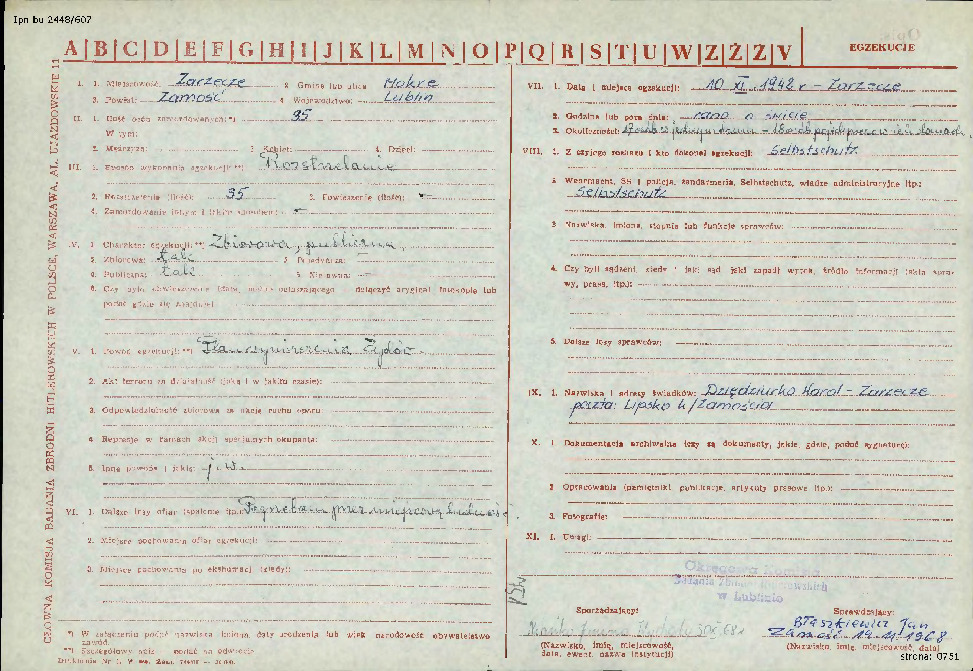
The survey of the Chief Commission for the Examination of German Crimes in Poland records the murder of 35 Jews in Zarzecze at dawn on November 10, 1942. “The Selbstschutz shot 35 Jews in the village of Zarzecze. Seventeen people were gathered in front of one house and publicly executed. The remaining 18 were shot individually in their homes.” (IPN BU 2448/605)
IDENTIFICATION OF THE GRAVE BASED ON NON INVASIVE RESEARCH
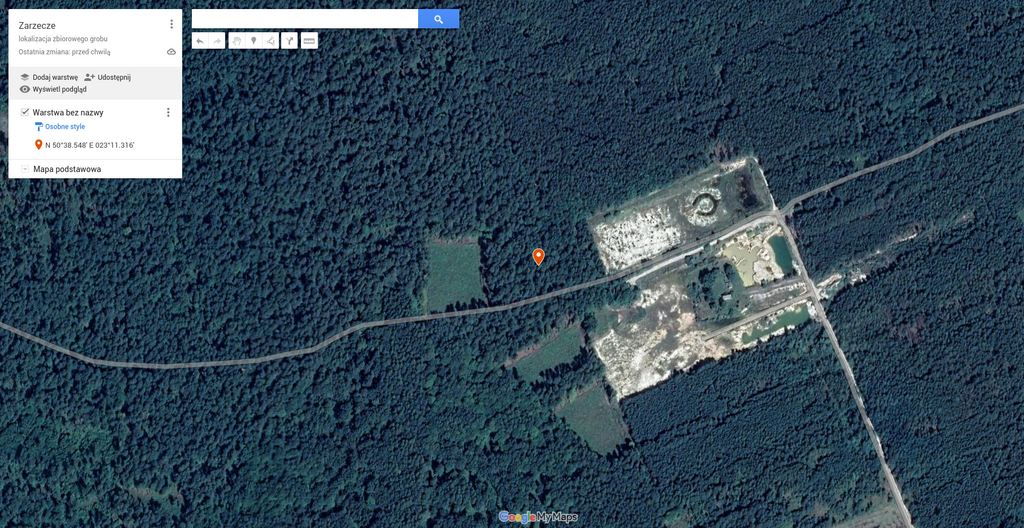
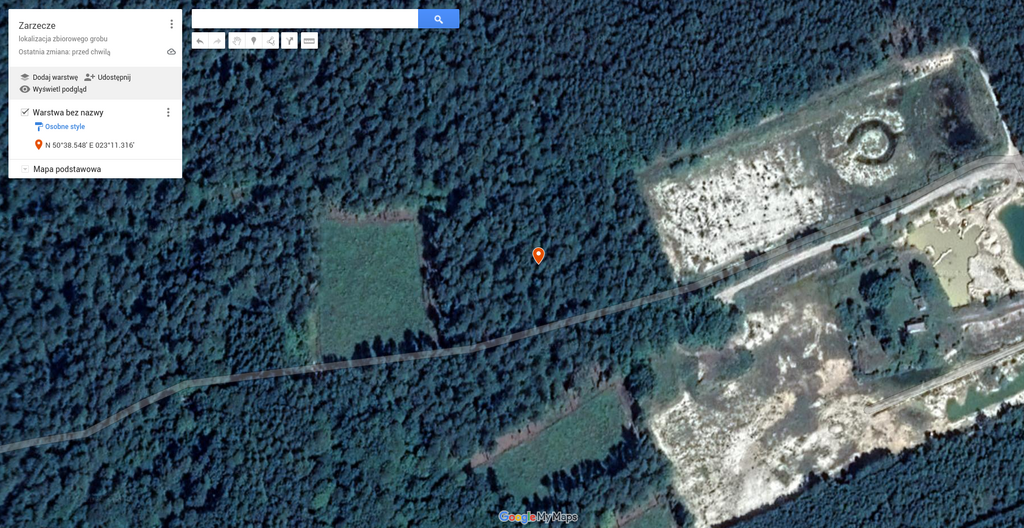
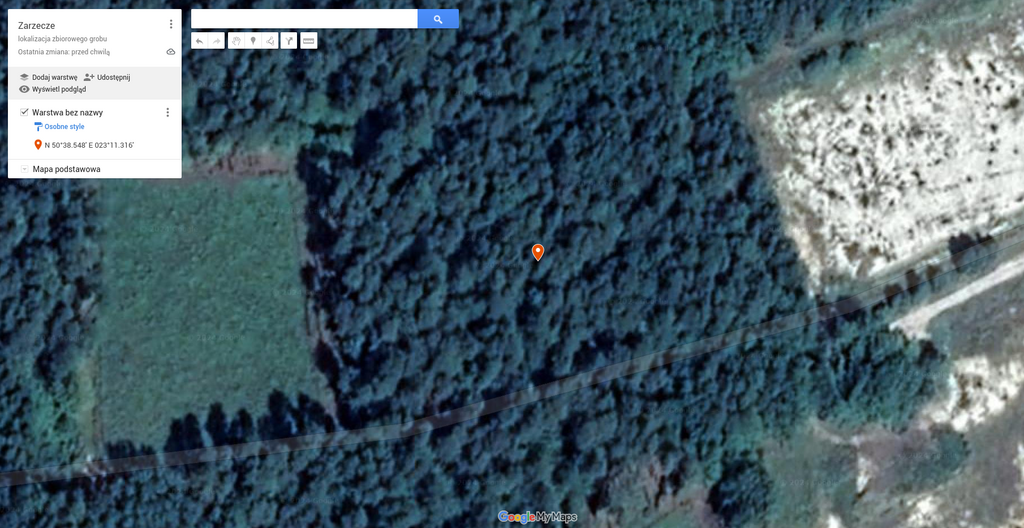
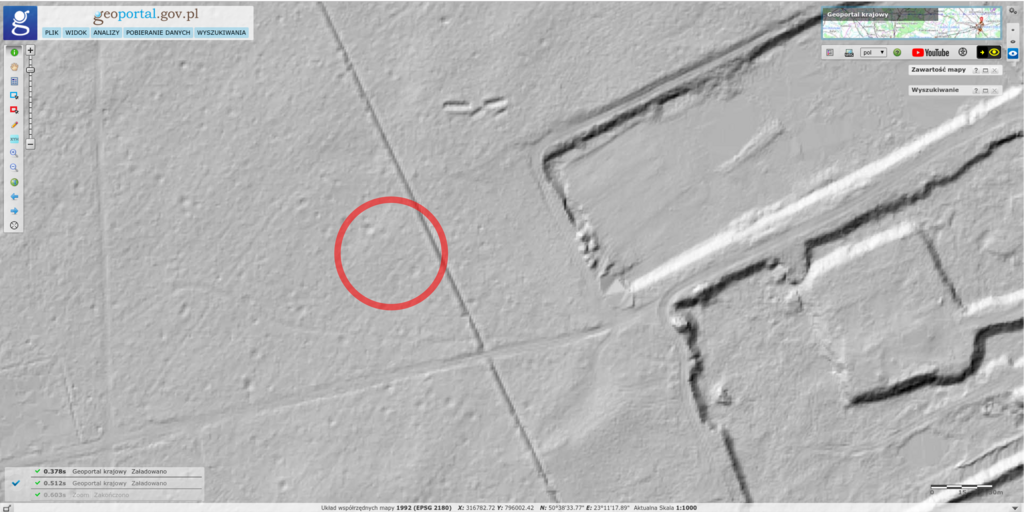
On 23 February 2022, a site inspection was carried out at the location indicated and marked as the hiding place and mass grave of the victims (GPS: N50°38.548′ E023°11.316′). The site is characterised by a distinct depression, next to which a plaque commemorating the victims has been installed. On the topographic survey, the area containing the hiding place and mass grave of the victims was marked (see annex Zarzecze LiDAR 1,2).
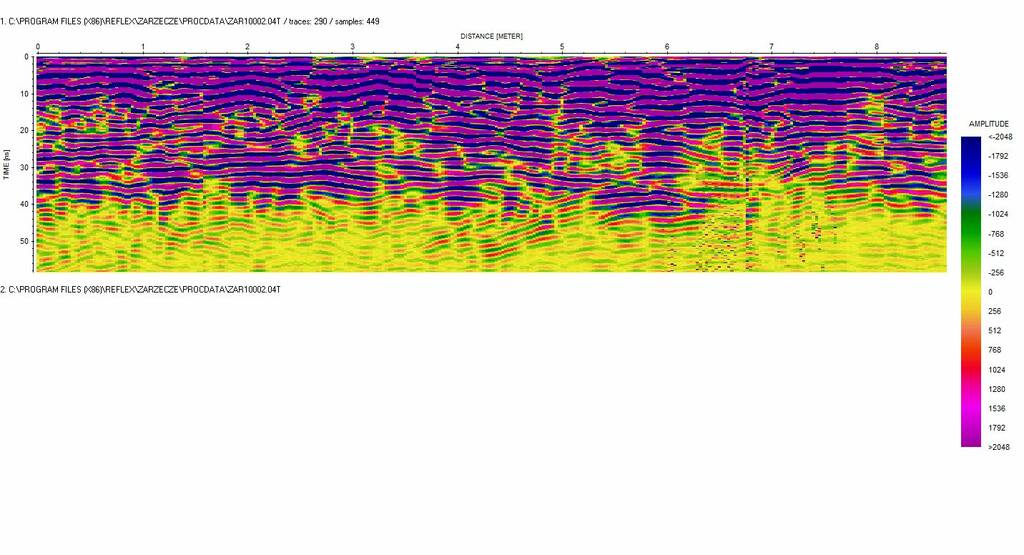
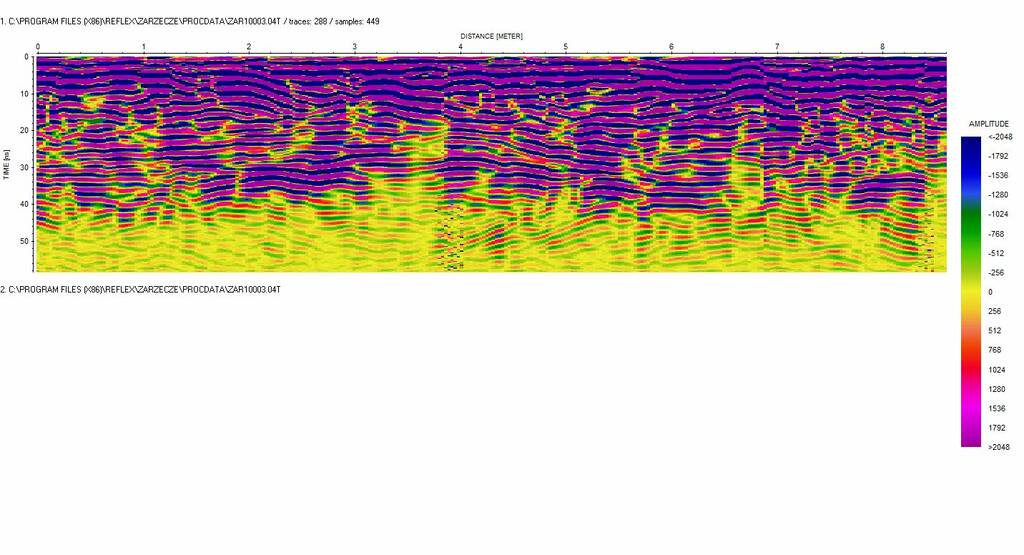
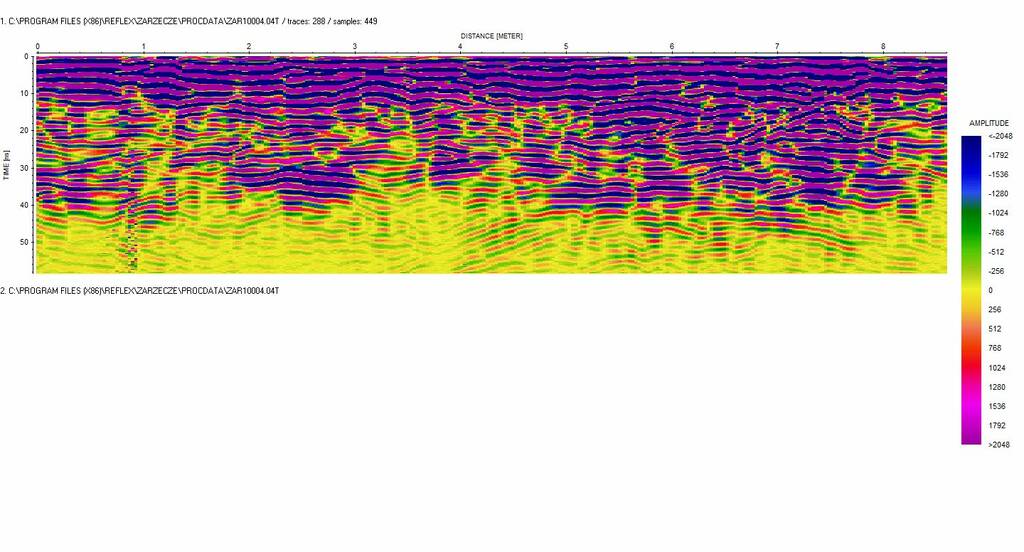
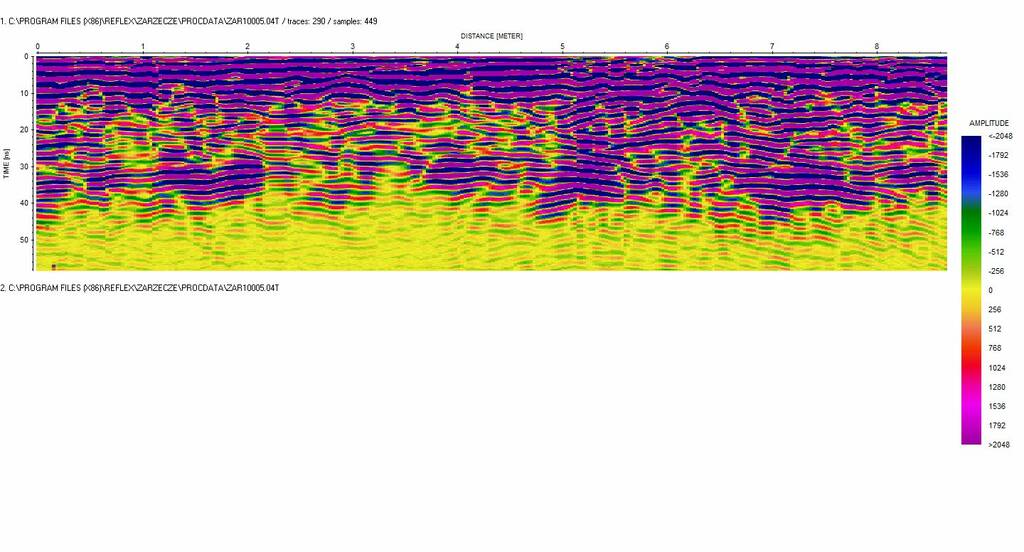
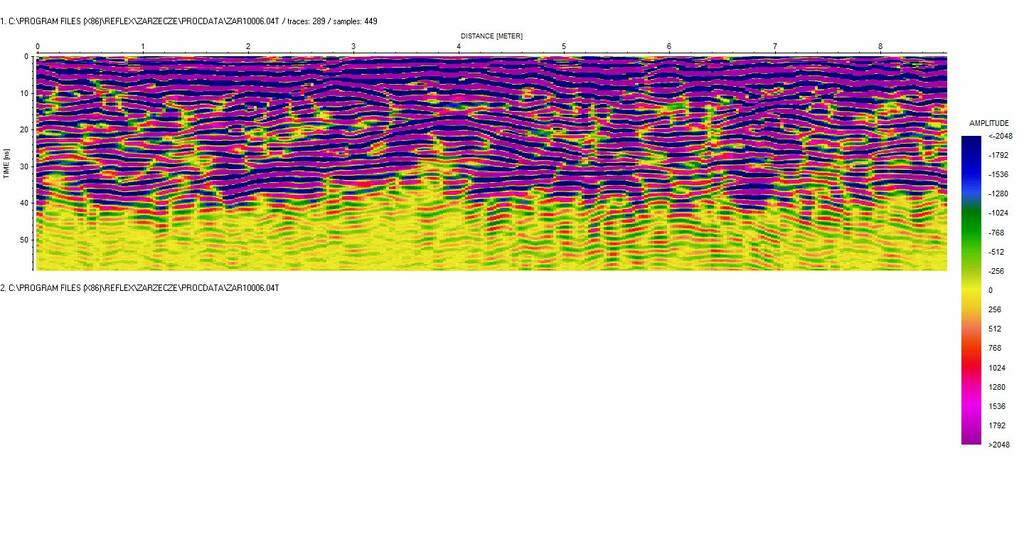
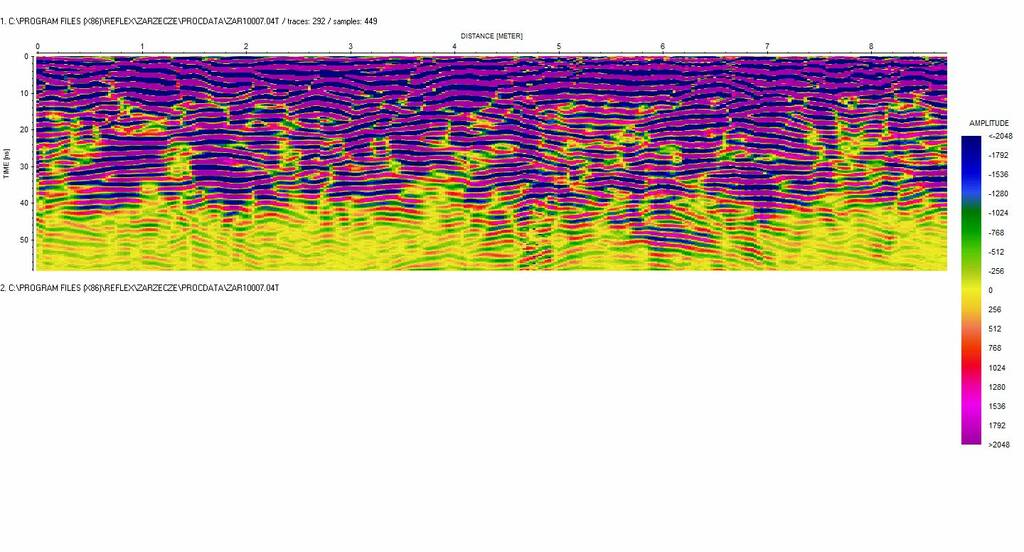
On 17 September 2023, research using a MALA/X3M/Ramac 500 MHz ground-penetrating radar was performed. Seven echograms (ZAR10001–ZAR10007) were collected. The echograms indicate disturbances in the soil layers at the site of the victims’ mass grave (see annex Zarzecze, echogram summary ZAR1). The recorded anomalies appear between approximately 1.5 m and 7.0 m, with a depth of around 0.90–1.0 m below ground level. The presumed dimensions of the hideout and grave are approximately 5.5 m in length, 2.1 m in width, and 0.90–1.0 m in depth.
The aerial photography query for this area wasn’t ordered.
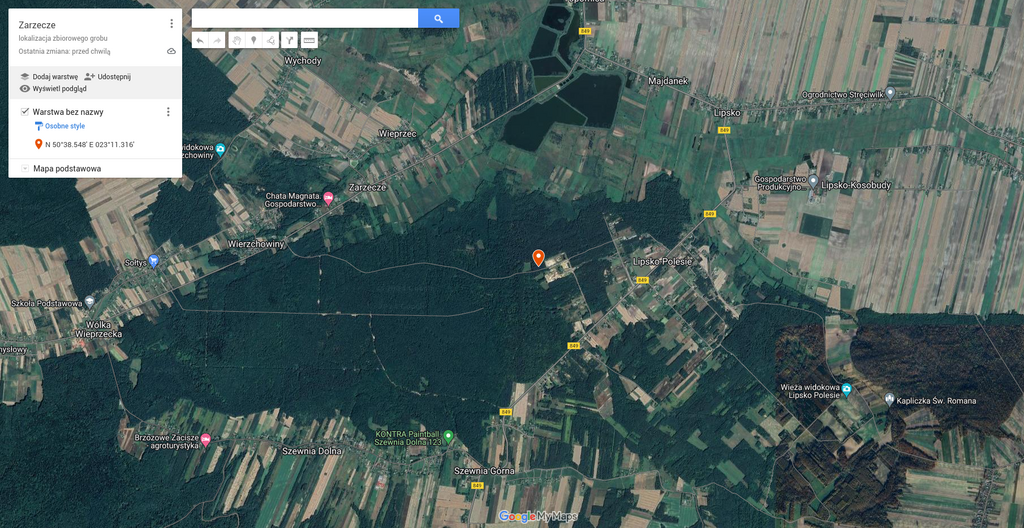 Zarzecze fotografia satelitarna 1a
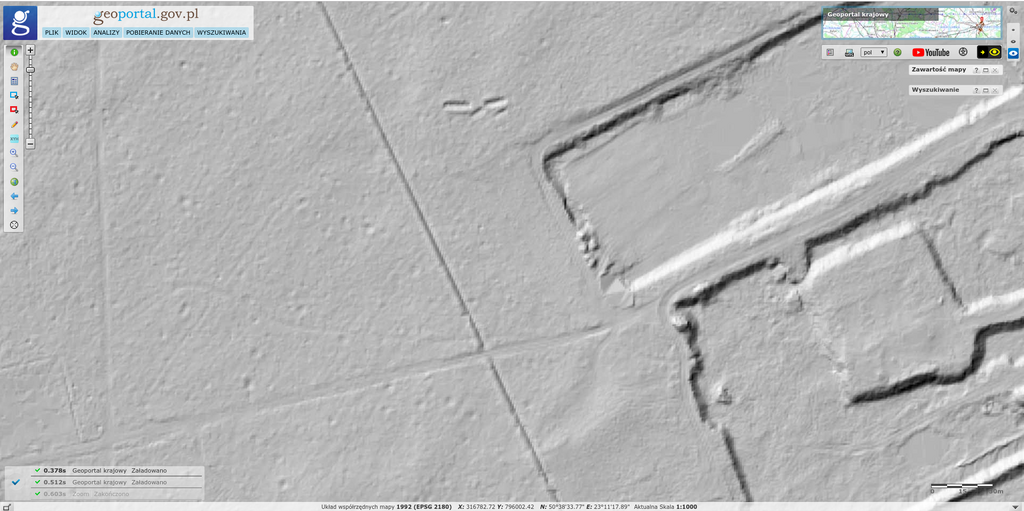 Zarzecze LiDAR 1
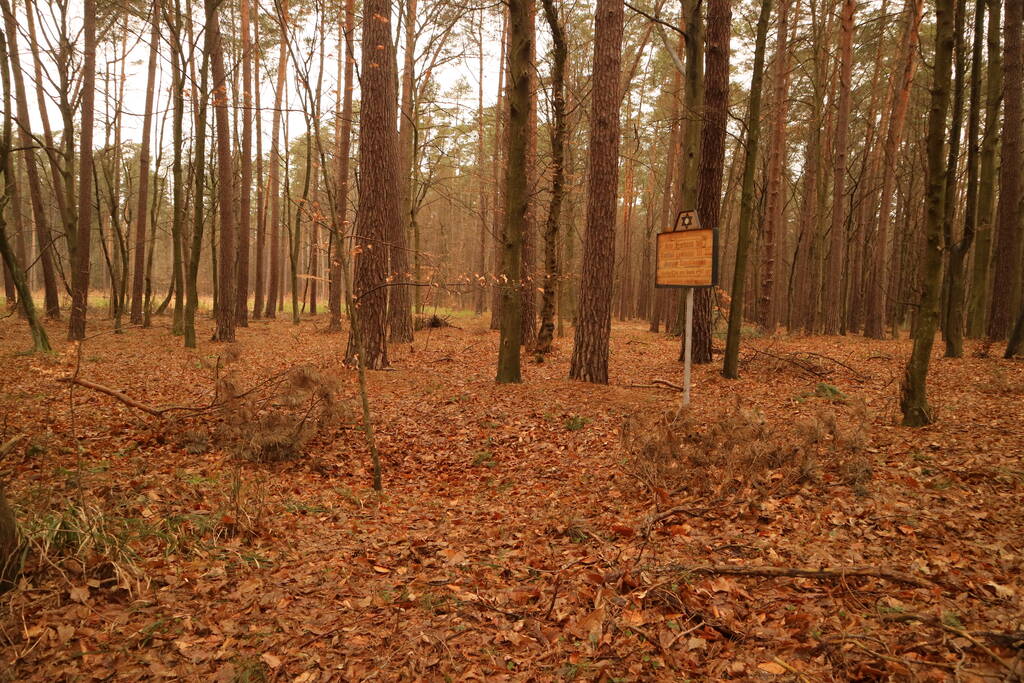 Zarzecze fotografia 1 lokalizacji
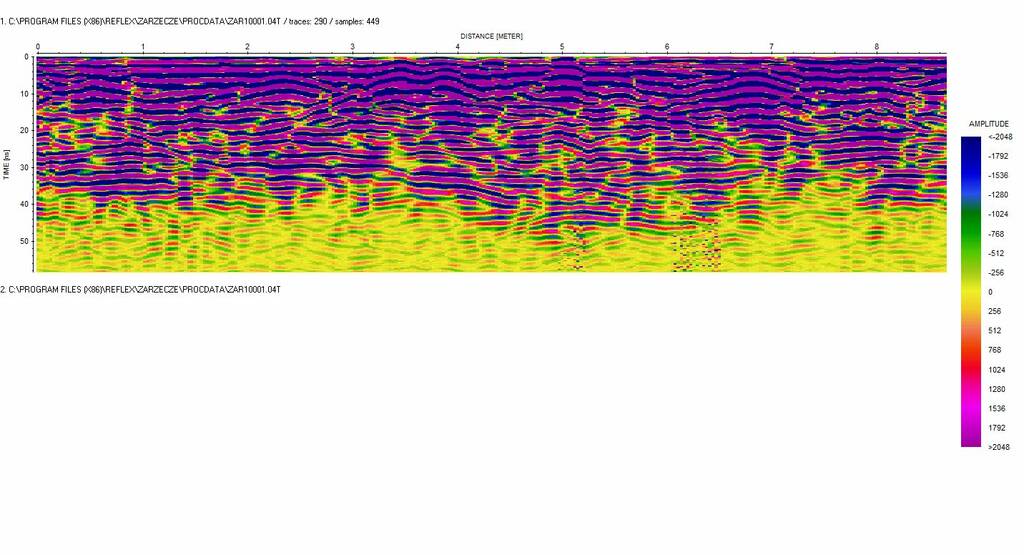 Zarzecze ZAR10001
Sources
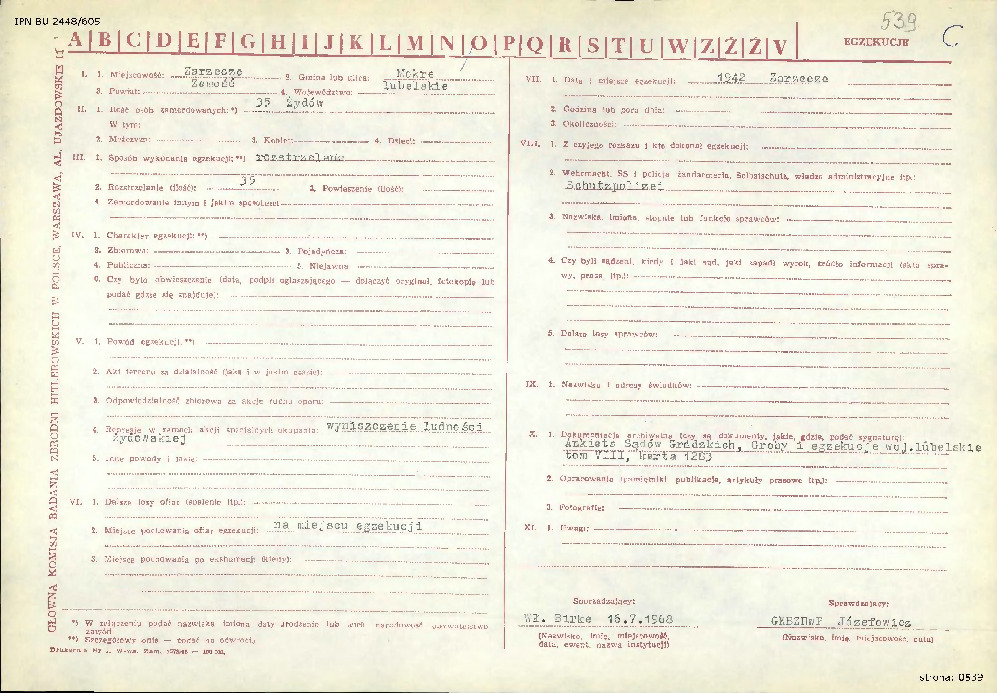 Zarzecze Ankiety GKBZH w Polsce oraz OKBZH w Warszawie, zebrane w latach 1968-1972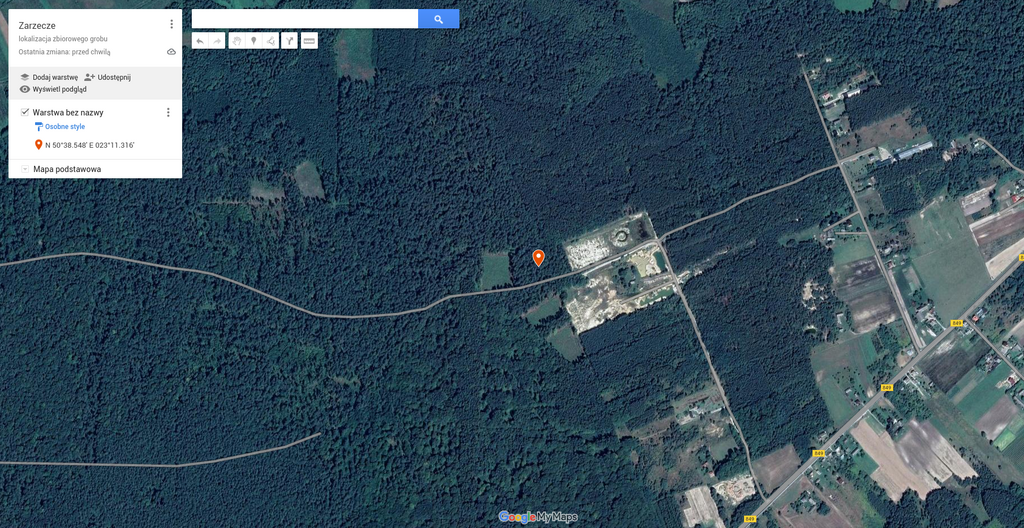


Contact and cooperation
We are still looking for information on the identity of the victims and the location of Jewish graves in Zarzecze. If you know something more, write to us at the following address: kontakt@zapomniane.org.
Bibliography
IPN Bu 2448/605 part 2, surveys of the Chief Commission for the Examination of German Crimes in Poland and the Regional Commission for the Examination of German Crimes in Warsaw, collected in 1968-1969. Surveys concerning lubelskie voivodeship-VIII, Zamość district: surveys
IPN Bu 2448/607 part 2 IPN Bu 2448/607, the Chief Commission for the Examination of German Crimes in Poland, Zamość district: executions
The materials published on this website were developed, digitized, and made available thanks to funding from the Minister of Culture and National Heritage through the Culture Promotion Fund, as well as support from the Embassy of the Federal Republic of Germany in Warsaw, which also enabled the creation of the English-language version of the website.