Zagnańsk Forest District
Borough: Zagnańsk, District: kielecki, Voivodeship: świętokrzyskieType of place
A forest.Information about the crime
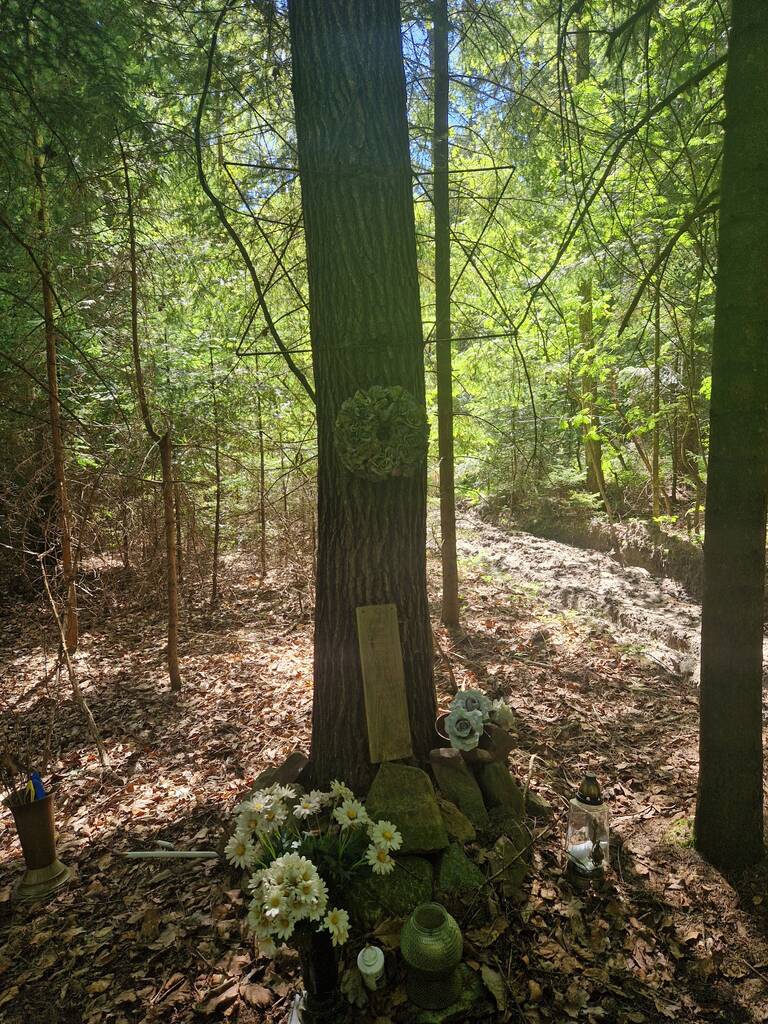
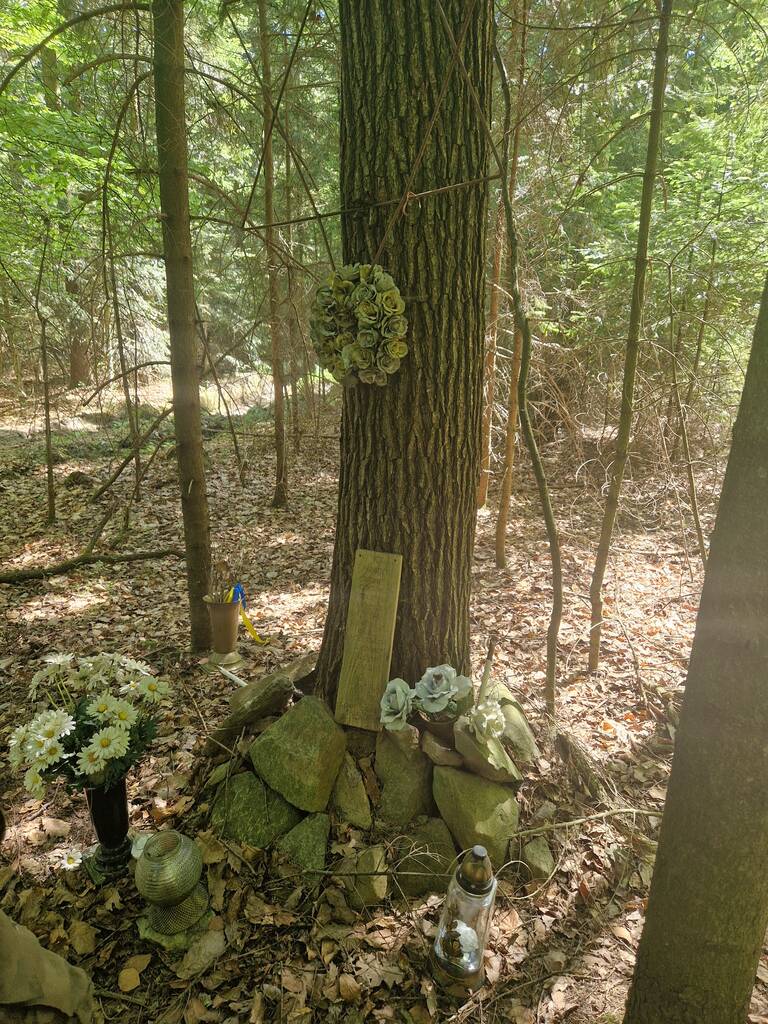
On 16 May 2024, we carried out a site inspection in the area of the Zagnańsk Forest District at the location where a Jewish family from Tumlin had been hiding. An employee of the Forest District showed us the hiding place and the burial site of the victims’ bodies:
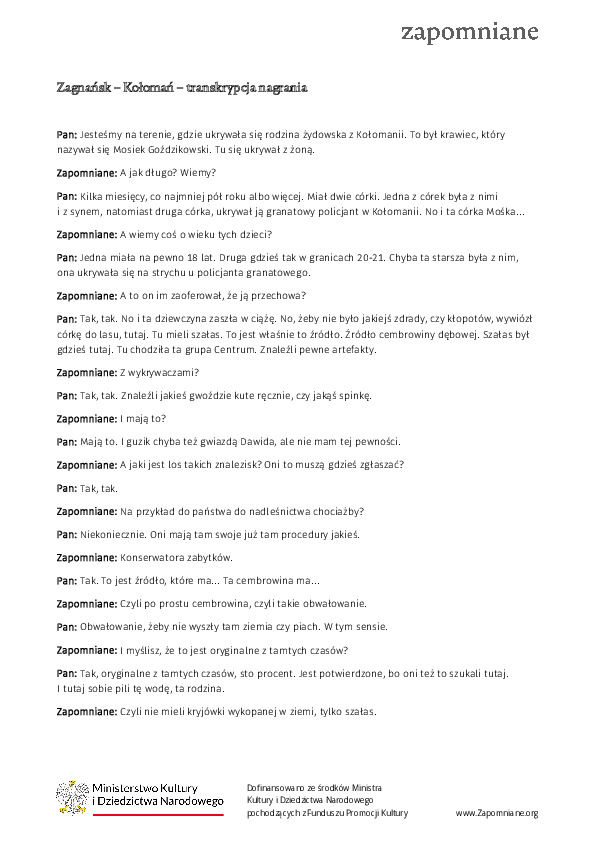
– “We are at the site where a Jewish family from Kołomań was hiding. The man was a tailor named Mosiek Goździkowski. He was hiding here with his wife.
Zapomniane: And for how long? Do we know?
– Several months, at least half a year or more. He had two daughters. One of the daughters was with them and the son, while the other daughter was hiding with a Blue Police officer in Kołomań. And Mosiek’s daughter…
Zapomniane: Do we know how old these children were?
– One was definitely 18. The other was somewhere between 20 and 21. I think the older one was with him; she was hiding in the attic of the Blue Police officer.
Zapomniane: And he offered to hide her for them?
– Yes, yes. And then the girl got pregnant. To avoid any suspicion of betrayal or trouble, he took her out to the forest, here. They had a hut here. Here is the spring. The hut was somewhere around here.
Zapomniane: So they didn’t have a dugout in the ground, just a hut. Did they build it themselves?
– Probably someone from Kołomań helped with it, but I don’t know the details. I know that it was made of planks and covered with branches, so it blended in with the forest.
Zapomniane: And they are buried somewhere around here?
– No, no. They are buried a little further. We won’t go through the forest; we’ll go around, but it’s 20 meters in a straight line.
Zapomniane: And why weren’t they buried here?
– The roots made it hard to dig a pit.
Zapomniane: So they were just moved?
– No, no. They were driven there and killed on the spot. That’s how it was. And they were buried on the road, a sandy road, where it was easy to dig. They were military policemen from Samsonów.
Zapomniane: And who dug the grave?
– Probably they did it themselves. Yes, the son dug it, yes. From what I know, the gamekeeper S., who was here for about 30 years after the war, said that they even knew that when the military police and the Blue Police officer arrived, Mosiek’s daughter went out to meet them, in good faith. First, she was hit in the stomach right away. Then they moved her to them. And then the tailor and his son dug their own grave.
Zapomniane: And there was also the other daughter and the mother.
– The mother was murdered last. I don’t know why.
Zapomniane: Were there many Jews in Kołomań before the war?
– No, five families.
Zapomniane: And one died here?
– I mean, she was promised she would live… They lived because the policeman promised it to them, in that sense. And because of that, they felt safe here. I suspect someone was bringing them food as well, until the girl became pregnant. And out of fear of the obvious consequences, they were killed here.
Zapomniane: And the rest of the Jews from Kołomań – do we know what happened to them?
– No, I don’t know. Let’s go to the place where they are buried. They were hiding here. Here, they had water.” (Ireneusz W., 16 May 2024)
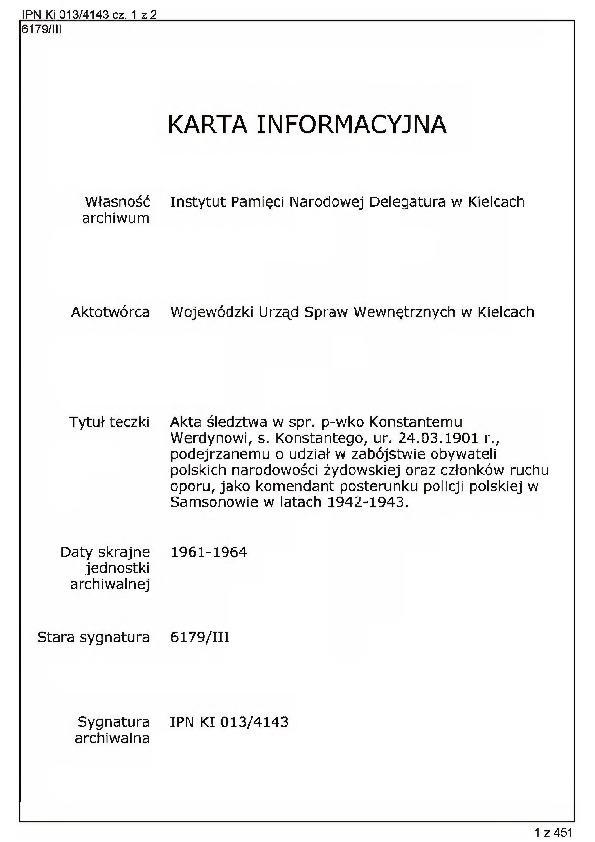
After the war, Konstanty W., commander of the Polish police station in Samsonów, was accused of murdering the Jewish Goździński family. A summary of the investigation files regarding the crimes committed by Konstanty W. and other police officers from the Samsonów police station describes the circumstances of the murder of, among others, the Goździński family.
“[…] A large number of Polish citizens of Jewish origin lived in the Samsonów borough. As a result of German orders, these people were forcibly transported to ghettos. Some of them hid in nearby villages and in the forests surrounding Samsonów. Werdyn and other police officers from the Samsonów station were involved in hunting down Jews in hiding. Those who were captured were detained in the jail at the police post in Samsonów. When a larger number of Jews had been gathered, including women and small children, they were transported to a forest near Samsonów known locally as “Sośnia,” where they were shot. The executions were carried out personally by Werdyn and, on his orders, by policemen from Samsonów.
The Goździński family, of Jewish origin, lived in Tumlin and most likely consisted of six members. They were shot by policemen from Samsonów, including Werdyn.
Werdyn carried out the murders of Jews with calculation, as evidenced by the fact that he invited a local resident, Władysław S., to witness the execution. During the execution of the Goździński family, Werdyn personally ordered policemen S., K., and D. to fire, using a handkerchief as a signal. He then personally finished off the seriously wounded with his pistol. Among the victims were also small children. These murders took place in the spring of 1942.” (IPN Ki 013/4143)
In the indictment against Konstanty W., dated 7 February 1962, we read:
“In Samsonów and the surrounding area, there were many Polish citizens of Jewish nationality who, as a result of the discriminatory policies pursued by the German authorities, hid in nearby villages and forests in order to avoid death. Konstanty Werdyn, together with his subordinate police officers, organised manhunts for these citizens and then murdered them and robbed them of their possessions and clothing.
- In the spring of 1942, a family of Polish citizens of Jewish nationality, the Goździński family, consisting of six people, were staying in Tumlin. Konstanty Werdyn organised a manhunt for the above-mentioned individuals and, together with other policemen, murdered them in a forest near Samsonów.
- In the winter of 1942, a Polish citizen of Jewish nationality, Dygel Zylbersztajn, was hiding in Dudków, Kielce County, together with his wife and son. Upon learning of this fact, Konstanty W., together with other policemen, went to Dudków in order to apprehend the above-mentioned individual. After noticing Konstanty W., Dygel Zylbersztajn attempted to defend himself and was then shot dead together with his wife and son by Konstanty W. and other policemen.
- In the spring of 1943, police officer Materek apprehended a Polish citizen of Jewish nationality with a minor child at the station in Zagnańsk and took them to the police station in Samsonów. Konstanty W. ordered policeman D. to shoot the woman and her child, which he did.
- In the winter of 1942, Jewish citizens and their minor children were hiding,in forests near Dudków, Kielce voivodeship. Upon receiving information about this, the German military police came from Samsonów and, together with Konstanty W. and other policemen, went to Dudków, where they apprehended 14 persons whom they murdered after robbing them of their property.” (IPN Ki 013/4143)
Alina Skibińska, who analysed the case files of Konstanty W., quotes witness Władysław S.: “Goździński was a shoemaker by profession and lived in his own house in Tumlin, which is now occupied by Stępień.” (A. Skibińska, Dostał 10 lat, ale za co – Analiza motywacji sprawców zbrodni na Żydach na wsi kieleckiej w latach 1942-1944 (He got ten years, but for what – An Analysis of the Motives of Perpetrators of Crimes Against Jews in the Kielce Rural Area, 1942–1944) in: Zarys krajobrazu. Wieś polska wobec zagłady Żydów 1942-1945 (Outline of a Landscape: The Polish Village and the Holocaust of Jews, 1942–1945), ed. B. Engelking and J. Grabowski, Warsaw 2011.)
The Register of Killing Sites and Crimes for the former Kielce voivodeship states that Mosiek Goździński was murdered along with his wife, two daughters and son. (The Register of Killing Sites and Crimes… Warsaw, 1980, p. 110)
The Yad Vashem Institute’s archives contain information about the following individuals from Tumlin with the surname Goździński:
- Zecharia, born in Tumlin in 1890, son of Dow and Estera, farmer. Before World War II, he lived in Końskie, and during the war, he stayed in Szydłowiec. Place of death unknown.
- Srul, born in Tumlin in 1911, son of Zecharia and Miriam. He was married to Pesia, née Zaltzberg.
- Beer, born in Tumlin in 1914, son of Zecharia and Miriam. He was a tailor and unmarried. Before the Second World War, he lived in Końskie; during the war, he stayed in Szydłowiec.
On 5 November 2022, a post was published in the Facebook group “Stary Zagnańsk” describing the circumstances of the murder of the Jewish Zylbersztajn family, mentioned in the indictment of Konstanty W., who were hiding in Dudków:
“The photograph was taken in the summer of 1942 from the hallway of my grandfather Stanisław Szwed’s house. The photograph shows a Jewish woman, Regina Zylbersztajn. She, her husband Dygiel, and their teenage son Fejsol hid for several months in Dudków in an uninhabited house formerly belonging to my great-grandfather Antoni Szwed. They probably came from Jasiów – but I am not sure about that, and there is no one left to ask. From what I was told, the family was denounced to the Blue Police in Samsonów. The first time, two Blue Police officers came for them. One of the officers, a local prewar policeman (I do not mention his name, as I am not entirely sure), warned the other that there might be typhus in the house and said he would enter alone. He found only Dygiel Zylbersztajn there. He explained why they had come, ordered him to escape through the window on the opposite side of the house into the bushes and never return. He told the policeman waiting outside that the house was empty. A few days later, the Blue Police returned to Dudków, this time with a different group. They were led by the station commander himself, Konstanty Werdyn – a Volksdeutsche from Poznań, a primitive sadist. Inside the house, they found the entire three-person Dygiel family and dealt with the matter “on the spot.” The shot and battered victims were buried (though it could hardly be called a burial) in a shed next to the house, and their belongings, mainly clothing and shoes, were taken. Due to my age, I know about this event only from stories. What I do remember, however, is the exhumation of those people. In 1962, when I was six years old, Werdyn’s trial took place in Kielce, and as part of it, exhumations and examinations of the remains of murdered Jews were carried out around Samsonów (as I later read, also of Roma victims in Ćmińsk). I remember human bones dug out of the pit – arranged into complete skeletons on newspapers spread out on the ground. In the forest, several hundred meters from my grandfather’s house, a family from Tumlin was exhumed. They were hiding in a dugout in the forest and were also denounced by a local resident. What stuck in my memory from that place was the sight of skulls laid out on pine needles and a row of wooden shoe soles. Among the bones were two, or perhaps three, skulls of small children. Exhumations were also carried out in the “Fertowa Pine Grove” [Fertowa sośnina] in Samsonów. The area was cordoned off with rope, and it was impossible to approach the sites directly. I wouldn’t be able to find it today. I only remember that it was close to the quarter where, in the mid-nineteenth century, the inhabitants of Samsonów who died of cholera were buried. What else can I say? A few years before her death, while looking through and commenting on old photographs, my mother mentioned that it was an open secret who had denounced the Zylbersztajn family. The only question was – why? During the occupation, my mother was a child, so she must have heard this from the stories of older people. What really happened remains unknown and will probably never be known.” (date of access: 15 December 2025)
According to the investigation files against Konstanty W. and other police officers from the Samsonów police station, as well as information provided by local historians from the Zagnańsk borough, the remains of the Zylbersztajn and Goździński families, along with an unknown number of Jews murdered in this area during the Holocaust, were exhumed after the war as part of the investigation and transferred to an unknown location.
Władysław S. testified that “in the forest called “sośnina” [pinewood] there were many graves and places suggesting that the bodies of murdered people had been buried there.” (IPN Gk 306/200-202 cited after A. Skibińska, in: Zarys krajobrazu. Wieś polska wobec zagłady Żydów 1942-1945 (Outline of a Landscape: The Polish Village and the Holocaust of Jews, 1942–1945) According to one of the people commenting on the post about the Zylbersztajns on the ‘Stary Zagnańsk’ group, the sośnina forest is the informal name of the grove on the right side of the road when entering Samsonów in the direction of Ćmińsk.” (date of access: 15 December 2025)
On the same day, 16 May 2024, we visited the following locations where unmarked graves of Holocaust victims are located.
The grave of a Jewish merchant from Opoczno:
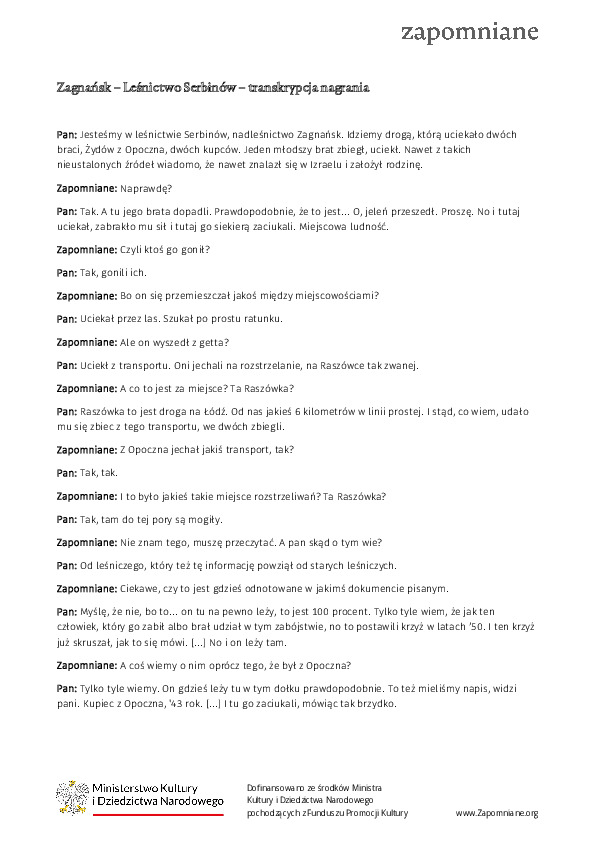
– “We are in the Serbinów forestry district, under the Zagnańsk forest inspectorate. We are walking along the road where two brothers, Jewish merchants from Opoczno, tried to flee. The younger brother managed to escape. According to unconfirmed sources, it is known that he eventually made it to Israel and started a family. Here, his brother was caught. He tried to flee, ran out of strength, and was killed with an axe by locals. He fled through the forest. He was just looking for safety. He had escaped from the transport. They were being taken to be executed, to the so-called Raszówka. It’s on the way to Łódź, about 6 kilometres away from here in a straight line. From what I know, they managed to flee from that transport – two of them escaped.
Zapomniane: It was a transport from Opoczno, yes?
– Yes, yes.
Zapomniane: And Raszówka was a site of mass executions?
– Yes, there are still graves there. He is definitely buried there; that’s 100 per cent certain. All I know is that the man who killed him, or participated in the killing, put up a cross in the 1950s. That cross has already decayed. […] And he is lying there. What is certain is that they escaped from the transport.
Zapomniane: So they didn’t necessarily kill him immediately after he escaped from the transport?
– It could be that, we simply don’t know. Maybe it was immediately after, or maybe they wandered in the forest… They certainly did not hide for long, because they would have had nothing to eat. In my opinion, it must have been no more than three days. And some, well, bad soul came along, saw them – maybe they thought they had some money or something. And that’s when they killed him.” (Ireneusz W., May 16, 2024)
The bunker in the Kamieniec forest, Serbinów forestry district:
– “We are in the Serbinów forest district, section 163, subsection A, where the Kamieniec complex is located. A shelter was built in this complex, where most likely 50 Jews and 40 people were hiding, some soldiers, and some fugitives who had been outlawed.
Zapomniane: And these Jews, where could they have come from?
– From the surrounding area.
Zapomniane: So, from the surrounding villages?
– Rogowice, Serbinów, Raszówka. And they stayed here until… it was probably a betrayal. I know it happened on Sunday. Then they arrived here – there were windows, and into each window they threw seven bundles of grenades. Thirty years ago, I tried to look for something here, and I found small bone fragments, a burnt binocular, and countless shells that had been fired unnaturally, under the influence of heat.” (Ireneusz W., 16 May 2024)
The Register of Killing Sites and Crimes for the former Kielce Voivodeship notes information about a bunker in the “Kamieniec” forest:
“On 14 June 1943, in a bunker in the “Kamieniec” state forests, military police, Gestapo officers and SS officers murdered an unknown number of people. There is no information about the names of the victims. (The Register of Killing Sites and Crimes… Warsaw, 1980, p. 167)
 Zagnańsk fotografia lokalizacji
Sources
 Zagnańsk Akta śledztwa w sprawie przeciwko Konstantemu Werdynowi s. Konstantego ur. 24.03.1901 r
Transkrypcje
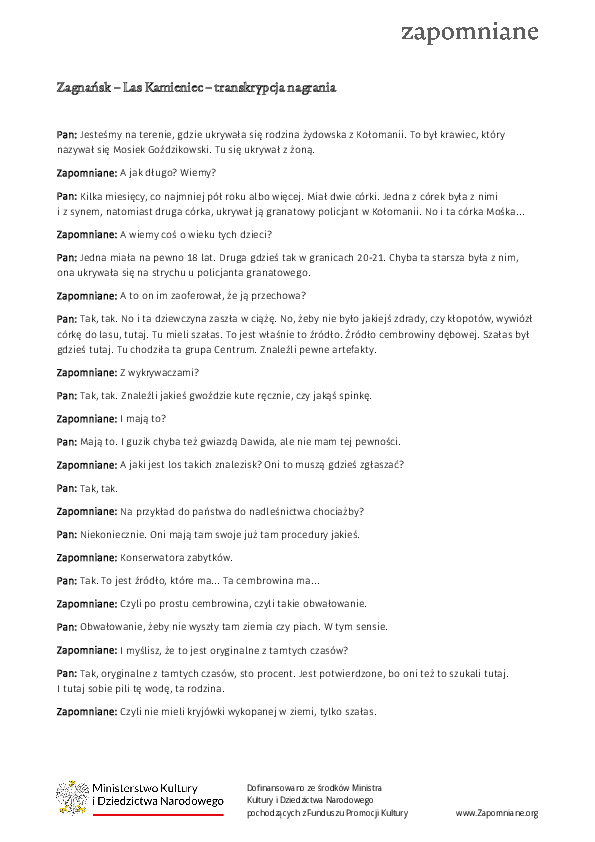
 Zagnańsk – Kołomań i Trzęsawka transkrypcja nagrania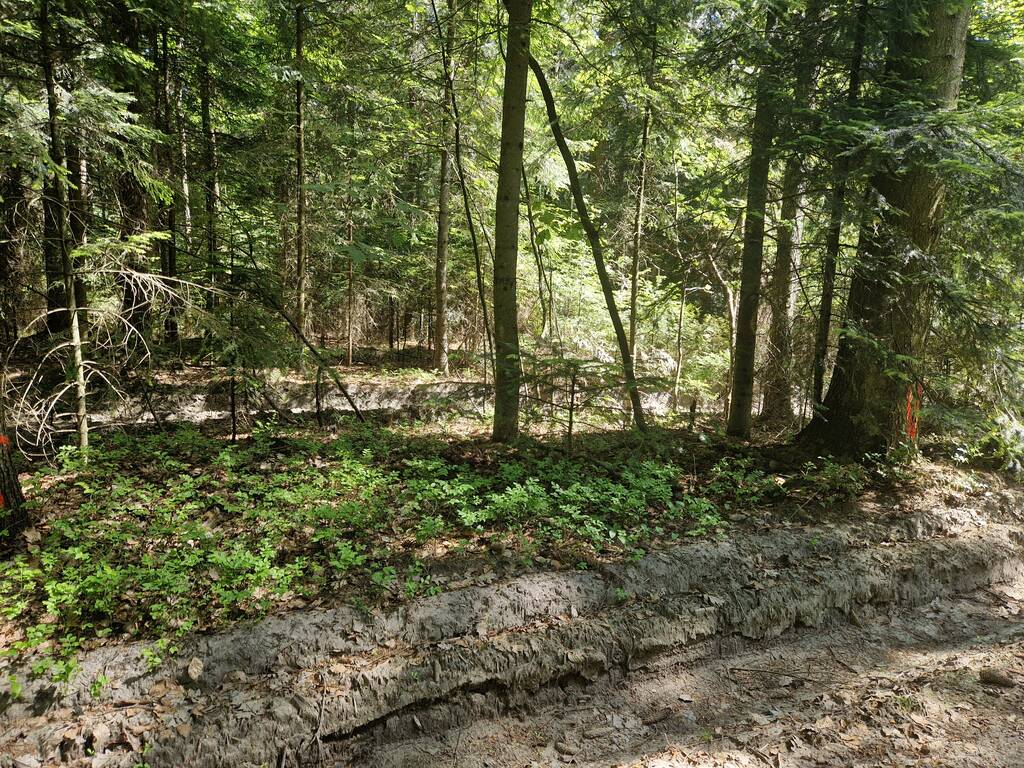
Contact and cooperation
We are still looking for information on the identity of the victims and the location of Jewish graves in Zagnańsk. If you know something more, write to us at the following address: kontakt@zapomniane.org.
Bibliography
IPN Ki 013/4143 Investigation files in the case against Konstanty Werdyn, son of Konstanty, born on 24 March 1901, suspected of participating in the murder of Polish citizens of Jewish nationality and members of the resistance movement, as commander of the Polish police station in Samsonów in 1942.
Zarys krajobrazu. Wieś polska wobec zagłady Żydów 1942-1945 (Outline of a Landscape: The Polish Village and the Holocaust of Jews, 1942–1945), ed. B. Engelking and J. Grabowski, Warsaw 2011.)
Recording of the Zapomniane Foundation (audio file), forester Ireneusz W., interviewed by Agnieszka Nieradko, May 16, 2024.
Serdelski B.J., Lasy nasiąkłe krwią (Forests soaked in blood), volume 1, Radom 1995
The Register of Killing Sites and Crimes committed by the Germans in Poland between 1939 and 1945, kieleckie voivodeship, Warsaw, 1980
“Stary Zagnańsk” Facebook link
The materials published on this website were developed, digitized, and made available thanks to funding from the Minister of Culture and National Heritage through the Culture Promotion Fund, as well as support from the Embassy of the Federal Republic of Germany in Warsaw, which also enabled the creation of the English-language version of the website.