Rzeszów
Borough: Rzeszów, District: rzeszowski, Voivodeship: podkarpackieType of place
Jewish cemetery in Rzeszów on Rejtana Street.Information about the crime
Until September 1939, there were two Jewish cemeteries in Rzeszów. The oldest one, dating back to the 17th century, was completely destroyed by the Germans. Jews were gathered there and being deported to the extermination camp in Bełżec. The cemetery in Czekaj, known as the new one, was also destroyed. Some trees were cut down, and an unknown number of gravestones were removed from the cemetery. The new Jewish cemetery served as a burial site for victims of the Holocaust before the establishment of the Rzeszów ghetto, during Operation Reinhardt, as well as during the so-called third phase of the Holocaust, when victims’ bodies were buried in individual and mass graves. The exact number of graves remains unknown. In addition to documented large-scale executions or ‘actions’ directed against Jews, murders of residents occurred routinely within the Rzeszów ghetto, which was established in January 1942 and closed in September 1943. “Individual executions were constantly carried out for the smallest offences.” (IPN BU 2448/896) “During September 1942, people were shot for the slightest offence.” (IPN BU 2448/896). In addition to the victims of executions and random shootings, the cemetery was used to bury the bodies of those who died as a result of hunger, disease, and exhausting labour in the ghetto. One account mentions mass graves “by the cemetery wall”. The majority of the inhabitants of the Rzeszów ghetto—both Jews from Rzeszów and those resettled there, among others from Łódź, Kalisz, Upper Silesia and towns around Rzeszów (Sokołów Małopolski, Jawornik Polski, Głogów Małopolski, Kolbuszowa, Sędziszów, Czudec, Tyczyn, Błażowa, Strzyżów, Niebylec, Łańcut, Leżajsk, Dębica) were murdered in the Bełżec extermination camp and in mass shootings carried out in the forests near Rzeszów (including the Głogowskie Forests). Historical documents list ten executions of Jews carried out between January 1940 and February 1944. In most cases, the burial sites of the victims’ bodies are not specified. However, no information has been found indicating that the bodies were buried inside the city. With one exception: in the suburban village of Pobitno (now part of Rzeszów), “in the autumn of 1943, the German military police shot five people of Jewish nationality taken from the Rzeszów–Łańcut road. The bodies were buried at the site of the execution next to a barn owned by Wojciech Broda.” (The Register of Killing Sites and Crimes…, rzeszowskie voivodeship, Warsaw 1984) Therefore, it can be assumed that the victims of these crimes were buried in the Jewish cemetery.
The Register of Killing Sites and Crimes for the former rzeszowskie voivodeship and the survey of The Chief Commission for the Examination of German Crimes in Poland record the following events in Rzeszów:
- “On 22 January 1940, Gestapo officers shot approximately 30–40 Jewish people in the market square. The names of the victims have not been established.” (Warsaw, 1987)
- “In the autumn of 1941, in the garden opposite the Gestapo headquarters, a Jew named Abraham Lifschutz, owner of the ‘Alko’ vodka factory residing in Rzeszów–Rynek, was shot by a Gestapo officer. The body of the murdered man was buried in the Jewish cemetery.” (Warsaw, 1987) The circumstances of Lifschutz’s murder were described as follows: “He had made an agreement with a German Wehrmacht officer who, for a large sum of money, agreed to transport him by car to Hungary. On the day in question, in the autumn of 1941, a car arrived at the building, and Lifschutz got into the vehicle. According to witnesses, after driving around the city several times, the German stopped at the Gestapo building on Marchelewskiego Street, opened the car door, and shouted in German: “Get out, Budapest!” Gestapo henchmen pulled Lifschutz out and, a few minutes later, led him into the garden opposite and shot him.” (IPN BU 2448/897)
- On 28 April 1942, on a street in the Rzeszów ghetto, the SS and Gestapo shot 30 Jews. The reason for the execution was the liquidation of the Rzeszów ghetto. The victims were buried in a mass grave in the Jewish cemetery. This day was referred to by the Germans as anti-communist.” (IPN BU 2448/896) Wójcik also mentions the execution of 30 people in April 1942. (Wójcik, 1988, p. 155)
- “In June 1942, ten Jews were shot at night in the prison in Rzeszów.” (Warsaw, 1987) “Following 28 April 1942, the Jews of the Rzeszów Ghetto endured a harsh period of contributions. The Kreishauptmann deprived them of all their property. The contributions were collected in a ruthless manner. As one of these contributions failed to reach the specified sum on time, ten members of the ‘Judenrat’ were executed on a tragic June night in the Rzeszów prison.” (IPN BU 2448/896) The burial site is unknown.
- “On 28 June 1942, during the liquidation of the ghetto, approximately 30 Jews were shot by the SS and Gestapo on a ghetto street. The names of the victims were not established. The bodies of the murdered were buried in a common grave in the Jewish cemetery in Rzeszów.” (IPN BU 2448/897)
- “Between 7 and 14 July 1942, Gestapo officers and other Germans shot a total of over 200 people in Rzeszów during the liquidation of the ghetto. It is impossible to determine which of the murdered were killed within the ghetto itself and which outside its borders. It is known that executions took place at gathering points, for example at the market square, and during transport to the railway station.” (Warsaw, 1987)
- “1942, the Germans shot a Jewish woman in the Jewish cemetery.” The victim was Etla Duller, born 1870, daughter of Jakub and Chaja.” (Warsaw, 1987)
- 1943. On Baldachowska Street [probably Baldachówka Street], the chief of the Jewish Affairs Department in Rzeszów, the office of the Commander of the Security Police and Security Service […] shot three members of the Schmit family.” (Warsaw, 1987)
- “On 1 September 1943, only 200 Jews remained in the Rzeszów ghetto. Their task over the coming months was to gather the remaining property of the Jews. During this time, some Jews fled the ghetto, and as a result, several were shot.” (IPN BU 2448/896)
- “On 22 February 1944, the Germans shot a Jew hiding in a shelter. The victim was Benjamin Gross, born 1896, son of Hersz and Perla.” (Warsaw, 1987)
Moshe Oster, a survivor from Rzeszów, writes about Baldachówka Street: “The Germans threw sick Jews out onto the streets and set up a hospital for the German army. Since a hospital was needed, the Hasidic synagogue in Rymanów on Baldachówka Street was converted into a hospital for Jews, which existed until the deportation.” (Oster, 2013) Oster also recalls the systematic extermination of the Jewish hospital patients: “From time to time, Gestapo officers would burst into the ward, take Jewish policemen with them, throw the patients out of their beds and take them to the cemetery, where they were shot.” (Oster, 2013) Furthermore, patients in the hospital died of starvation, and their bodies were probably buried in the Jewish cemetery. “The conditions [in the hospital] were terrible. Receiving any help was nearly impossible, as there were no medicines. I do not know a single Jew who came out of there alive. If the sick were not killed by the Germans, they died of hunger.’” (Oster, 2013)
Aleksander Heller, a doctor from Rzeszów working in the ghetto hospital, witnessed the deportation in July 1942. His memoirs can be found in the Rzeszów Memorial Book: “At noon, the entire convoy, escorted by an SS company, recruited from the surrounding towns, toward the Staroniwa railway station. On the way, an SS officer beat a woman, and her husband ran to her aid and attacked the SS man, who hit her. In response, the SS company massacred the deportees, leaving about 250 bodies there. This took place near the ‘Sokół’ building, opposite the new post office building. The bodies of the victims of the massacre at the post office building were ordered to be buried in the cemetery, in pits dug “by the cemetery wall.” (“The Martyrdom of the Rzeszów Community,” p. 299) The same July 1942 event is also described by Zbigniew Wójcik: “Undoubtedly, in the six-hundred-year history of the city—which had witnessed Tatar invasions—this was one of the most tragic and bloodiest days. After this gruesome procession had passed, the streets were stained with blood, and Jewish policemen, following orders, loaded the murdered bodies onto carts and transported them to the Jewish cemetery at Czekaj, where the gravedigger Oszerowicz took care of the burial.” (Wójcik, 1988) Jan Forczek, a resident of Rzeszów and a witness to the Holocaust, whose memories appear in the Rzeszów Memorial Book, also mentions the burials of the victims of the deportation at the cemetery: “Behind the carts drove a washer, cleaning the streets soaked with the victims’ blood. And here is the railway station, where freight cars are waiting. […] And again the carts arrive, taking the murdered and bringing the deceased to the Jewish cemetery at Czekaj.” (“Polish Evidence on the Extermination of Rzeszów Jews” p. 350) The same account also confirms that the extermination of Jews in Rzeszów was not limited to spectacular “actions”, but that there were periods when the killing of Jews was a daily occurrence. “The situation in the ghetto worsened day by day. Every night we heard gunshots, and every morning the corpses were taken to the cemetery. The poor people in the ghetto suffered from cold and hunger and were forced to perform hard labour.” (p. 350)
Heller recalls that in the spring, an epidemic of typhus broke out in the western ghetto, and its victims (the number of whom is unknown) were buried in the cemetery: “The plague spread through the western ghetto and claimed many victims. Relatives were allowed to accompany the deceased only to the ghetto gate; they were not permitted to go further, to the cemetery.” (p. 302)”
The sources mention the names of three people involved in burying the bodies of Holocaust victims in the cemetery. Heller mentions Ozerovitz (referred to by Z. Wójcik as Oszerowicz): “The chief gravedigger at the cemetery was a man called Ozerowitz. He buried all the Gestapo’s victims at the Jewish cemetery, including Poles murdered by the Gestapo. One day, he escaped and saved his two daughters by transporting them in a hearse. He managed to hide the girls with Christian families. Today, he lives in America and is a wealthy man. He testified in the trial against Maugh [Hans Mack, head of the Rzeszów Gestapo from 1940 to July 1944, who was tried in Germany after the war and died during the trial].” (p. 303) Meanwhile, Elżbieta Rączy mentions Szaja Pleszer, the gravedigger of the Jewish community, and Józef Reich, the rabbi of Rzeszów, who, according to the account of one of the survivors from Rzeszów, was also murdered during one of the countless executions at the cemetery. (Rączy E., Zamoyski G., Wierzbieniec W., Rzeszów, 2016)
The Rzeszów Memorial Book contains a testimony by Franciszek Kotula, who became the director of the Rzeszów City Museum after the war. Kotula describes the destruction of Jewish landmarks in the city by the Germans, including two cemeteries: “The mentioned synagogues bordered two ancient cemeteries, which extended beyond the city limits and over time became part of its centre, on both sides of Sobieski Street, near Żeromski and Kopernik Streets. These cemeteries were surrounded by high walls, and their tall, old trees and dense shrubs served as the lungs of the city – a green space to breathe. In this part of the city, in the oldest cemetery, there were gravestones from the 16th century, dating back to the beginnings of Jewish settlement in the city. In the autumn of 1939, the walls were destroyed. During the harshest winter, the trees were cut down for firewood, and the gravestones were destroyed and used for road repairs and other purposes. In 1940, the area was ploughed and used as a landfill in the summer and for storing piles of snow from the city streets in the winter. In the summer of 1942, Jews were brought there, lined up in rows and groups, and led to their deaths [the site of the so-called old Jewish cemetery was used as a gathering place for Jews before deportation to the Bełżec extermination camp]. There, they were also robbed of any money and whatever possessions they had left. Many gravestones, piled up in stacks, remained in the ghetto from the summer of 1942 but were later completely destroyed. A similar fate befell the last so-called new cemetery (in Czekaj). There, Jews were buried in mass graves until the end of 1943, up to the liquidation of the ghetto and Jewish settlement – first the deceased, then the murdered, and at some point, also Roma.” (“The Fate of Rzeszów Jewry, 1939 – 1944” p. 342).
n the archives of the Jewish Historical Institute, there is a letter from July 1946, sent by the Regional Jewish Committee in Rzeszów to the Voivodeship Jewish Historical Commission in Kraków, containing a description of the site of mass burials in the cemetery: “To summarise the course of events, we would like to point out that, according to our approximate calculations, in Rzeszów alone, around 300 Jews fell victim to German barbarism. They were buried in the cemetery in Czekaj, in an area of approximately 800 square metres, without clothes and very shallowly beneath the surface of the ground. […] [The Germans] desecrated Jewish cemeteries, particularly the cemetery at Czekaj, where several hundred Jews were forced by the Gestapo to remove all the monuments from the cemetery by hand and transport them to the nearby brickyard.” (AŻIH 301/4587)
The archives of the Jewish Historical Institute also contain three accounts of Holocaust survivors who describe the criminal activities of Alfred Pavlu, the German mayor of Rzeszów, who was responsible for the destruction of the cemetery and the mass murders that took place there.
Majer Goldman:
“Pavlu was the Stadthauptmann in Rzeszów from the beginning of 1942. He was particularly cruel to Jews. He would burst into the ghetto and carry out bloody massacres. He shot indiscriminately, especially women and children. […] He forced the Jews to bury the victims in the cemetery, and then he personally shot the gravediggers.” (AŻIH 301/3687)
Aschera Heller:
“He [Pavlu] initiated the destruction of the Jewish cemetery and ordered the tombstones to be used for paving streets. On his orders, a mass grave had to be always kept ready at the Jewish cemetery. He personally supervised the execution of this order (naturally by Jews), measuring the dimensions of the grave. In the ghetto, it was said that he personally shot Jews in the cemetery.” (AŻIH 301/3688)
Benjamin Leszczower:
“In response to your letter of April 13 regarding A. Pavlu, I would like to inform you that during the first deportation, there were 238 corpses; 10–15 of us went to the cemetery to bury them. Pavlu was present; he had his mouth covered with handkerchiefs, and he was pouring cologne on himself.” (AŻIH 301/3689)
After the war, Alfred Pavel was investigated by the District Court in Rzeszów. In August 1948, a witness, Moses Reich, aged 46, a lawyer residing in Rzeszów, was questioned. Reich described the process of burying the bodies of Jews murdered at the cemetery: “At that time [in July 1942], a large number of Jews were buried in the Jewish cemetery in the presence of the suspect, who wanted to ensure that the bodies did not decompose due to the summer weather and that the burials were carried out as quickly as possible. According to the suspect, if those involved in burying Jews did not perform their duties properly, he would shoot them himself.” (Rączy, Zamoyski, Wierzbieniec, 2016)
An interesting insight into the condition of the Jewish cemetery on Rejtana Street is provided by a letter sent by the Voivodeship Office in Rzeszów, Department for Religious Affairs, to the Deputy Director of the Office for Religious Affairs, dated January 4, 1975: “The Jewish cemetery covers an area of approximately 2.5 hectares. Approximately 80-90% of this area is covered by a dense network of gravestones. Stone-sand or concrete tombstones have survived in approximately 30–35% of cases. The rest were destroyed during the occupation and removed from the cemetery grounds. The cemetery is surrounded by a fairly high wall, which has been severely damaged on the southern side. Approximately 60% of the fence has been preserved in good condition. During the liquidation of the ghetto by the Germans, the bodies of murdered Jews were brought to this cemetery and buried in mass graves. Besides these transported bodies, individuals or groups shot directly on the cemetery grounds were also buried there. The exact number of these burials cannot be determined today. The shootings were carried out on a massive scale. In 1946 or 1947, a masonry obelisk and a commemorative plaque were erected on the site of the mass graves, with inscriptions commemorating the victims of Nazism. The obelisk and plaque were likely built by people of Jewish origin. The mass burial site is marked by several planted trees.” (Letter sent by the Voivodeship Office in Rzeszów, Department of Religious Affairs, to the Deputy Director of the Office of Religious Affairs, dated 4 January 1975)
Commemoration
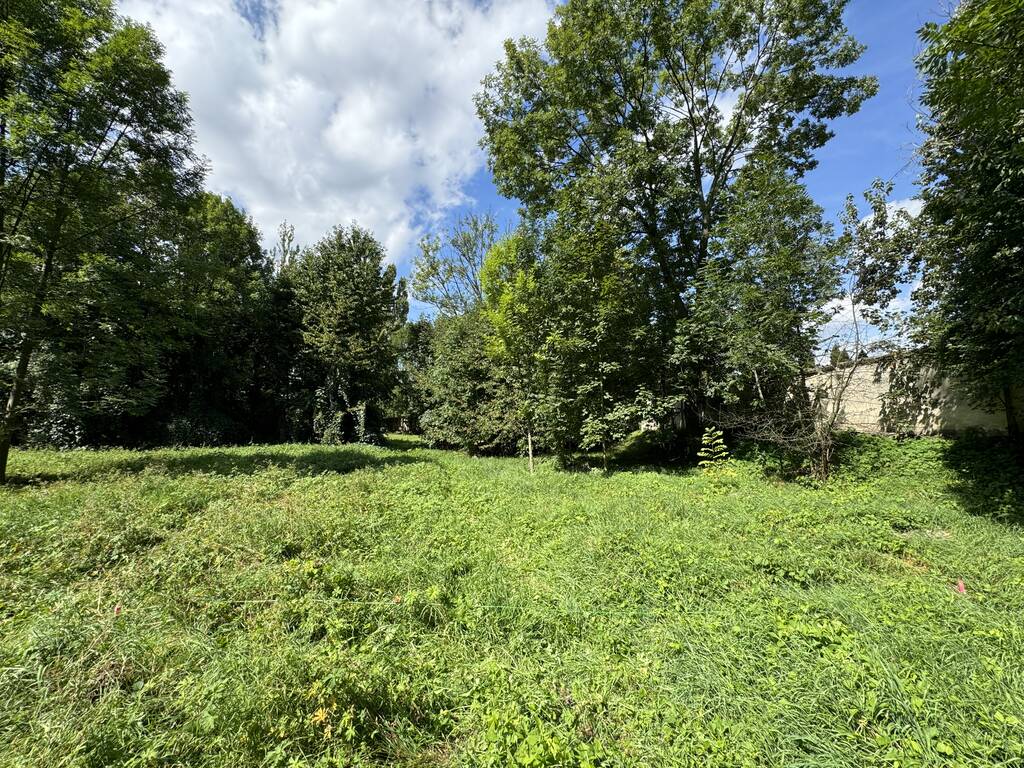
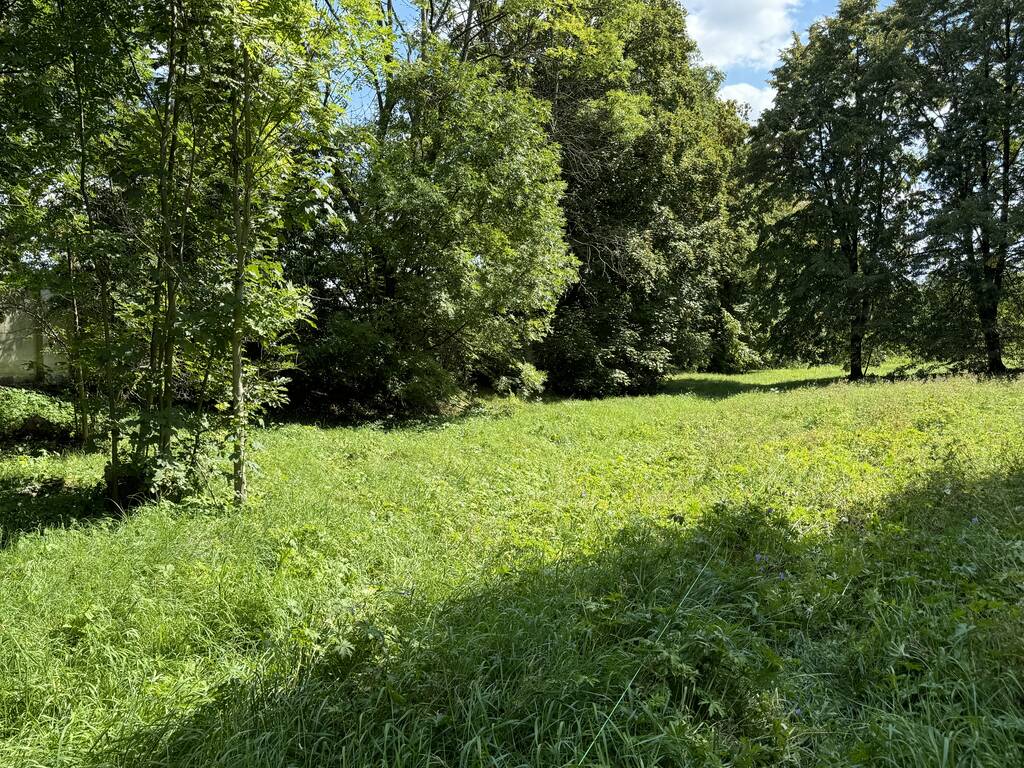
Miejsce grobu zostało oznaczone drewnianą macewą w 2025 roku ramach projektu „Punkty odniesienia. Współtworzenie drewnianych macew z lokalną społecznością”.
„Punkty odniesienia” to próba znalezienia sposobu na znakowanie odnalezionych mogił, zanim możliwe będzie ich upamiętnienie. Działanie ma na celu drobną ingerencję w krajobraz tych miejsc, która przypominałaby o tym, co w nim niewidoczne, a często obecne w pamięci lokalnych społeczności. Będąc jedynie tymczasowym upamiętnieniem, drewniane macewy mają otwierać możliwość przejęcia przez lokalne społeczności opieki nad tymi miejscami, oswojenia ich, a być może także uruchomienia własnych, związanych z nimi praktyk lub trwałego ich upamiętnienia.
Więcej o projekcie można przeczytać tutaj: link
Projekt „Punkty odniesienia. Współtworzenie drewnianych macew z lokalną społecznością” był realizowany dzięki dofinansowaniu Stowarzyszenie Żydowski Instytut Historyczny.
IDENTIFICATION OF THE GRAVE BASED ON NON INVASIVE RESEARCH
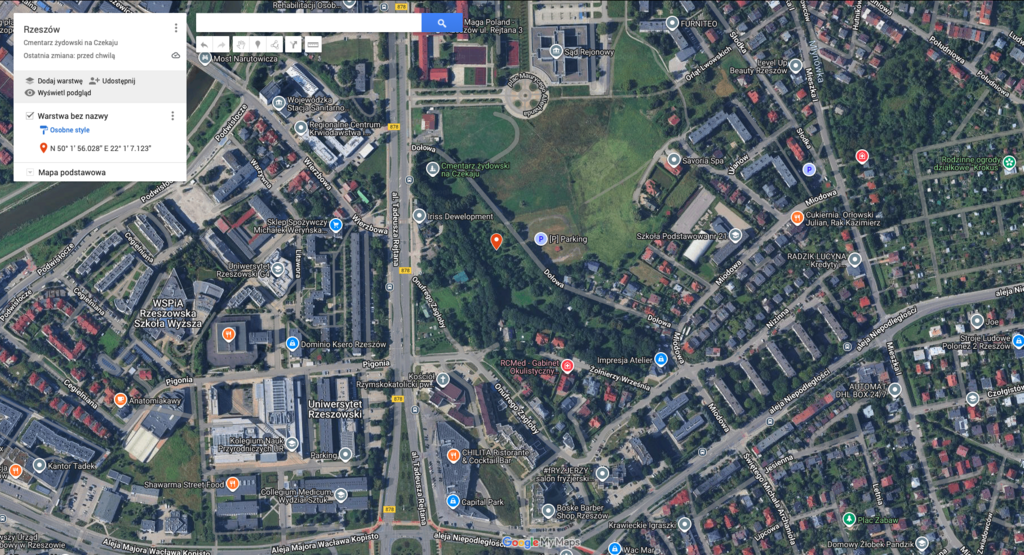
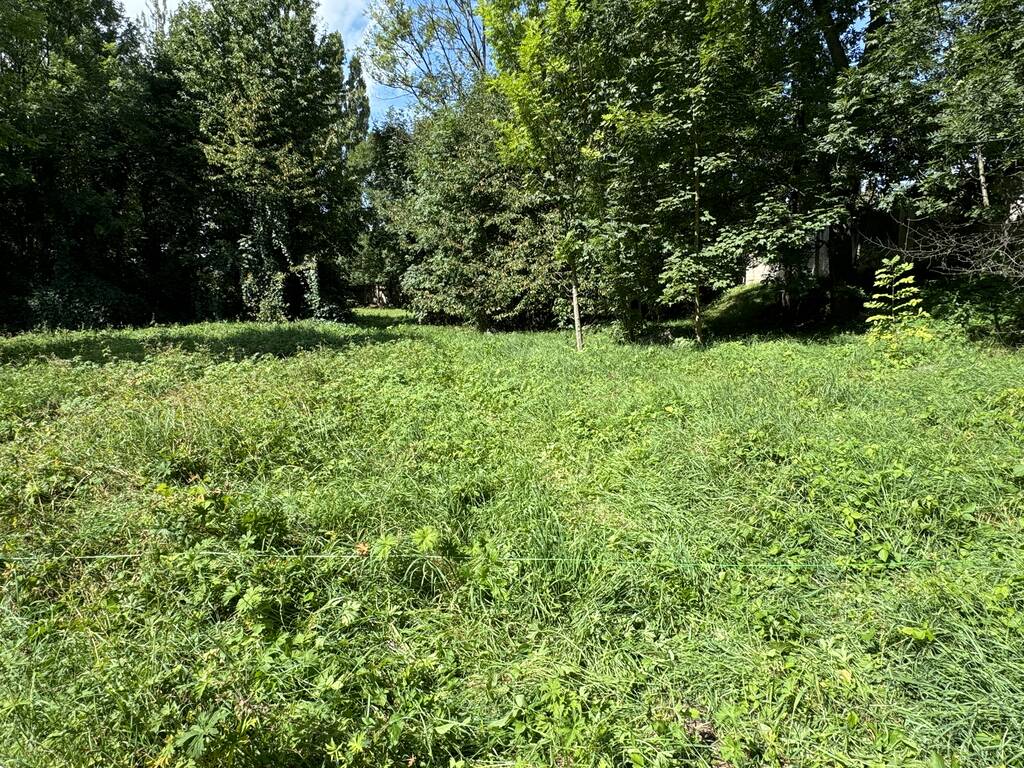
In 2025, non-invasive research was carried out at the Jewish cemetery in Czekaj (GPS: N 50°1’56.028” E 22°1’7.123”) in order to locate the mass graves of Holocaust victims. As a result of an aerial photography query, photographs from 1941-1944 were obtained. The photographs were processed and interpreted. The area of the cemetery captured in the images clearly indicated soil disturbances in the western part of the plot. These locations were precisely marked in the field and examined using ground-penetrating radar. The results of geophysical surveys confirmed disturbances in the soil layers, which are highly likely to be associated with mass graves. LiDAR terrain mapping shows numerous soil disruptions throughout the examined area.
The full report on the non-invasive research of the cemetery is available for download from the resources of the Zapomniane Foundation.
 Rzeszów fotografia satelitarna 1a
 Rzeszów fotografia 1 lokalizacji
Sources
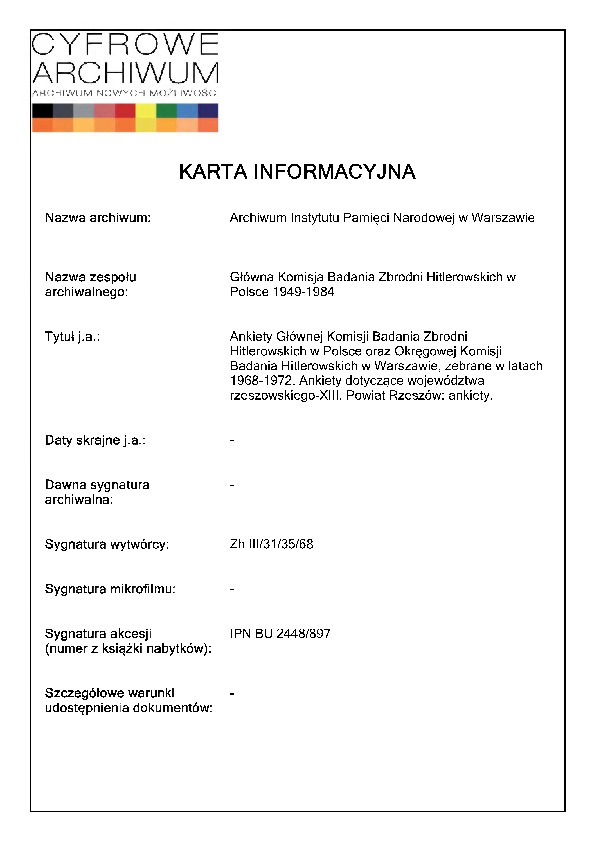
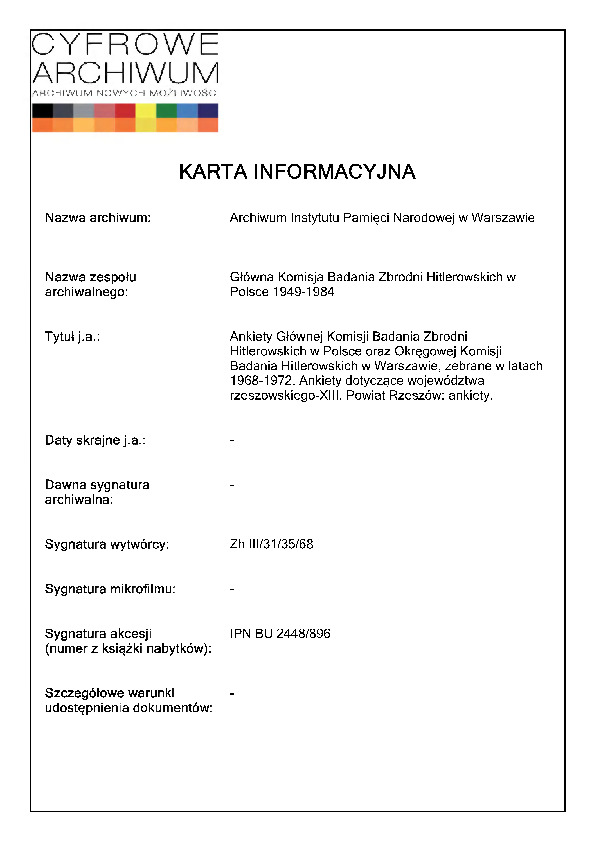 Rzeszów Ankiety GKBZH w Polsce oraz OKBZH w Warszawie, zebrane w latach 1968-1972_2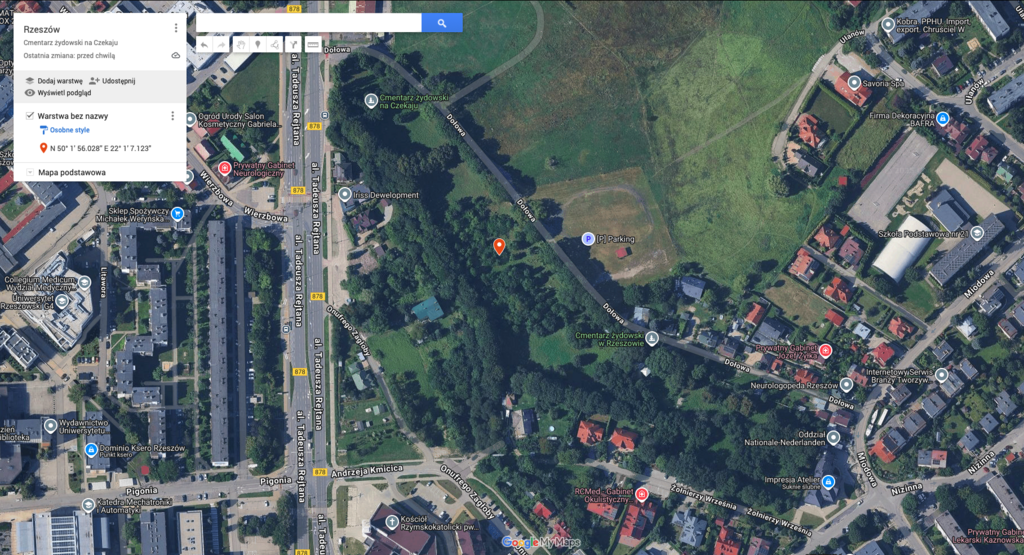
Contact and cooperation
We are still looking for information on the identity of the victims and the location of Jewish graves in Rzeszów. If you know something more, write to us at the following address: kontakt@zapomniane.org.
Bibliography
Moshe Oster, Gehinom znaczy piekło. Przeżyłem getto i dziewięć obozów [Gehinom means hell. I survived the ghetto and nine camps], Kraków, 2013
Letter sent by the Voivodeship Office in Rzeszów, Department of Religious Affairs, to the Deputy Director of the Office of Religious Affairs, dated 4 January 1975
The Register of Killing Sites and Crimes committed by the Germans in Poland between 1939 and 1944, rzeszowskie voivodeship, Warsaw, 1984
Zagłada Żydów na Rzeszowszczyźnie [The Extermination of Jews in the Rzeszów Area], ed. E. Rączy, I. Witowicz, Warsaw, 2004.
IPN BU 2448/896, the surveys of the Chief Commission for the Examination of German Crimes in Poland and the Regional Commission for the Examination of German Crimes in Warsaw, collected in 1968-1972, concerning the rzeszowskie voivodeship-XII. Rzeszów district: questionnaires.
IPN BU 2448/897, the surveys of the Chief Commission for the Examination of German Crimes in Poland and the Regional Commission for the Examination of German Crimes in Warsaw, collected in 1968-1972, concerning the rzeszowskie voivodeship-XII. Rzeszów district: questionnaires.
AŻIH 301/4587, a letter from the District Jewish Committee in Rzeszów addressed to the Voivodeship Jewish Historical Commission in Kraków, 13 July 1946
AŻIH 301/3687, account of Majer Goldman, born in Sanok in 1899.
AŻIH 301/3688, account of Ascher Heller written on 20 May 1948
AŻIH 301/3689, account of Benjamin Leszczower, a letter to the Regional Jewish Historical Commission in Kraków, date unknown
Wójcik Z. Rzeszów w latach drugiej wojny światowej. Okupacja i konspiracja 1939-1944-1945 [Rzeszów during World War II. Occupation and conspiracy 1939–1944–1945], 1988
Rzeszów Community Memorial Book, Tel Aviv, 1967
Materiały źródłowe do dziejów Żydów w Rzeszowie w czasie okupacji niemieckiej [Source Materials on the History of the Jews in Rzeszów during the German Occupation], E. Rączy, G. Zamoyski, W. Wierzbieniec, Rzeszów, 2016
The materials published on this website were developed, digitized, and made available thanks to funding from the Minister of Culture and National Heritage through the Culture Promotion Fund, as well as support from the Embassy of the Federal Republic of Germany in Warsaw, which also enabled the creation of the English-language version of the website.