Dubiecko “Konik” forest
Borough: Dubiecko, District: przemyski, Voivodeship: podkarpackieType of place
A small forest by the dirt road.Information about the crime
In 2015, we conducted ground-penetrating radar surveys at the Jewish cemetery in Dubiecko and collected eyewitness accounts of the massacre at the cemetery. One of the people who secretly observed the execution of Jewish men, women, and children was Józefa P. (born in 1932). She also remembered the post-war murder of a Jewish woman and her daughter, who had returned to their home after the war ended. However, she did not remember the names of the victims, nor did she know where their bodies had been buried.
The case of this murder came back to us after ten years. Thanks to our collaboration with Ph.D. Łukasz Krzyżanowski, a historian from the University of Warsaw, we established the identities of the victims and learned the circumstances of their deaths. Estera and Rena Kornfeld were victims of a robbery-related murder. Before her death, Estera was raped by men who later murdered her and her child. The perpetrators were Henryk G., Wacław P., and Bronisław W. Estera knew Wacław P. before the war, and she may have known the other two men as well, since both Henryk G. and Bronisław P. were born in Dubiecko. Henryk G. lived in Dubiecko until the start of the war. After the war, the perpetrators were brought to trial. During the trial, the defendants recounted what had happened that evening and what they had done:
Henryk G.
“After the robbery, the stolen goods were loaded onto carts, which drove off in the direction of Śliwnica. During the robbery, I heard the groans and screams of the victims, Zygmunt P., and the sounds of beating. A moment later, the leader of the robbery group approached us with several people and instructed us, i.e. me, Bronisław W., Wacław P., and five members of his group, to go to the Pilawski house, where, according to information he had received, probably from Jan W., two Jewish women were staying: a mother and her eight-year-old daughter, who had come from the west and were said to have two large suitcases and [illegible] valuables with them. He ordered us to take the aforementioned items and to liquidate the Jewish women, that is, to murder them by shooting them by the San River. […] After arriving at the location with Wacław P., Bronisław W., and several men from an outside group, […] we found the windows ajar, as it was a warm night. Several of us entered through the front window, while the others went in through the open back door. I was only in the hallway with P. and W., while people from another group ordered the Jewish women to get dressed and then searched for the suitcases, which were found to be missing. […] After leading the Jewish women out of the apartment, W., P., and I took them toward the forest known as “Konik”. On the way, she began to beg us to release them, and she even recognized W. and P., pleading with them because she knew them. None of us relented, ordering her to go deeper into the bushes, where each of us raped her. Before intercourse, she was told to go deeper into the bushes. When she heard the rifle being cocked, she realized that we wanted to murder her. She started screaming, “Rape, help!” Then W. fired the rifle, striking her from behind in the back. At that moment, P. shot his daughter, who had been taken into the bushes by her mother before the intercourse. Since the older Jewish woman was still moaning after the first shot, W. shot her again, saying, “Now she’s had enough.” After that, we covered them with some branches and, after W. had collected the murdered woman’s belongings, we headed towards Dubiecko across the fields to our homes.” (IPN Rz 25/3064)
Henryk M.:
“While leading the Jewish woman out of the apartment, I realized that they wanted to murder them, because they were not leading them towards the Citizens’ Militia, but in a different direction, north towards the cemetery.” (IPN Rz 25/3064)
From the indictment:
“After the robbery, the commander of the unit, Tomasz P., ordered Bronisław W., Henryk G., and Wacław P. to go to Pilawska’s house, where two Jewish women lived, and execute them, as well as steal two suitcases full of clothes and valuables that the Jewish women had brought from the west. […] Upon arriving at Pilawska’s house, G., W., and P. entered the apartment and ordered the sleeping Jewish woman, who turned out to be Estera Kornfeld, to get dressed and hand over her clothing. While Kornfeld was getting dressed, the gang members conducted a search, during which they took a briefcase with some items. After conducting a thorough search, G., W., and P. led Estera Kornfeld and her eight-year-old daughter Rena out of the house. The three of them led Kornfeld and her daughter toward a forest 700 meters away from Pilawska’s house. Regarding the murder of Kornfeld and her daughter, the defendant W. testified that on the way, while following the women, they began to discuss how to carry out the sentence. After a brief conversation, G. agreed to shoot the child with a pistol, while W. and P. were to carry out the death sentence on Estera Kornfeld. During the conversation, G. told W. that he wanted to “play” with Kornfeld, to which W. replied that he did not care about that matter. G. then asked W. to watch the child while he went into the bushes with the woman and P. In fact, G., P., and the woman went into the bushes about 30 meters from where W. remained with Rena Kornfeld. After 15 minutes, G. returned to W., telling him that, according to their agreement, he would shoot the child, and sent W. to P. When W. came to P., he found Estera Kornfeld standing next to him, stripped of her coat. At that moment, P. reportedly told W. that he would test his rifle, while at the same time ordering the woman to move ahead. At that moment, P. fired a shot from a rifle, killing Estera Kornfeld. At the same time, two pistol shots were fired, killing Estera Kornfeld’s child. The three of them dragged Kornfeld Estera’s body to the place where Rena Kornfeld was lying, and then covered it with branches. […] The defendant G., who together with P. and W. participated in the murder of Estera and Rena Kornfeld testified that when the Jewish woman and her daughter were led out of Pilawska’s apartment, she began to beg P., whom she addressed by name, to spare her life. None of the gang members agreed to release the Jewish woman, and she cried on the way to the place of execution as she followed the bandits. Kornfeld Estera walked ahead with her child, and three members of the gang followed behind. Upon reaching the forest, P. asked Kornfeld Estera if he could have some fun with her. According to G., Kornfeld immediately understood what he meant and asked whether, after this “fun”, she would be allowed to return home, to which P. answered yes. At that point, Kornfeld led her child into the bushes, where she left her, and then began to undress herself. She first removed her coat and then her underwear. G. then proceeded to have intercourse with Kornfeld, which lasted a very short time. Afterwards, P. had intercourse with Kornfeld, and finally W. After intercourse with W., Kornfeld put her underwear back on, took her coat over her arm, and walked toward the bushes in the direction of her child. When the Jewish woman reached her child, W., he cocked his rifle, and when Kornfeld heard the clank of the breech, she began to scream, realizing that she was about to be murdered. Then W. fired at the Jewish woman with his rifle, while at the same time P. fired his rifle at the child. The child was killed immediately by the first shot, while Estera Kornfeld was still showing signs of life. Then W. approached her and fired another shot from his rifle /now she will have enough/. After that, the dead Estera Kornfeld was dragged to the place where the body of her child lay, and both bodies were covered with branches.”
Wacław P.
“After a few days, Józef S. shouted at me, asking why I hadn’t buried the dead bodies. I replied that I had not known about it earlier and that I had had nothing to bury them with. The bodies of the Jewish women killed by me and W. were found the next day, and a forensic investigation was conducted.” (IPN Rz 25/3064)
Wacław P.
“[…] I went to Przemysla [Przemyska] Street in Dubiecko, to the house of Izabela Pilawska. On the way there, I don’t remember who told me, but everyone was talking about going to see a Jewish woman who was staying with Izabela Pilawska. She had arrived in Dubiecko a few days earlier and was staying with the aforementioned woman because the house occupied by Pilawska belonged to her.” (IPN Rz 25/3064)
On May 31, 1945, a report was drawn up on the examination of the bodies carried out by the District Court in Dubiecko. It states that after the examination, the Dubiecko Borough Council and the Citizens’ Milita station were ordered to “bury the body at the scene of the crime.” (IPN 828/1306)
We managed to establish contact with the descendants of the Kornfeld family from Dubiecko, who provided us with pre-war photographs of Estera, her husband, and their daughter, as well as other family members.
In August 2024 and May 2025, we conducted site inspections of the crime scene and the burial site of Estera and Rena Kornfeld. We were accompanied by Leokadia S., who indicated the approximate location where the bodies of Estera and Rena were buried.
IDENTIFICATION OF THE GRAVE BASED ON NON INVASIVE RESEARCH
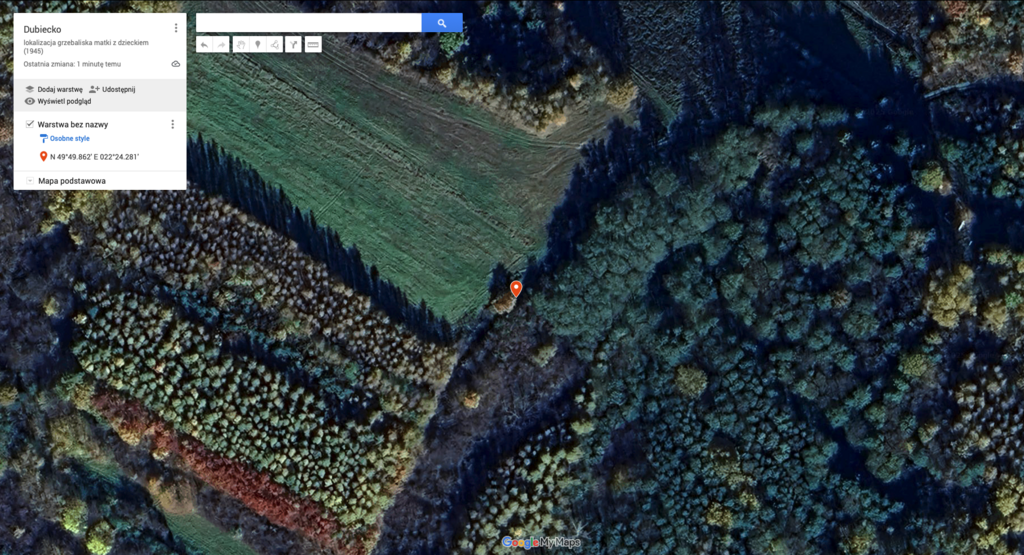
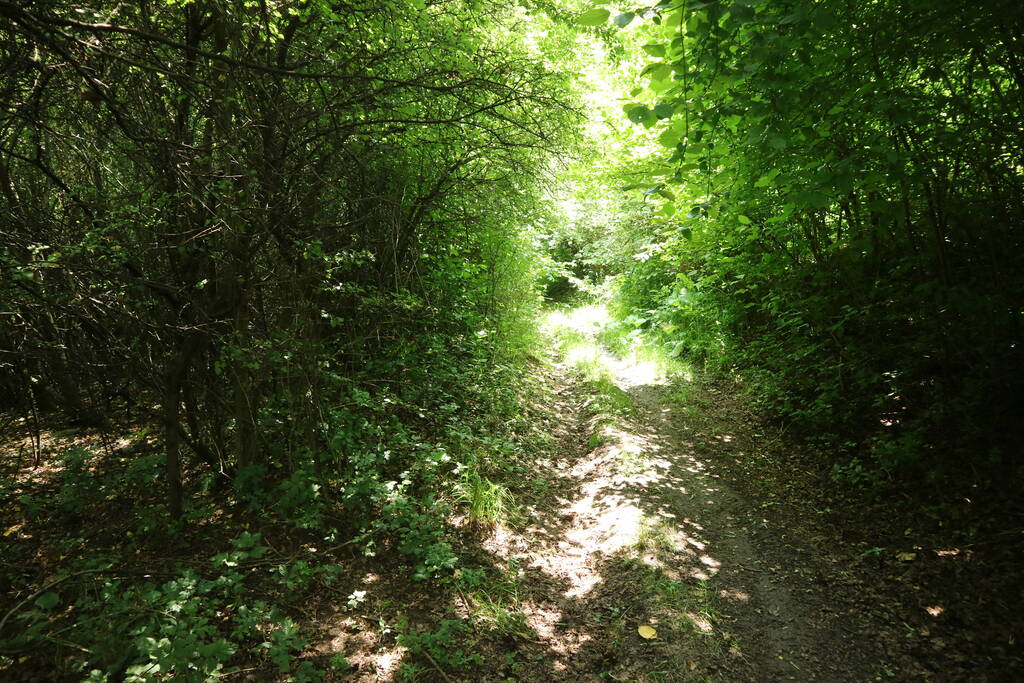
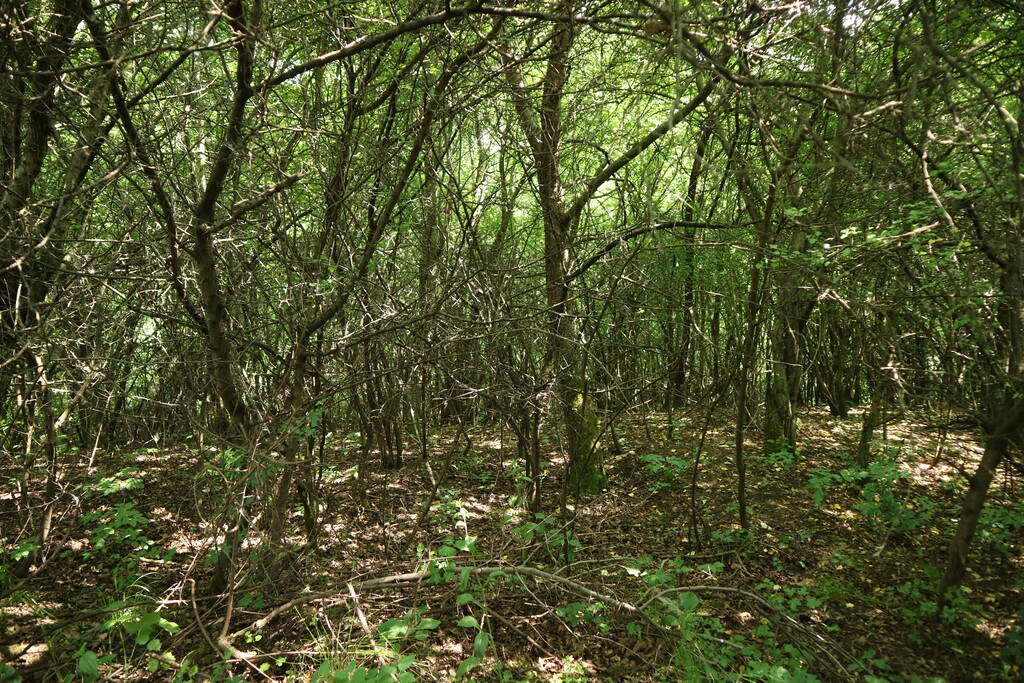
On June 12, 2025, a site inspection was conducted at the location precisely indicated by the witness (GPS: N 49°49.862′ E 022°24.281′) as the burial site of the two victims. The grave is located in an overgrown area that is part of a large embankment (see attached photographs of the location 1–3).
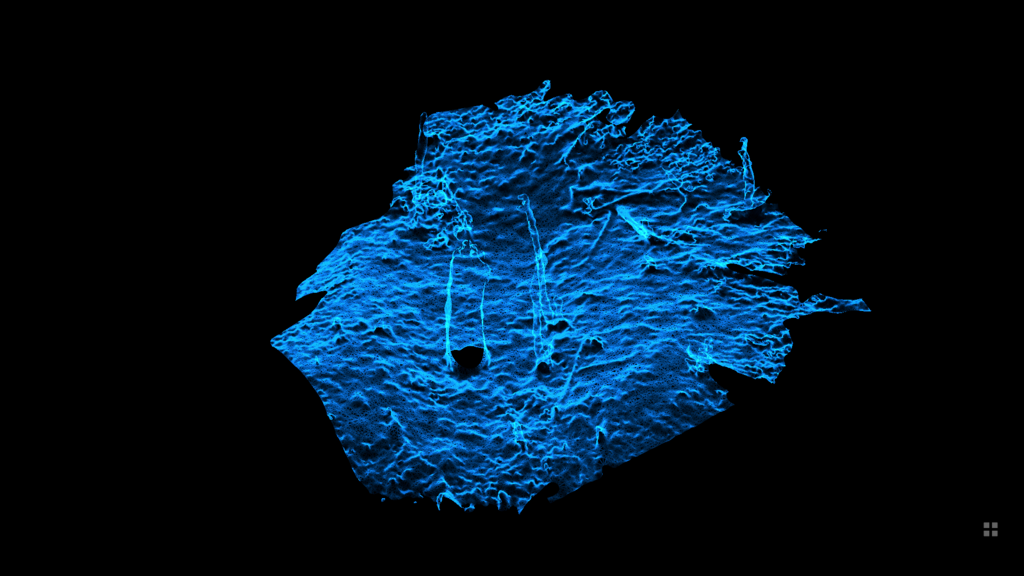
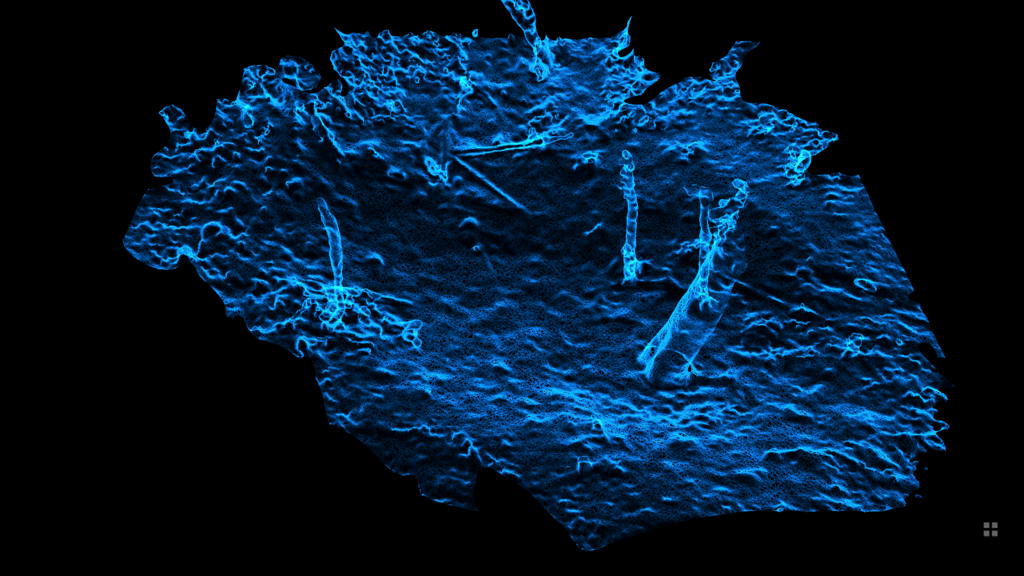
In the past, the burial ground was marked with a mound; currently there is a sinkhole (LiDAR 1-3), measuring approximately 1.80 m by 0.85 m.
Aerial photography query for this area wasn’t ordered.
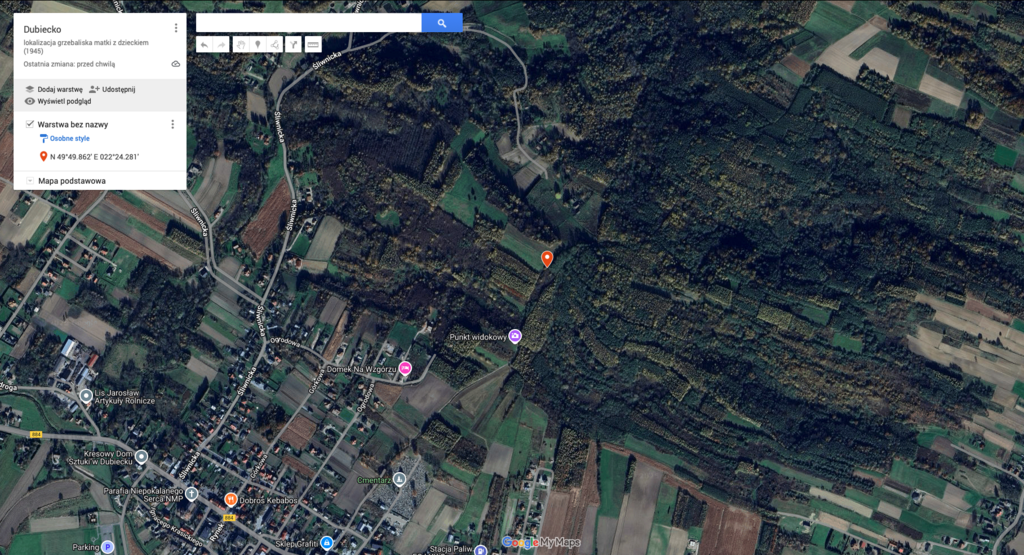 Dubiecko las "Konik" fotografia satelitarna 1a
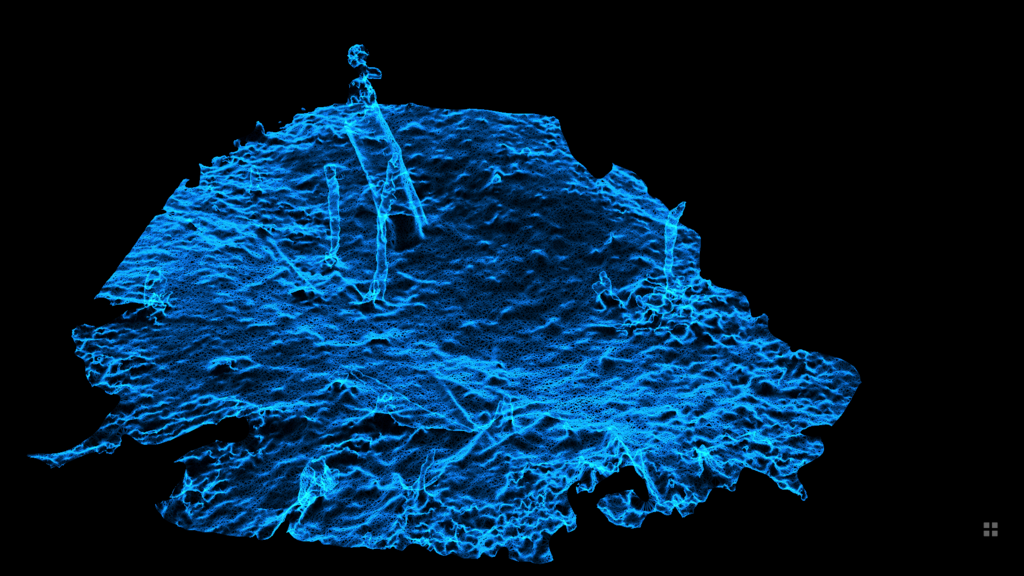 Dubiecko las "Konik" LiDAR 1
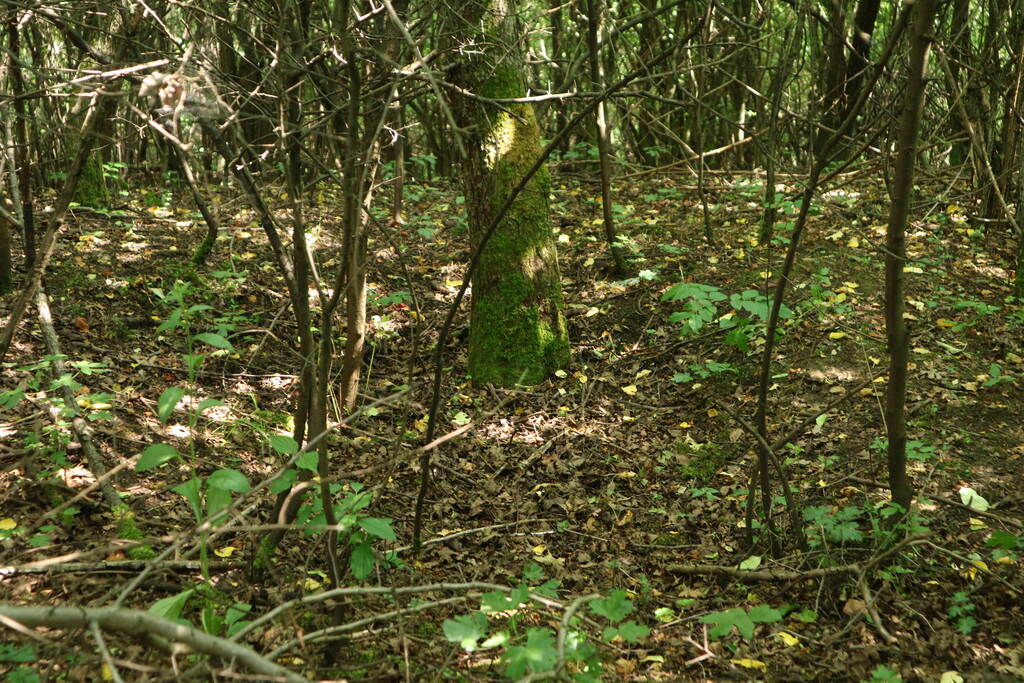 Dubiecko las "Konik" fotografia 2 lokalizacji
Sources
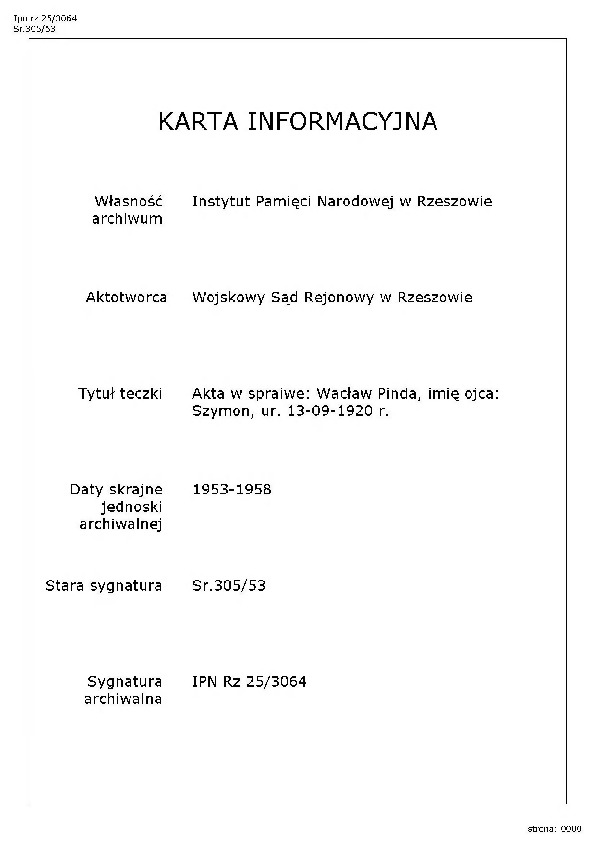
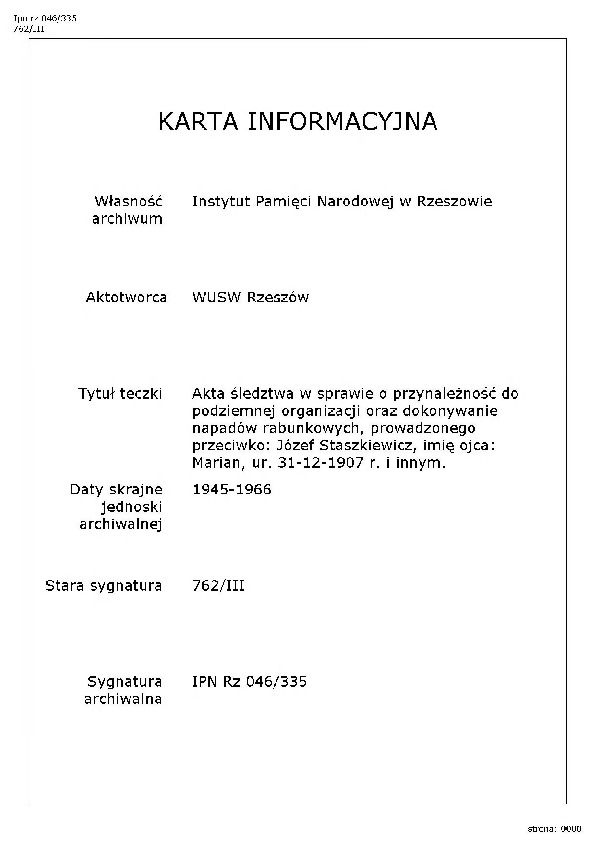 Dubiecko Kornfeld Akta śledztwa w sprawie o przynależność do podziemnej organizacji oraz dokonywanie napadów rabunkowych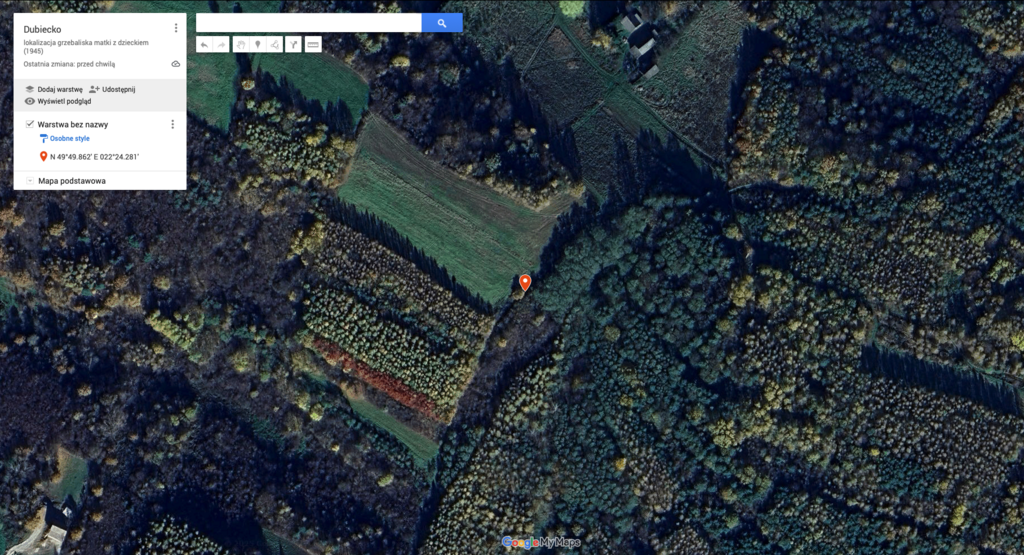
Contact and cooperation
We are still looking for information on the identity of the victims and the location of Jewish graves in Dubiecko. If you know something more, write to us at the following address: kontakt@zapomniane.org.
Bibliography
IPN Rz 25/3064 Files in the case against Pinda Wacław, son of Szymon (Article 3 of the Decree of 16 November 1945; Article 204, paragraph 1 of the Penal Code; Article 225, paragraph 1 – possession of weapons, armed robbery, rape, and participation in murder, 1953–1958)
IPN Rz 46/335 – Investigation files regarding participation in an underground organization and involvement in robbery attacks, against: Józef Staszkiewicz, father’s name Marian, born on 31 December 1907, and others.
Recording of the Zapomniane Foundation (audio file), Leokadia S., interviewed by Agnieszka Nieradko and Aleksander Schwarz, Dubiecko, 13 June 2025.
The materials published on this website were developed, digitized, and made available thanks to funding from the Minister of Culture and National Heritage through the Culture Promotion Fund, as well as support from the Embassy of the Federal Republic of Germany in Warsaw, which also enabled the creation of the English-language version of the website.